Got contracts to review? While you're here for policies, let Cobrief make contract review effortless—start your free review now.
Customize this template for free
Personal leave policy (Hawaiʻi)
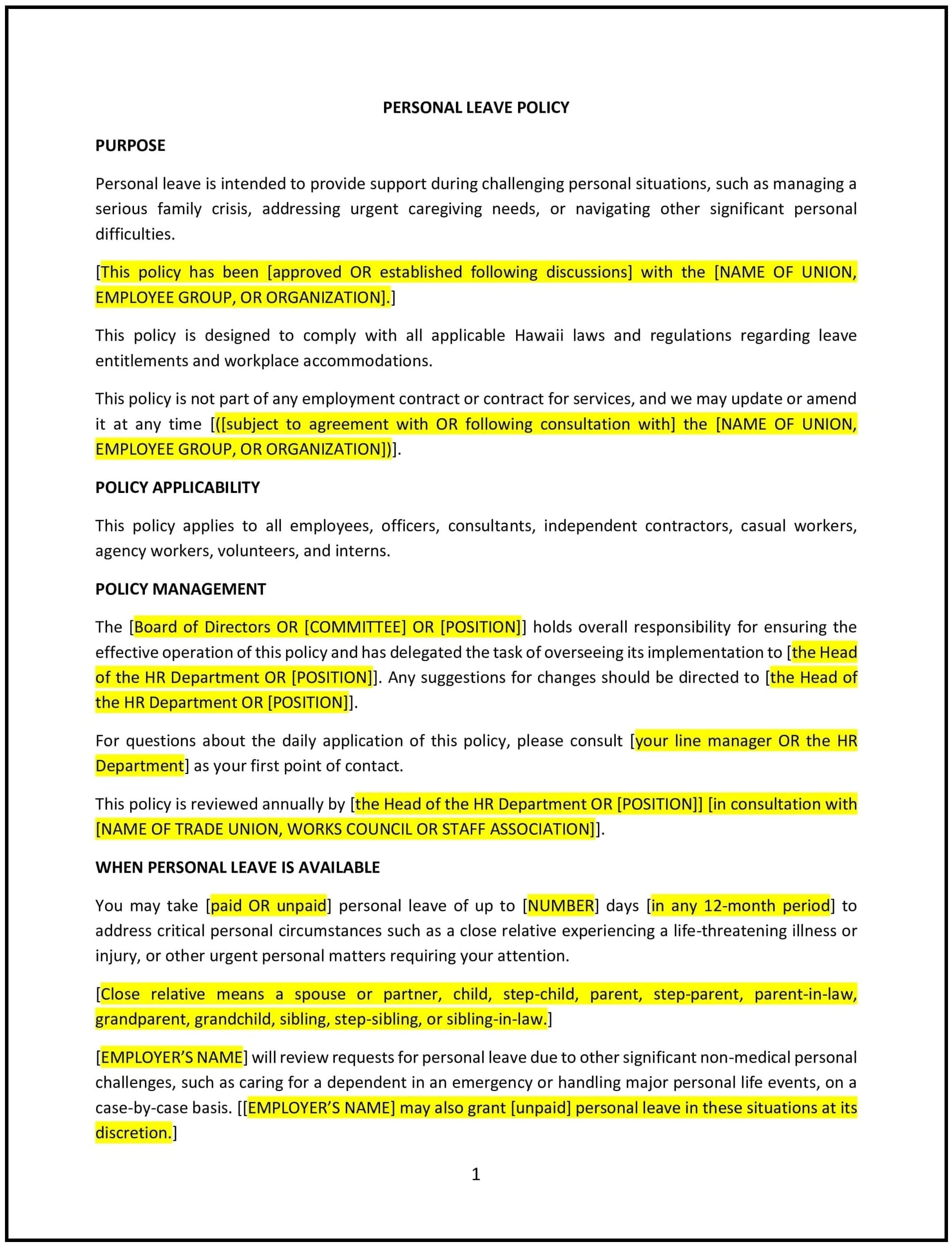
A personal leave policy helps Hawaiʻi businesses establish guidelines for employees who need time off for personal reasons, such as family emergencies, mental health days, or other non-medical situations. This policy outlines procedures for requesting, approving, and managing personal leave, while addressing Hawaiʻi’s unique cultural and workplace dynamics. It is designed to promote work-life balance, support employee well-being, and foster a compassionate workplace culture.
By implementing this policy, businesses in Hawaiʻi can improve employee morale, reduce burnout, and demonstrate a commitment to supporting their workforce.
How to use this personal leave policy (Hawaiʻi)
- Define personal leave: Clearly outline what constitutes personal leave, such as time off for family emergencies, mental health, or other personal matters.
- Establish eligibility: Specify which employees are eligible for personal leave, such as full-time or part-time staff, and any tenure requirements.
- Set leave duration: Define the maximum amount of personal leave employees can take, typically in alignment with Hawaiʻi state laws and business needs.
- Address paid vs. unpaid leave: Clarify whether personal leave is paid, unpaid, or a combination of both, and explain how employees can use accrued paid time off (PTO) during their leave.
- Create request procedures: Provide clear instructions for employees to request personal leave, including required documentation and advance notice when possible.
- Communicate the policy: Share the policy with employees during onboarding and through internal communications to ensure awareness and understanding.
- Train managers: Educate supervisors on how to handle personal leave requests, manage team workloads, and support employees during their leave.
- Monitor compliance: Regularly review personal leave requests to ensure adherence to the policy and address any issues promptly.
- Review and update the policy: Regularly assess the policy’s effectiveness and make adjustments as needed to reflect changes in laws, employee needs, or workplace dynamics.
Benefits of using this personal leave policy (Hawaiʻi)
This policy offers several advantages for Hawaiʻi businesses:
- Supports employee well-being: Providing personal leave helps employees manage personal matters and maintain work-life balance.
- Improves morale: Offering personal leave demonstrates the business’s commitment to employee care, increasing job satisfaction and loyalty.
- Reduces burnout: Employees are less likely to experience burnout when they have time to address personal needs.
- Enhances workplace culture: A compassionate approach to personal leave fosters a positive and supportive work environment.
- Aligns with legal requirements: The policy helps businesses comply with Hawaiʻi state laws and federal regulations related to leave.
- Encourages accountability: Employees understand their responsibilities for requesting leave and managing their work before taking time off.
- Builds trust: Employees are more likely to trust leadership when they see a commitment to supporting their personal needs.
Tips for using this personal leave policy (Hawaiʻi)
- Communicate the policy effectively: Share the policy with employees during onboarding and through regular reminders, such as emails or posters in common areas.
- Provide training: Educate managers on how to handle personal leave requests, manage team workloads, and support employees during their leave.
- Be flexible: Consider individual circumstances when approving personal leave requests and be open to accommodations when possible.
- Monitor compliance: Regularly review personal leave requests to ensure adherence to the policy and address any issues promptly.
- Be transparent: Clearly explain the policy’s purpose, benefits, and expectations to employees to build trust and cooperation.
- Review the policy periodically: Update the policy as needed to reflect changes in laws, employee needs, or workplace dynamics.