Got contracts to review? While you're here for policies, let Cobrief make contract review effortless—start your free review now.
Customize this template for free
Personal leave policy (Idaho)
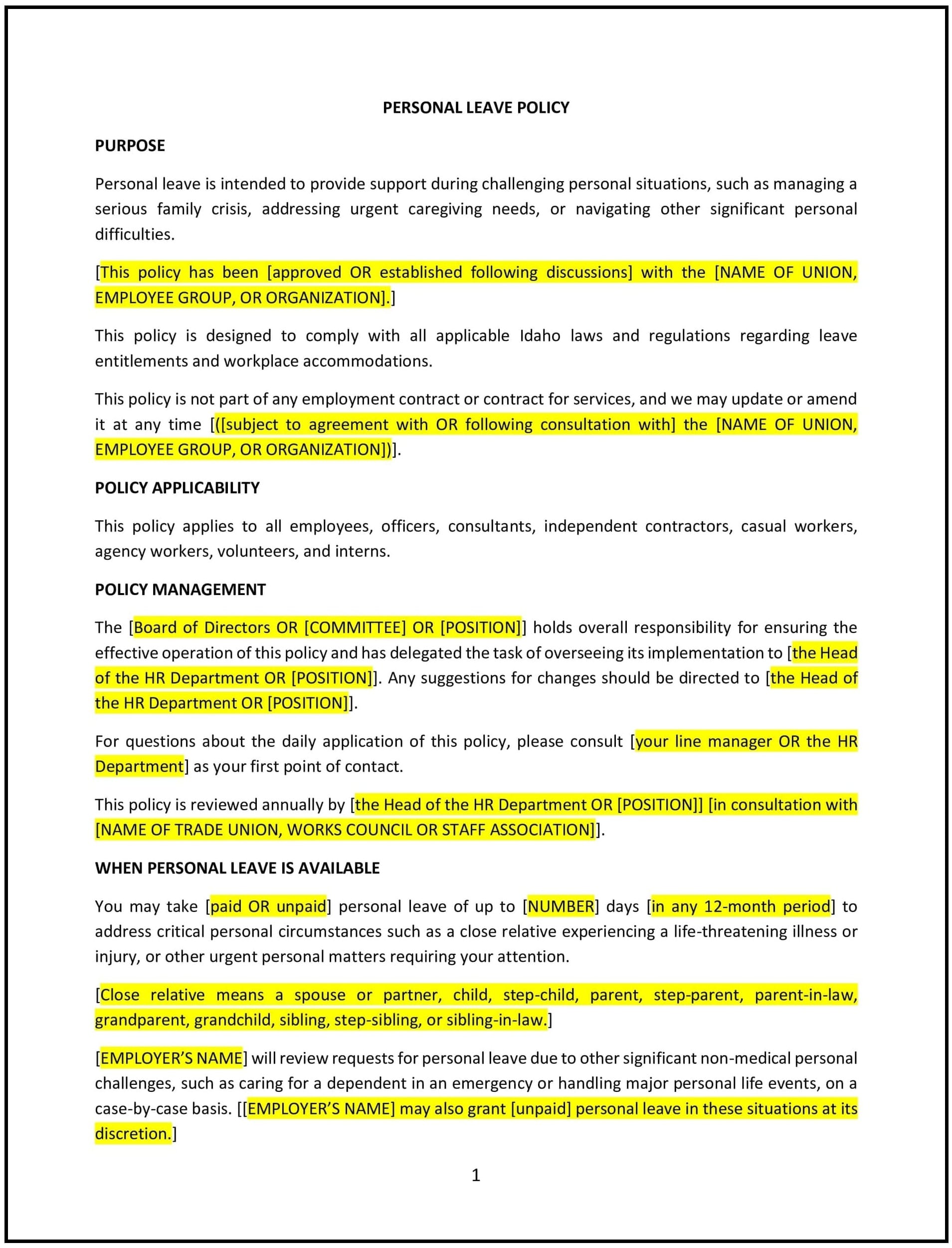
A personal leave policy helps Idaho businesses establish guidelines for employees who need time off for personal reasons, such as family emergencies, medical appointments, or other non-work-related matters. This policy outlines the types of personal leave available, eligibility criteria, and the process for requesting and approving leave. It also emphasizes the importance of balancing employee needs with business operations.
By implementing this policy, businesses can support employees during personal challenges, maintain productivity, and foster a culture of understanding and flexibility.
How to use this personal leave policy (Idaho)
- Define personal leave: Specify the types of personal leave available, such as unpaid leave, paid time off (PTO), or other forms of leave, and the reasons for which it can be used.
- Establish eligibility criteria: Outline which employees are eligible for personal leave, such as full-time or part-time workers, and any requirements, such as a minimum tenure or advance notice.
- Set request procedures: Provide clear instructions for employees to request personal leave, including required documentation, approval processes, and timelines.
- Address pay during leave: State whether personal leave will be paid or unpaid, including any use of accrued PTO or other benefits.
- Ensure job protection: Reassure employees that their job will be protected during personal leave, as required by Idaho and federal laws, such as the Family and Medical Leave Act (FMLA).
- Communicate benefits continuation: Explain how benefits, such as health insurance, will be handled during personal leave, including any employee contributions required.
- Review and update the policy: Periodically assess the policy’s effectiveness and make adjustments based on changes in business needs, employee feedback, or Idaho laws.
Benefits of using this personal leave policy (Idaho)
This policy offers several advantages for Idaho businesses:
- Supports employee well-being: Providing personal leave helps employees manage personal challenges, reducing stress and improving overall well-being.
- Enhances retention: A supportive policy fosters loyalty and reduces turnover by demonstrating the business’s commitment to employees’ personal needs.
- Promotes inclusivity: The policy reflects the business’s dedication to creating an inclusive workplace that supports employees during significant life events.
- Builds trust and morale: Employees appreciate businesses that prioritize their needs, leading to higher job satisfaction and workplace morale.
- Reduces legal risks: Clear guidelines help businesses comply with Idaho and federal leave laws, minimizing the risk of disputes or penalties.
- Attracts top talent: Offering personal leave makes the business more competitive in attracting skilled professionals who value work-life balance.
Tips for using this personal leave policy (Idaho)
- Communicate the policy clearly: Share the policy with employees during onboarding and through internal communication channels to ensure awareness and understanding.
- Train managers: Provide training for managers on how to handle personal leave requests, maintain confidentiality, and support employees during their absence and return to work.
- Monitor leave requests: Keep track of personal leave requests to ensure consistency and fairness in applying the policy.
- Review legal updates: Stay informed about changes to Idaho and federal leave laws and update the policy as needed.
- Encourage transparency: Foster open communication with employees about their leave options and the support available to them.
- Document everything: Maintain records of leave requests, approvals, and any correspondence to ensure accountability and compliance.