Got contracts to review? While you're here for policies, let Cobrief make contract review effortless—start your free review now.
Customize this template for free
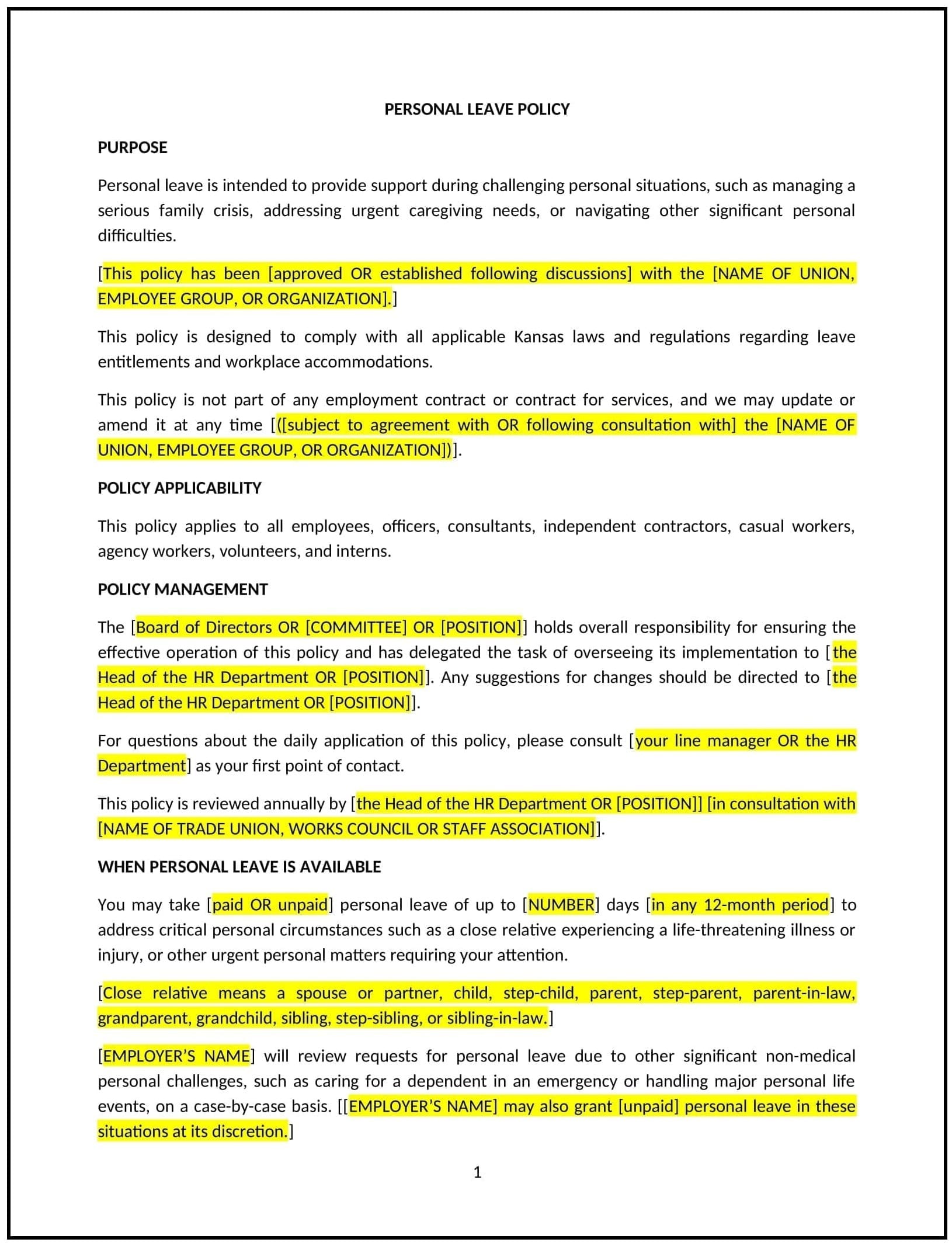
Personal leave policy (Kansas)
A personal leave policy helps Kansas businesses manage employee requests for time off for personal reasons not covered by other leave policies, such as vacation or sick leave. This policy outlines the process for requesting personal leave, the conditions under which it may be granted, and any applicable guidelines for maintaining productivity and fairness.
By implementing this policy, businesses can offer employees flexibility while maintaining clear guidelines for time-off requests and managing workload expectations.
How to use this personal leave policy (Kansas)
- Define eligibility criteria: Businesses should specify which employees are eligible for personal leave, including tenure requirements or any specific job roles that may have different entitlements.
- Establish a request process: Employees should be required to submit a formal request for personal leave, providing sufficient notice and any necessary documentation to support their request.
- Set leave duration: The policy should outline how much personal leave is available per employee, whether it is paid or unpaid, and the maximum duration for leave requests.
- Provide guidelines for approval: Businesses should establish clear approval processes, such as who is responsible for reviewing leave requests, and any circumstances under which personal leave may be denied.
- Address time-off scheduling: The policy should specify how personal leave requests will be managed to minimize disruption to the business, ensuring adequate staffing and operational efficiency.
- Maintain job protection: Employees should be guaranteed the right to return to their original position or an equivalent role upon their return from personal leave, with the same seniority, pay, and benefits.
- Review and update regularly: Businesses should periodically review the policy to ensure it remains relevant and aligns with any changes in business operations, employee needs, or legal requirements.
Benefits of using a personal leave policy (Kansas)
- Provides flexibility for employees: A clear personal leave policy allows employees to take time off for personal matters, such as family emergencies, without negatively impacting their job or reputation.
- Promotes fairness and transparency: The policy ensures that all employees are aware of the process for requesting leave and are treated equitably when it comes to approval and duration.
- Supports employee well-being: By offering personal leave, businesses demonstrate a commitment to employee health and work-life balance, improving job satisfaction and morale.
- Reduces absenteeism: By providing a structured way for employees to request leave, businesses can reduce the frequency of unscheduled absenteeism and manage staffing needs more effectively.
- Protects business operations: A well-managed personal leave policy ensures that employee absences are planned and can be covered, helping businesses maintain continuity of operations.
- Enhances retention: Employees are more likely to remain with a company that supports their need for personal time off, which can lead to higher retention rates and reduced turnover.
Tips for using this personal leave policy (Kansas)
- Communicate the policy clearly: Businesses should ensure all employees understand the personal leave policy, including how to request leave, any eligibility criteria, and the approval process.
- Offer flexibility in scheduling: Businesses should allow flexibility in when personal leave can be taken, ensuring that employees’ personal needs are met while maintaining business operations.
- Manage leave effectively: To minimize disruptions, businesses should encourage employees to request personal leave with as much advance notice as possible and to plan their time off in alignment with business needs.
- Be consistent in application: Businesses should apply the policy consistently to all eligible employees to prevent any perception of favoritism or discrimination.
- Keep accurate records: Businesses should maintain clear records of personal leave taken, including the duration of the leave and any supporting documentation, to track usage and manage staffing effectively.
- Regularly review the policy: Businesses should periodically review the policy to ensure it remains aligned with the company’s evolving needs and any changes in employment laws.