Got contracts to review? While you're here for policies, let Cobrief make contract review effortless—start your free review now.
Customize this template for free
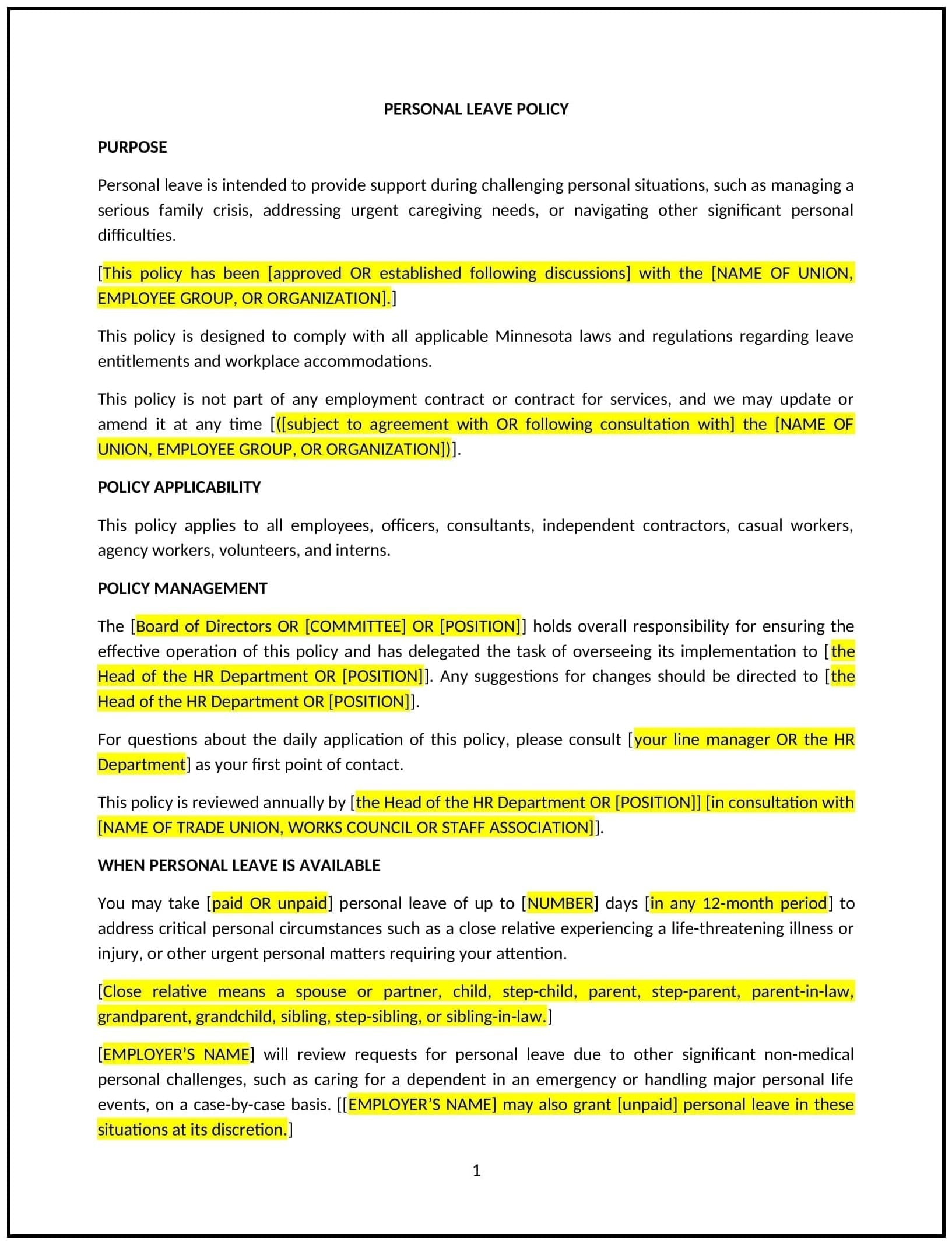
Personal leave policy (Minnesota)
This personal leave policy is designed to help Minnesota businesses provide employees with time off for personal reasons that are not covered by other leave types such as sick leave, vacation leave, or public holidays. It outlines the conditions under which personal leave may be granted, the process for requesting leave, and the expectations for both employees and employers during personal leave periods.
By implementing this policy, businesses can offer employees flexibility in managing personal matters while maintaining operational continuity.
How to use this personal leave policy (Minnesota)
- Define personal leave: Clearly explain what constitutes personal leave, specifying that it is typically used for non-medical, personal matters that do not fall under other leave categories, such as family events, urgent personal matters, or other unforeseen circumstances.
- Establish eligibility: Define which employees are eligible for personal leave, including full-time, part-time, or temporary workers, and specify any requirements, such as length of employment or hours worked.
- Specify the amount of leave: Outline how much personal leave an employee is entitled to, whether it is a set number of days per year or a flexible amount depending on the situation.
- Set the request process: Provide clear instructions on how employees should request personal leave, including how far in advance they should submit requests, any documentation that may be required, and whom to notify.
- Address pay during personal leave: Clarify whether personal leave is paid or unpaid. Businesses may choose to offer paid personal leave, or employees may be required to use other leave types (e.g., PTO) if applicable.
- Include expectations for communication: Set guidelines for how employees should communicate during their leave, including any updates on their situation or expected return-to-work dates.
- Handle excessive leave requests: Define a process for managing situations where an employee requests more personal leave than is available or when frequent absences become a concern. This can include discussions with the employee to understand the reason for the leave and potential alternatives or accommodations.
Benefits of using a personal leave policy (Minnesota)
Implementing this policy provides several advantages for Minnesota businesses:
- Promotes work-life balance: By offering personal leave, businesses demonstrate their commitment to supporting employees in balancing work with personal needs, which can improve job satisfaction and retention.
- Reduces absenteeism: Clear guidelines for personal leave requests can help prevent unscheduled absences, ensuring that employees plan their time off and that businesses can manage staffing effectively.
- Increases employee loyalty: Providing personal leave fosters goodwill with employees, showing that the company values their well-being and is willing to accommodate personal needs.
- Enhances fairness and consistency: A formal policy ensures that all employees are treated equally when requesting personal leave, minimizing any perceptions of favoritism or bias.
- Reflects Minnesota-specific considerations: Tailors the policy to reflect Minnesota’s labor laws, local expectations, and business practices, ensuring that it aligns with the state’s employment environment.
Tips for using this personal leave policy (Minnesota)
- Communicate clearly: Ensure all employees are informed about the policy, including how to request leave, eligibility, and how it will be handled (e.g., paid or unpaid).
- Be flexible: While maintaining fairness, be flexible in allowing employees to take personal leave for genuine reasons, especially when balancing both work and personal obligations.
- Monitor leave usage: Track personal leave requests to ensure that employees are not abusing the system and that operational needs are met while employees take leave.
- Offer support: If employees frequently request personal leave, offer support or accommodations where possible, such as flexible hours, temporary adjustments to duties, or referrals to employee assistance programs (EAP).
- Review regularly: Periodically review the policy to ensure that it continues to meet the needs of both the business and employees while staying aligned with Minnesota’s legal requirements and best practices.