Got contracts to review? While you're here for policies, let Cobrief make contract review effortless—start your free review now.
Customize this template for free
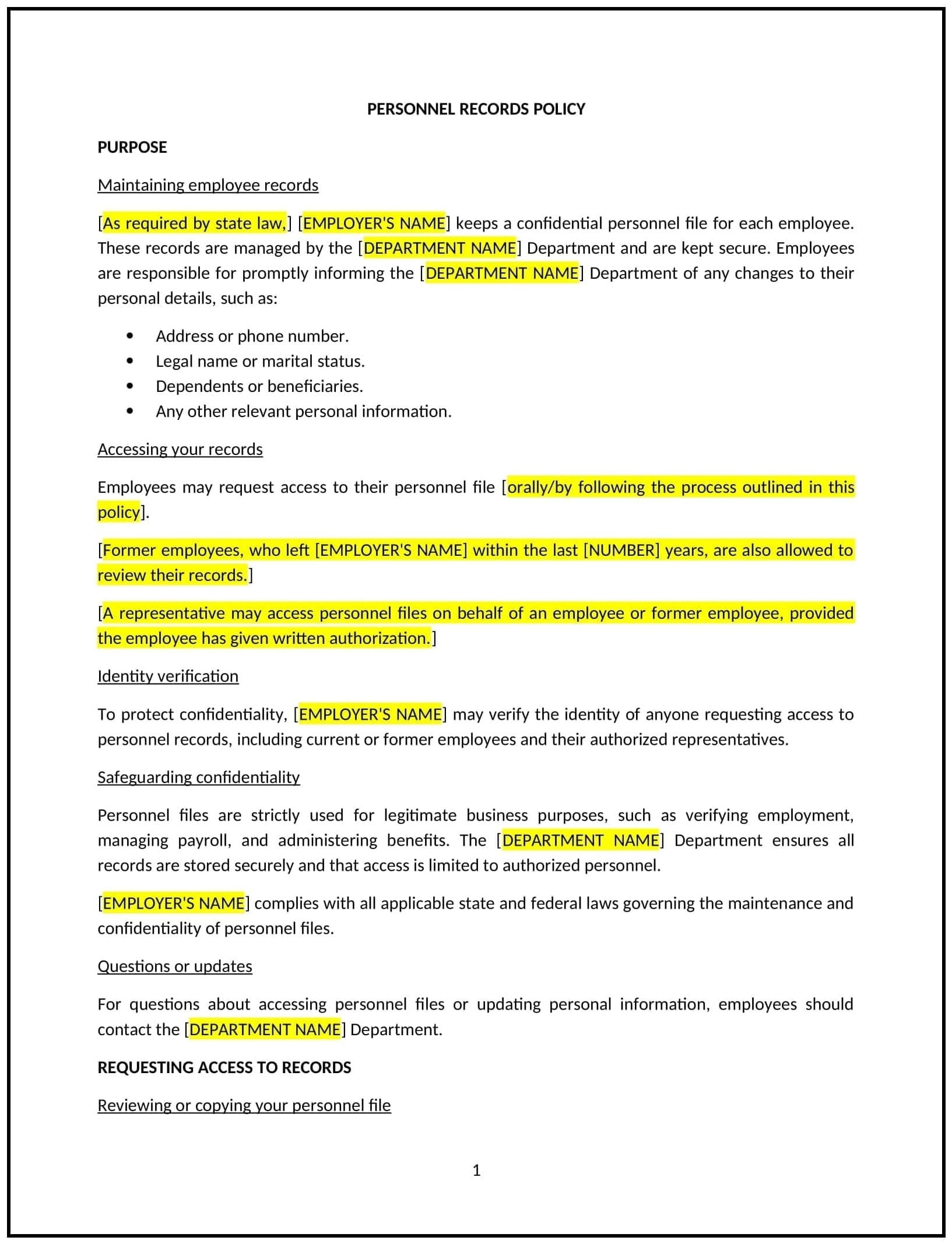
Personnel records policy (Indiana): Free template
This personnel records policy is designed to help Indiana businesses manage and maintain accurate employee records while protecting privacy and ensuring compliance with state and federal regulations. It provides guidelines for collecting, storing, accessing, and disposing of employee records in a secure and organized manner. Whether managing onboarding documents, performance records, or payroll information, this template supports businesses in creating a transparent and efficient records management system.
By implementing this policy, Indiana businesses can enhance administrative efficiency, safeguard sensitive information, and ensure proper documentation for employment-related matters.
How to use this personnel records policy (Indiana)
- Define the scope of records management: Specify which types of employee records are covered under the policy, such as application forms, tax documents, payroll records, performance reviews, and disciplinary actions.
- Establish secure storage procedures: Outline how personnel records should be stored, including the use of locked filing cabinets for physical records and password-protected systems for digital records.
- Limit access to authorized personnel: Define who is permitted to access personnel records and under what circumstances. Include procedures for reviewing and granting access rights.
- Specify retention periods: State how long different types of personnel records must be kept, referencing Indiana and federal guidelines where applicable. Include instructions for securely disposing of records after the retention period expires.
- Include employee access rights: Explain how employees can request access to their personnel files and the process for reviewing records. Ensure the policy aligns with Indiana state laws on employee access to records.
- Outline procedures for record updates: Detail how updates or corrections to personnel records should be handled, such as changes to personal information or employment status.
- Implement training for managers: Ensure managers understand their responsibilities for maintaining and securing personnel records in compliance with the policy.
- Review and update regularly: Regularly assess the policy to ensure it reflects changes in laws, business operations, or best practices.
Benefits of using this personnel records policy (Indiana)
Implementing this policy provides several key benefits for Indiana businesses:
- Ensures organized records management: Helps businesses maintain accurate and up-to-date employee records, improving administrative efficiency.
- Protects employee privacy: Safeguards sensitive information through secure storage and access controls.
- Supports compliance: Helps businesses meet Indiana and federal record-keeping requirements for employment-related documentation.
- Enhances transparency: Provides clear guidelines for employees and managers regarding access and management of personnel records.
- Minimizes legal risks: Ensures proper documentation to address potential disputes, audits, or legal claims.
- Promotes accountability: Encourages consistent and responsible handling of employee records across the organization.
Tips for using this personnel records policy (Indiana)
- Communicate the policy: Include the policy in the employee handbook and review it during onboarding to ensure all employees are aware of the procedures for managing and accessing personnel records.
- Secure sensitive records: Implement physical and digital safeguards, such as limited access to storage areas, encrypted digital files, and regular audits of access logs.
- Stay informed on regulations: Keep up-to-date with Indiana and federal record-keeping requirements to ensure ongoing compliance.
- Encourage employee awareness: Inform employees of their rights regarding access to and updates of their personnel records.
- Conduct periodic audits: Regularly review personnel records for accuracy and completeness, identifying any missing or outdated information.
- Use clear processes for corrections: Establish a straightforward process for employees to request updates or corrections to their records, ensuring that changes are documented appropriately.