Got contracts to review? While you're here for policies, let Cobrief make contract review effortless—start your free review now.
Customize this template for free
Personnel records policy (Kansas)
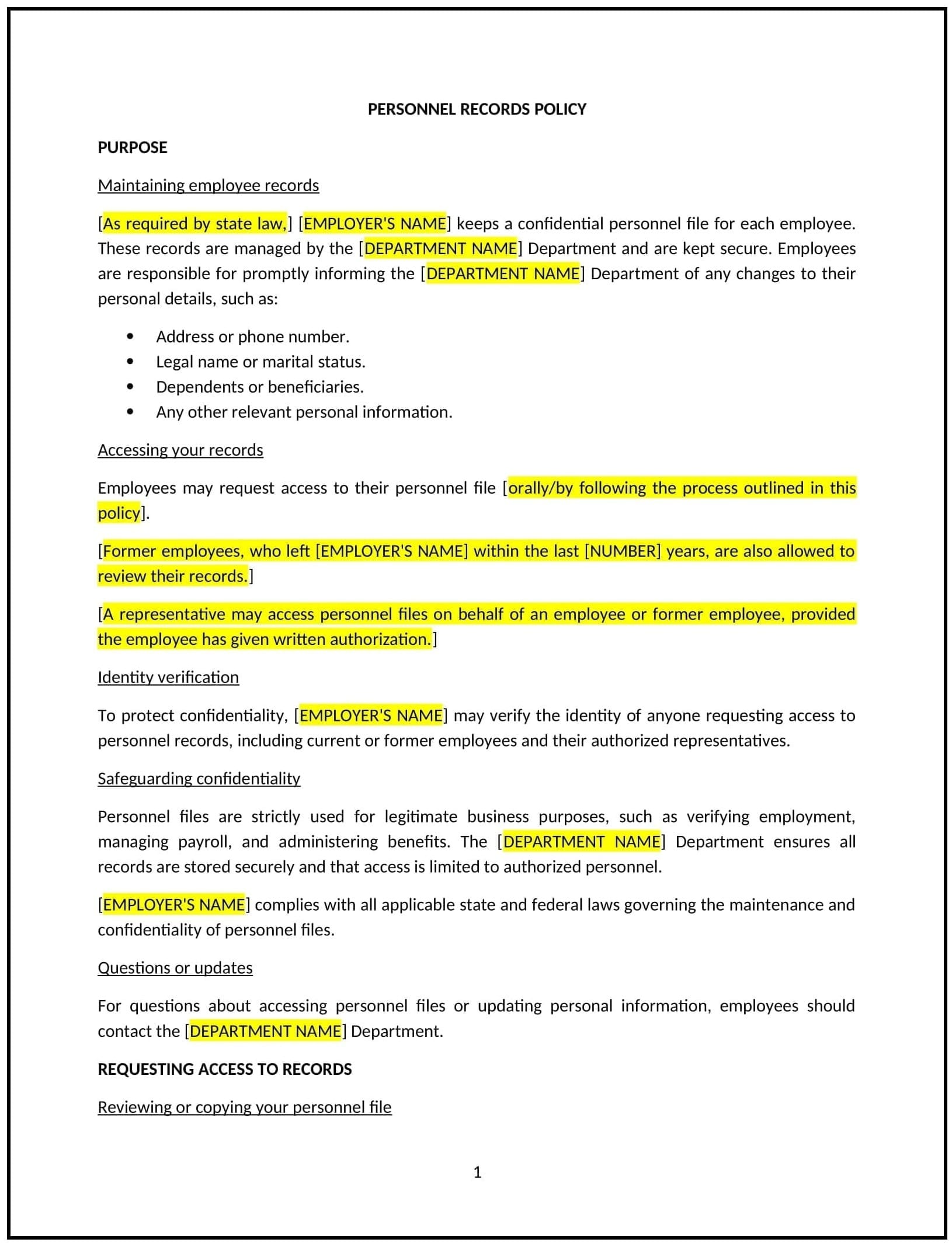
A personnel records policy helps Kansas businesses manage employee records in a secure, organized, and compliant manner. This policy outlines the types of records maintained, how they are stored, who has access, and the retention period for various types of employee information. The goal is to ensure that personal and employment-related data is protected while meeting legal requirements.
By implementing this policy, businesses can maintain accurate employee records, ensure confidentiality, and comply with state and federal laws governing data protection and privacy.
How to use this personnel records policy (Kansas)
- Define record types: Businesses should specify what types of personnel records will be maintained, including personal information, employment history, compensation data, performance evaluations, and any other job-related documents.
- Establish record-keeping procedures: Businesses should outline how records will be created, updated, stored, and disposed of, ensuring that they are accurate and up-to-date.
- Set retention periods: The policy should define how long different types of records will be retained, including the legal requirements for retaining certain documents (e.g., tax records, performance reviews).
- Protect confidentiality: Businesses should establish protocols for protecting employee privacy, ensuring that only authorized personnel have access to sensitive records.
- Implement security measures: The policy should specify how personnel records will be securely stored, whether in physical files or digital systems, and outline the protections in place to prevent unauthorized access.
- Provide access guidelines: Employees should be informed about their right to access certain parts of their personnel records, and the process for requesting access or correcting any inaccuracies.
- Review and update regularly: Businesses should periodically review the policy to ensure it aligns with current data protection laws, company needs, and best practices in personnel record management.
Benefits of using a personnel records policy (Kansas)
- Protects employee privacy: A clear policy helps ensure that personal and sensitive information is handled securely, protecting employees' privacy and preventing unauthorized access.
- Increases organizational efficiency: A well-structured policy makes it easier to manage employee records, ensuring that they are organized, accessible, and compliant with relevant laws.
- Promotes legal compliance: A formal policy helps businesses comply with state and federal regulations regarding the maintenance, retention, and protection of employee records, reducing the risk of legal issues.
- Reduces the risk of data breaches: By outlining clear security and access protocols, businesses can reduce the risk of data breaches and unauthorized access to confidential employee information.
- Enhances transparency: Employees will understand what records are kept, how they are used, and how they can access or amend their information, fostering transparency and trust.
- Supports accurate reporting and decision-making: Properly maintained records ensure that businesses have the data they need to make informed decisions regarding payroll, performance, benefits, and legal compliance.
Tips for using this personnel records policy (Kansas)
- Communicate the policy clearly: Businesses should ensure that all employees are aware of the policy and understand how their personnel records will be managed, who has access to them, and how they can request changes.
- Maintain accuracy: Regularly update personnel records to ensure that the information is accurate and reflects any changes to the employee’s status, position, compensation, or benefits.
- Restrict access: Limit access to personnel records to authorized personnel only, such as HR staff or management, and implement secure systems to protect sensitive data.
- Keep records organized: Use a standardized system for storing and organizing personnel records to ensure that they are easy to retrieve and comply with retention guidelines.
- Implement secure disposal procedures: When it is time to dispose of records, ensure that they are destroyed securely, whether through shredding physical documents or deleting digital files to prevent unauthorized access.
- Review the policy regularly: Businesses should periodically review the policy to ensure it reflects the latest legal requirements, technological advancements, and company needs.