Personnel records policy (Minnesota): Free template
Got contracts to review? While you're here for policies, let Cobrief make contract review effortless—start your free review now.
Customize this template for free
Personnel records policy (Minnesota)
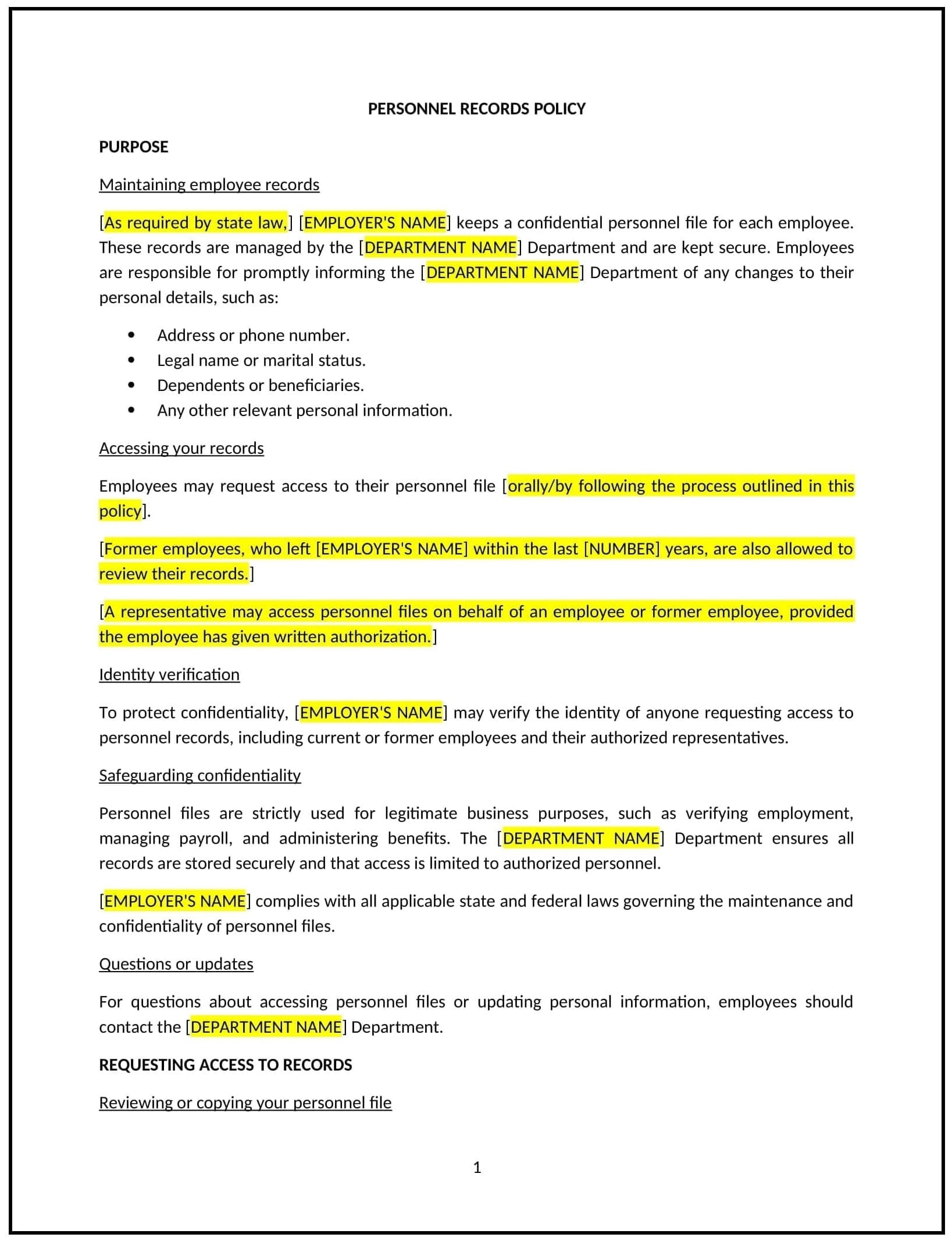
This personnel records policy is designed to help Minnesota businesses manage and protect employee records in a secure and confidential manner. The policy outlines how personnel records should be maintained, the types of information included, and how they should be accessed, updated, and retained. It also addresses the rights of employees to access their records and the company’s responsibility to protect personal and sensitive information.
By implementing this policy, businesses can maintain accurate, organized records while safeguarding employee privacy and supporting compliance with applicable state and federal laws.
How to use this personnel records policy (Minnesota)
- Define personnel records: Clearly specify what constitutes a personnel record, including personal information, employment history, performance evaluations, disciplinary actions, compensation details, and other work-related documents.
- Outline record retention guidelines: Set clear guidelines on how long different types of personnel records should be retained, such as the duration of employment, performance reviews, and any disciplinary records. Specify how long records will be kept after employment ends.
- Address access to records: Define who within the company has access to personnel records and under what circumstances. Access should be limited to authorized personnel, such as HR staff or managers, and employees should be informed of who can view their records.
- Establish confidentiality procedures: Implement procedures to protect the confidentiality of personnel records, ensuring that sensitive personal information is stored securely and only shared with authorized individuals or external parties when necessary.
- Provide employee access rights: Clearly outline employees' rights to review their personnel records, the process for requesting access, and the time frame in which the request will be fulfilled.
- Define the process for record updates: Set guidelines for how employee records will be updated, including when employees must inform the company of changes to their personal details, such as a change of address, legal name, or emergency contact information.
- Discuss record destruction: Establish a clear process for securely disposing of outdated or unnecessary personnel records once the retention period has expired, in compliance with Minnesota laws and industry best practices.
Benefits of using a personnel records policy (Minnesota)
Implementing this policy provides several advantages for Minnesota businesses:
- Promotes data accuracy: By maintaining clear and accurate personnel records, businesses ensure that employee information is up-to-date, which is essential for performance evaluations, payroll, and other administrative processes.
- Protects employee privacy: The policy helps protect sensitive personal information, demonstrating the company’s commitment to safeguarding employee privacy and building trust within the workforce.
- Enhances operational efficiency: A standardized system for managing personnel records improves administrative efficiency by reducing the risk of lost or misplaced records and simplifying employee file management.
- Reduces legal risk: By ensuring that employee records are maintained in accordance with state and federal regulations, businesses can reduce the risk of legal disputes or penalties related to record-keeping practices.
- Reflects Minnesota-specific considerations: The policy is tailored to Minnesota’s specific labor laws and privacy regulations, ensuring the company adheres to state-specific requirements for managing personnel records.
Tips for using this personnel records policy (Minnesota)
- Communicate clearly: Ensure that employees are informed of how their records are managed, who has access to them, and their rights to request copies or updates to their records.
- Implement secure storage: Store personnel records securely, whether in physical filing cabinets or electronically, using encryption and password protection to prevent unauthorized access.
- Regularly audit records: Periodically review personnel records to ensure they are up-to-date and that outdated records are securely destroyed or archived.
- Maintain confidentiality: Only authorized individuals should have access to personnel records, and employees should be informed of the circumstances under which their records may be shared.
- Review the policy regularly: Periodically review and update the policy to ensure it aligns with changes in labor laws, data privacy regulations, and the company’s evolving needs.