Personnel records policy (Mississippi): Free template
Outlines requirements for maintaining, accessing, and updating employee records in a secure manner.
- Policies
- Mississippi
Personnel records policy (Mississippi)
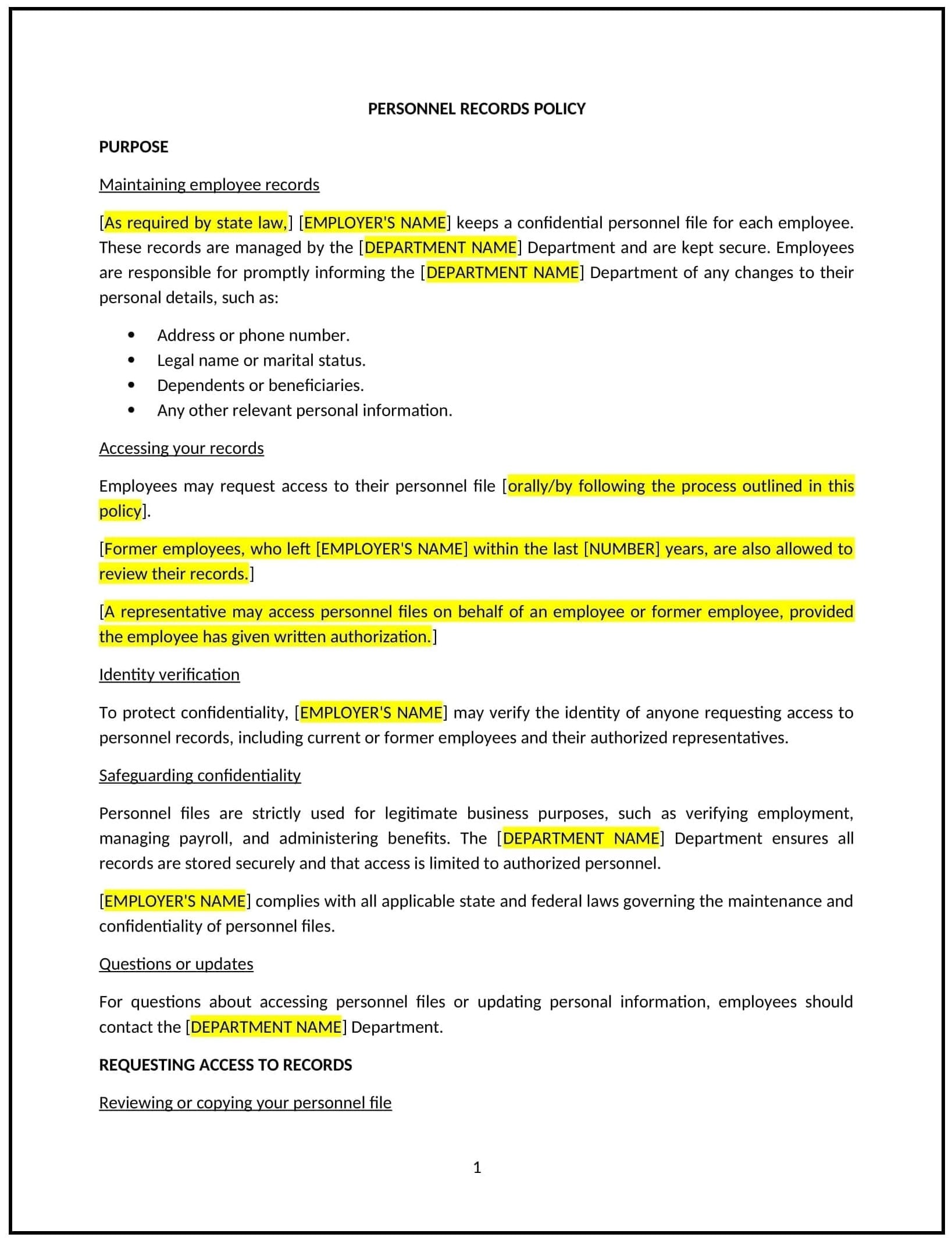
A personnel records policy establishes guidelines for how Mississippi businesses maintain, store, and manage employee records. This policy helps businesses organize personnel files, protect sensitive employee information, and determine who has access to these records. Proper record-keeping supports business operations, legal documentation, and workforce management.
By implementing this policy, businesses can ensure that employee records are securely maintained, accurately updated, and accessible only to authorized personnel.
How to use this personnel records policy (Mississippi)
- Define personnel records: Identify the types of documents included, such as job applications, payroll information, performance evaluations, and disciplinary records.
- Set access controls: Limit who can view, modify, or distribute personnel records, ensuring only authorized HR or management personnel have access.
- Establish record retention periods: Define how long different types of records should be maintained before they are securely disposed of.
- Implement secure storage methods: Store physical records in locked cabinets and digital records in encrypted or password-protected systems.
- Maintain confidentiality: Prohibit unauthorized sharing of employee records and establish confidentiality agreements where necessary.
- Outline employee access rights: Define how employees can request access to review their own personnel files and the process for making updates.
- Specify record update procedures: Establish how changes to personnel records, such as updated addresses or salary adjustments, should be documented.
- Set guidelines for record disposal: Develop secure procedures for shredding or permanently deleting outdated personnel records.
- Review and update the policy regularly: Ensure the policy reflects current business practices and regulatory considerations.
Benefits of using this personnel records policy (Mississippi)
This policy offers several benefits for Mississippi businesses:
- Protects sensitive employee information: Ensures that personal and employment data remain confidential.
- Supports compliance with record-keeping best practices: Helps businesses maintain accurate and legally required records.
- Enhances operational efficiency: Streamlines record management and retrieval processes.
- Reduces risks of data loss: Prevents accidental loss or destruction of important employee documents.
- Promotes transparency: Provides employees with a clear understanding of how their records are maintained and accessed.
Tips for using this personnel records policy (Mississippi)
- Maintain clear record categories: Separate employee records into relevant categories, such as payroll, benefits, and performance reviews.
- Train HR staff on record-keeping best practices: Ensure HR personnel understand how to handle employee records securely and efficiently.
- Regularly audit personnel records: Conduct routine checks to ensure records are accurate, up to date, and securely stored.
- Establish procedures for employee record requests: Provide employees with a structured process to review their own files.
- Securely dispose of outdated records: Use shredding or permanent deletion methods to prevent unauthorized access to disposed records.
Frequently asked questions (FAQs)
Similar templates
Where deals go from offer to paid
