Got contracts to review? While you're here for policies, let Cobrief make contract review effortless—start your free review now.
Customize this template for free
Petty cash policy (Idaho)
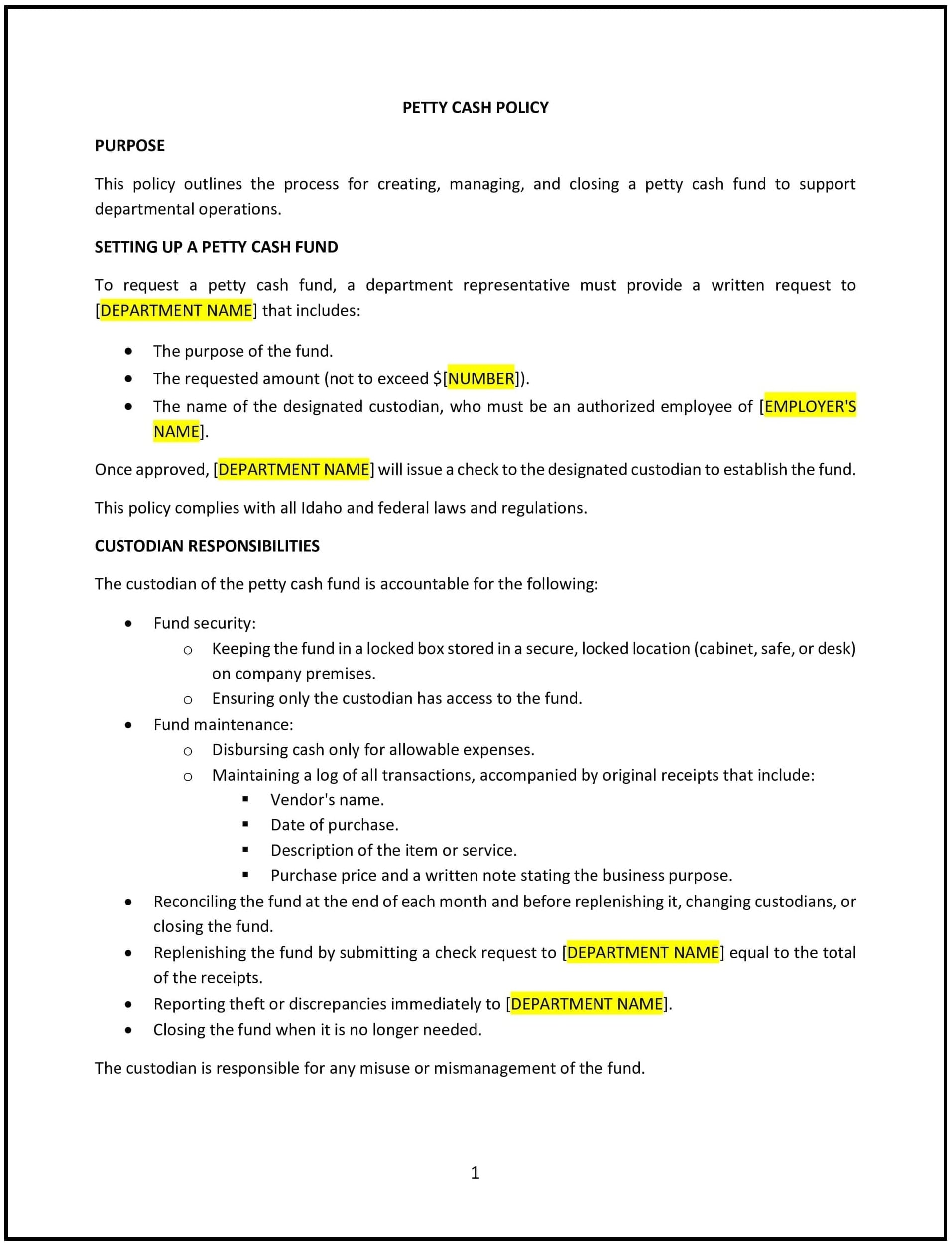
A petty cash policy helps Idaho businesses establish guidelines for managing small, routine expenses that are impractical to pay by check or credit card. This policy outlines procedures for maintaining, disbursing, and reconciling petty cash funds, as well as setting limits and documentation requirements. It also emphasizes the importance of accountability, transparency, and proper financial controls.
By implementing this policy, businesses can streamline small expense management, reduce administrative burdens, and maintain accurate financial records.
How to use this petty cash policy (Idaho)
- Define petty cash purpose: Specify the types of expenses that can be paid from petty cash, such as office supplies, minor repairs, or small reimbursements, to ensure clarity.
- Establish fund limits: Set a maximum amount for the petty cash fund and individual disbursements to control spending and minimize risks.
- Designate custodians: Assign responsibility for managing the petty cash fund to a specific employee or team, including disbursing funds and maintaining records.
- Outline disbursement procedures: Provide clear instructions for requesting and approving petty cash disbursements, including required documentation and approval processes.
- Set documentation requirements: Require receipts or vouchers for all petty cash transactions to ensure accountability and accurate record-keeping.
- Develop reconciliation processes: Establish procedures for regularly reconciling the petty cash fund, including verifying balances, replenishing funds, and addressing discrepancies.
- Train employees: Provide training for employees on how to handle petty cash, follow the policy’s procedures, and maintain proper documentation.
- Review and update the policy: Periodically assess the policy’s effectiveness and make adjustments based on changes in business needs, financial practices, or Idaho laws.
Benefits of using this petty cash policy (Idaho)
This policy offers several advantages for Idaho businesses:
- Streamlines expense management: Petty cash provides a convenient way to handle small, routine expenses without the need for checks or credit cards.
- Enhances accountability: Clear guidelines and documentation requirements help ensure petty cash is used appropriately and accounted for accurately.
- Reduces administrative burdens: A structured petty cash process minimizes the time and effort required to manage small expenses.
- Improves financial controls: The policy helps businesses maintain proper financial controls and reduce the risk of misuse or errors.
- Supports transparency: Regular reconciliation and documentation foster trust and transparency in financial practices.
- Encourages responsible spending: Setting limits and requiring approvals helps control petty cash expenditures and prevent overspending.
Tips for using this petty cash policy (Idaho)
- Communicate the policy clearly: Share the policy with employees through onboarding materials, training sessions, or internal communication platforms to ensure awareness and understanding.
- Train custodians: Provide training for petty cash custodians on how to disburse funds, maintain records, and reconcile the petty cash fund.
- Monitor usage: Regularly review petty cash transactions to ensure adherence to the policy and identify any potential issues.
- Stay informed about legal updates: Keep up-to-date with changes to Idaho laws or financial regulations that may impact petty cash management.
- Encourage transparency: Foster a culture where employees feel comfortable reporting discrepancies or concerns related to petty cash.
- Document everything: Maintain detailed records of petty cash transactions, including receipts, vouchers, and reconciliation reports, to ensure accountability and transparency.