Got contracts to review? While you're here for policies, let Cobrief make contract review effortless—start your free review now.
Customize this template for free
Petty cash policy (Kansas)
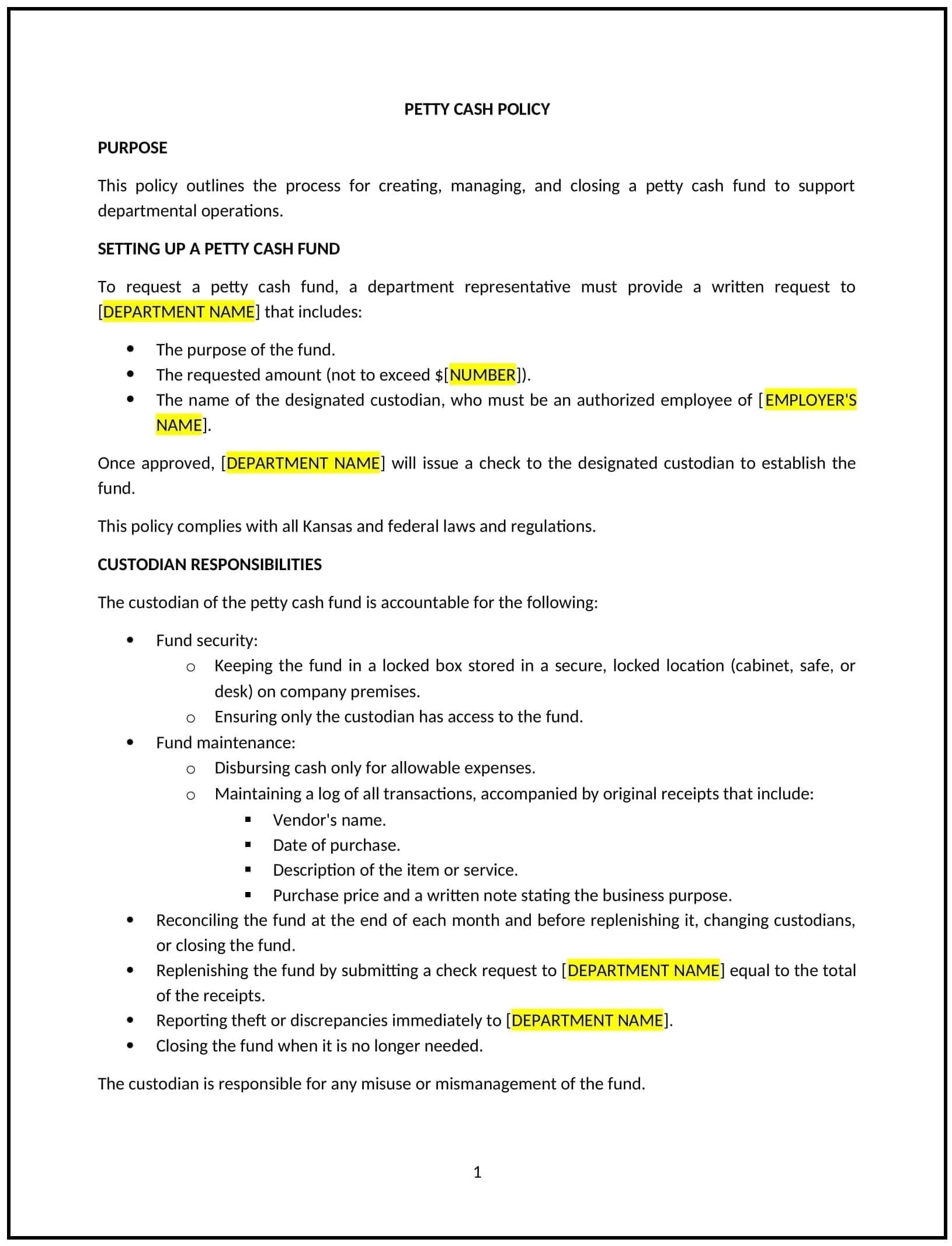
A petty cash policy helps Kansas businesses manage small, incidental expenses that cannot be paid through regular accounts payable channels. This policy outlines how petty cash is allocated, who is responsible for managing it, and the procedures for handling reimbursements, ensuring that all petty cash transactions are documented and transparent.
By implementing this policy, businesses can manage minor expenses efficiently while maintaining proper controls to prevent misuse of company funds.
How to use this petty cash policy (Kansas)
- Define petty cash usage: Businesses should specify what types of expenses are acceptable for petty cash use, such as office supplies, small equipment repairs, or employee reimbursements for minor purchases related to work.
- Set funding limits: The policy should outline the maximum amount of petty cash that can be kept on hand and the process for replenishing the fund when it reaches a certain threshold.
- Assign responsibility: A designated employee should be responsible for managing the petty cash fund, including handling disbursements, tracking expenses, and ensuring that the fund is properly accounted for.
- Implement record-keeping procedures: Businesses should require that all petty cash transactions be documented, including receipts, purpose of the expenditure, and approval from a manager. A petty cash log should be maintained for tracking purposes.
- Set approval guidelines: Petty cash disbursements should require approval from a designated manager or supervisor to ensure that funds are used appropriately.
- Monitor and audit: Businesses should periodically audit petty cash records to ensure that funds are being used appropriately and that all disbursements are properly documented.
- Review and update regularly: Businesses should periodically review the petty cash policy to ensure it aligns with company needs, legal requirements, and industry best practices.
Benefits of using a petty cash policy (Kansas)
- Promotes financial control: A petty cash policy provides clear guidelines for handling small transactions, ensuring that funds are used responsibly and within approved limits.
- Reduces the risk of fraud or misuse: By tracking expenses and requiring documentation for each disbursement, businesses can minimize the potential for unauthorized or improper use of petty cash.
- Increases transparency: Clear record-keeping and approval procedures help ensure that all petty cash transactions are transparent and can be reviewed if necessary.
- Improves budgeting: A defined petty cash policy allows businesses to better track small expenses and maintain accurate financial records, making it easier to stay within budget.
- Enhances employee accountability: By assigning responsibility for the petty cash fund to a designated employee, businesses encourage accountability and ensure proper management of company resources.
- Streamlines small purchases: The petty cash system allows businesses to handle small, routine expenses quickly and without the need for formal purchase orders or invoicing processes.
Tips for using this petty cash policy (Kansas)
- Communicate the policy clearly: Businesses should ensure that all employees understand the purpose of petty cash, the types of expenses allowed, and the approval process for accessing the fund.
- Keep accurate records: Businesses should maintain a detailed log of all petty cash transactions, including receipts, dates, amounts, and the purpose of each expenditure.
- Regularly audit the petty cash fund: Businesses should conduct periodic audits of the petty cash fund to ensure that the money is being used appropriately and that all records are up to date.
- Implement a maximum withdrawal limit: To prevent misuse, businesses should establish a maximum amount that can be withdrawn from petty cash for individual transactions.
- Require approval for all disbursements: Businesses should require that all petty cash disbursements be approved by a supervisor or manager to ensure funds are used for legitimate business purposes.
- Review and replenish the petty cash fund: Businesses should have a process in place to review the petty cash fund regularly and replenish it as necessary to maintain the designated amount.