Religious accommodations policy (Alabama): Free template
Got contracts to review? While you're here for policies, let Cobrief make contract review effortless—start your free review now.
Customize this template for free
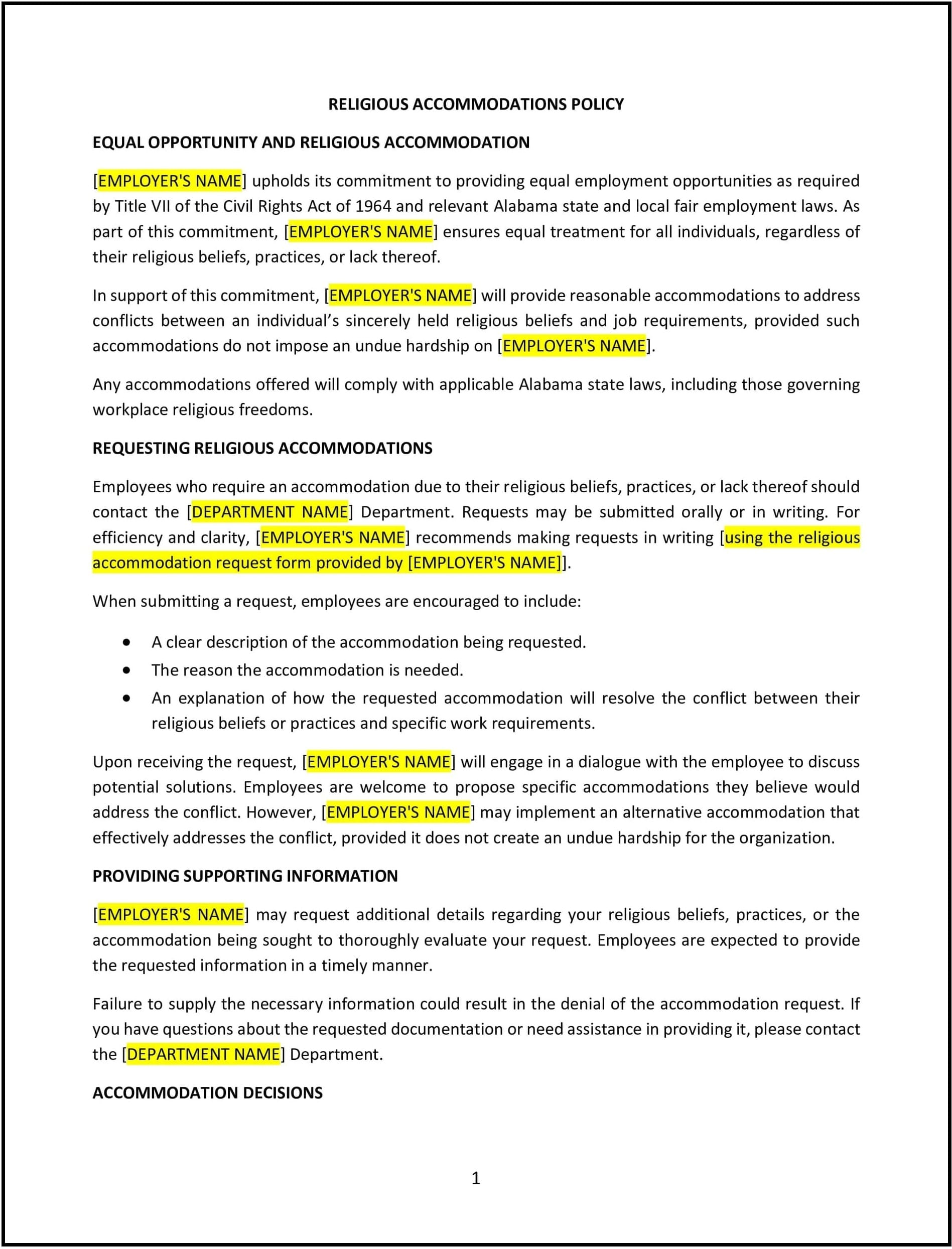
Religious accommodations policy (Alabama)
A religious accommodations policy outlines how a company supports employees in practicing their religious beliefs while ensuring a respectful and inclusive workplace. For SMBs in Alabama, this policy supports compliance with federal and state laws, such as Title VII of the Civil Rights Act, which requires reasonable accommodations for religious practices unless they pose an undue hardship on the business.
This policy provides a framework for requesting and granting accommodations, fostering inclusivity and respect for diverse religious practices.
How to use this religious accommodations policy (Alabama)
- Define religious accommodations: Clarify the types of accommodations that may be requested, such as schedule adjustments, dress code modifications, or prayer space provisions.
- Explain the request process: Outline how employees can formally request accommodations, including submitting written requests to HR or their supervisor.
- Include evaluation procedures: Detail how the company evaluates requests, considering factors like feasibility and potential business impact.
- Emphasize collaboration: Encourage open communication between employees and management to find mutually acceptable solutions.
- Address undue hardship: Specify that accommodations will be granted unless they create significant operational or financial challenges for the company.
Benefits of using a religious accommodations policy (Alabama)
A religious accommodations policy helps promote inclusivity and compliance while supporting employees’ rights. Here’s how it helps:
- Encourages inclusivity: Demonstrates respect for employees’ diverse religious beliefs and practices.
- Ensures compliance: Aligns with Alabama and federal anti-discrimination laws, minimizing legal risks.
- Reduces conflicts: Provides a clear process for addressing accommodation requests, fostering understanding and cooperation.
- Enhances employee morale: Shows commitment to supporting employees’ personal and cultural needs, improving workplace satisfaction.
- Protects the business: Establishes guidelines for handling requests consistently, reducing potential misunderstandings or disputes.
Tips for implementing a religious accommodations policy (Alabama)
- Train managers: Provide training on recognizing and handling accommodation requests with empathy and professionalism.
- Maintain confidentiality: Handle all requests discreetly to protect employees’ privacy and respect their beliefs.
- Document requests and decisions: Keep detailed records of all requests and the rationale behind granting or denying accommodations.
- Promote awareness: Include information about the policy in employee handbooks and onboarding materials to encourage understanding.
- Monitor effectiveness: Regularly assess accommodations to ensure they meet employees’ needs without causing undue hardship.