Religious accommodations policy (Iowa): Free template
Got contracts to review? While you're here for policies, let Cobrief make contract review effortless—start your free review now.
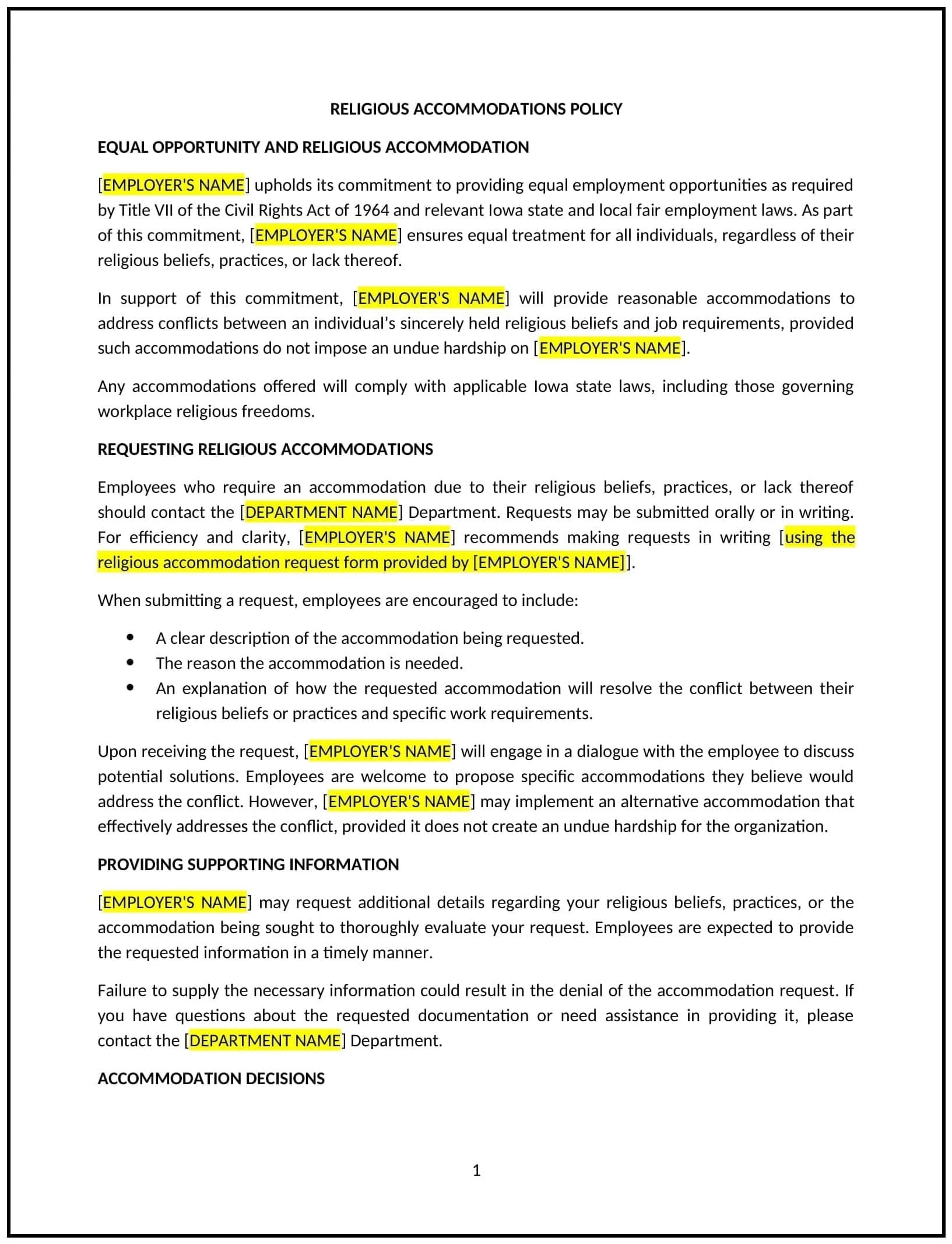
Customize this template for free
Religious accommodations policy (Iowa)
A religious accommodations policy helps Iowa businesses ensure that employees' religious beliefs and practices are respected in the workplace while maintaining business operations. This policy outlines the process for requesting religious accommodations, including flexible schedules, dress code modifications, and time off for religious observances. It also provides guidance on how to evaluate and implement accommodations while balancing the needs of the business.
By adopting this policy, businesses can foster an inclusive and respectful workplace, support employee well-being, and mitigate the risk of discrimination or religious bias claims.
How to use this religious accommodations policy (Iowa)
- Define religious accommodations: Clearly outline what constitutes a religious accommodation, such as adjustments to work schedules, dress codes, or time off for religious holidays and observances.
- Set the request process: Establish a formal process for employees to request religious accommodations, including how far in advance they should submit requests and the type of documentation, if any, that may be required.
- Evaluate accommodation requests: Develop criteria for evaluating accommodation requests, considering the nature of the employee's religious practices, the feasibility of the request, and any potential impact on business operations.
- Ensure a non-discriminatory approach: Make it clear that requests for religious accommodations will be evaluated in a fair and respectful manner, and that employees will not face retaliation or discrimination for requesting accommodations.
- Offer reasonable accommodations: Provide accommodations that are feasible and reasonable, without causing undue hardship to the business. This could include schedule flexibility, providing prayer breaks, or modifying workplace policies.
- Address undue hardship: Specify that businesses are not required to provide accommodations that would result in significant difficulty or expense, or that would interfere with business operations or safety standards.
- Review and update regularly: Periodically review and update the policy to ensure it reflects changes in religious practices, business needs, and relevant legal requirements.
Benefits of using this religious accommodations policy (Iowa)
This policy offers several key benefits for Iowa businesses:
- Promotes inclusivity: By accommodating employees' religious practices, businesses create a more inclusive and respectful work environment that values diversity and fosters employee satisfaction.
- Reduces discrimination risk: A clear religious accommodations policy helps businesses avoid religious discrimination claims by ensuring that employees are treated fairly and that their religious needs are taken into account.
- Enhances employee retention: Offering reasonable accommodations shows employees that their religious beliefs are respected, which can increase job satisfaction and loyalty, reducing turnover.
- Builds trust and morale: When employees know that their religious practices are recognized and respected, it builds trust and boosts morale, leading to improved productivity and employee engagement.
- Mitigates legal risks: Having a well-defined policy helps businesses reduce the risk of legal challenges related to religious discrimination or failure to accommodate religious practices.
- Supports business operations: By providing reasonable accommodations that do not unduly disrupt business operations, businesses can balance employee needs with operational efficiency.
Tips for using this religious accommodations policy (Iowa)
- Communicate the policy clearly: Ensure that all employees are aware of the religious accommodations policy and understand the process for requesting accommodations.
- Keep requests confidential: Treat all religious accommodation requests with the utmost confidentiality and respect. Only share details with individuals who need to know to evaluate or implement the accommodation.
- Be flexible and open to dialogue: While businesses are not required to provide every requested accommodation, they should approach each request with an open mind and engage in a dialogue with the employee to explore feasible solutions.
- Consider the impact on the business: When evaluating accommodation requests, consider how the accommodation will affect business operations, including scheduling, staffing, safety, and productivity.
- Implement a fair and consistent process: Ensure that all requests for religious accommodations are handled fairly and consistently across the organization, and that no employee is discriminated against based on their religion.
- Provide training for managers: Train managers and HR personnel to handle religious accommodation requests appropriately, ensuring they understand the policy and are equipped to respond to requests in a respectful and legally compliant manner.
- Monitor and adjust as needed: Regularly assess the effectiveness of the policy and make adjustments as needed based on employee feedback, changes in business needs, or legal developments.