Religious accommodations policy (Minnesota): Free template
Got contracts to review? While you're here for policies, let Cobrief make contract review effortless—start your free review now.
Customize this template for free
Religious accommodations policy (Minnesota)
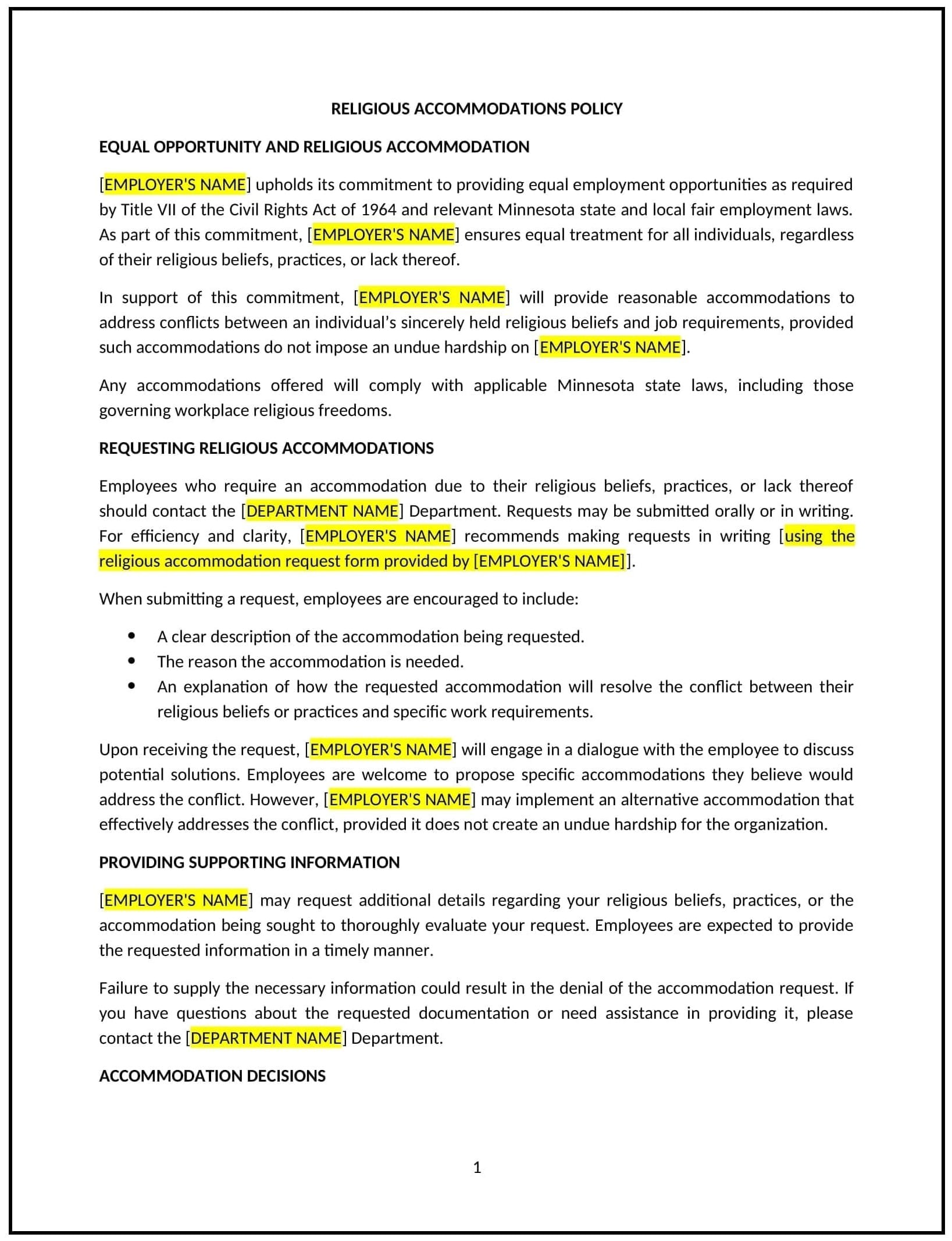
This religious accommodations policy is designed to help Minnesota businesses provide reasonable accommodations for employees’ religious practices and beliefs, as required by state and federal law. The policy outlines the company’s approach to accommodating religious observances, such as prayer, holidays, or dress codes, while balancing operational needs and promoting an inclusive work environment.
By implementing this policy, businesses can create a supportive workplace for employees of all faiths, ensure that religious practices are respected, and minimize the risk of discrimination claims.
How to use this religious accommodations policy (Minnesota)
- Define religious accommodations: Clearly specify what constitutes a religious accommodation, such as time off for religious holidays, prayer breaks, religious dress codes, or flexibility in work schedules.
- Address reasonable accommodation requests: Outline the process for employees to request religious accommodations, including how to submit requests, the timeline for approval, and any required documentation, such as religious observance dates.
- Evaluate each request individually: Each accommodation request should be evaluated on a case-by-case basis, considering the nature of the religious practice and how it might impact the workplace, as well as the employee’s specific needs.
- Balance business operations: While accommodating religious practices, ensure that accommodations do not unduly disrupt business operations or create an undue hardship for the company. Clearly define what constitutes “undue hardship” under Minnesota law.
- Respect privacy: Maintain confidentiality about religious beliefs and practices. Employees should feel comfortable discussing their religious accommodation needs without fear of discrimination or retaliation.
- Set expectations for communication: Establish a clear process for ongoing communication between employees and management regarding religious accommodations, ensuring that both parties are aware of any changes to work schedules or expectations.
- Address conflicts: If a requested accommodation conflicts with business operations or other employees' rights, address the situation in a respectful and constructive manner, seeking to find a mutually beneficial solution.
Benefits of using a religious accommodations policy (Minnesota)
Implementing this policy provides several advantages for Minnesota businesses:
- Fosters inclusivity: A clear policy ensures that all employees feel respected and supported, regardless of their religious background, promoting an inclusive and diverse work environment.
- Reduces legal risk: By proactively addressing religious accommodations, businesses can reduce the risk of legal claims related to religious discrimination under Minnesota state laws and federal regulations.
- Enhances employee satisfaction: Employees who feel their religious beliefs are respected are more likely to be satisfied with their job, leading to higher engagement, morale, and retention.
- Promotes workplace harmony: By accommodating religious practices, businesses help to create a harmonious work environment where all employees are valued and treated fairly.
- Reflects Minnesota-specific considerations: The policy can be tailored to Minnesota’s labor laws and the state’s diverse workforce, ensuring that it aligns with local expectations and best practices.
Tips for using this religious accommodations policy (Minnesota)
- Communicate clearly: Ensure that all employees are informed about the policy and understand how to request accommodations for religious practices, including the process and any necessary documentation.
- Encourage open dialogue: Foster an open, non-judgmental dialogue between employees and managers regarding religious needs, ensuring that both parties can address concerns and find reasonable solutions.
- Be flexible: While maintaining operational requirements, be flexible in accommodating religious practices, especially for requests related to religious observances, prayer times, or dress codes.
- Review regularly: Periodically review the policy to ensure it remains aligned with Minnesota’s evolving labor laws and the changing needs of the workforce.