Religious accommodations policy (Montana): Free template
Provides guidance on accommodating employees’ religious practices and beliefs in line with anti-discrimination laws.
- Policies
- Montana
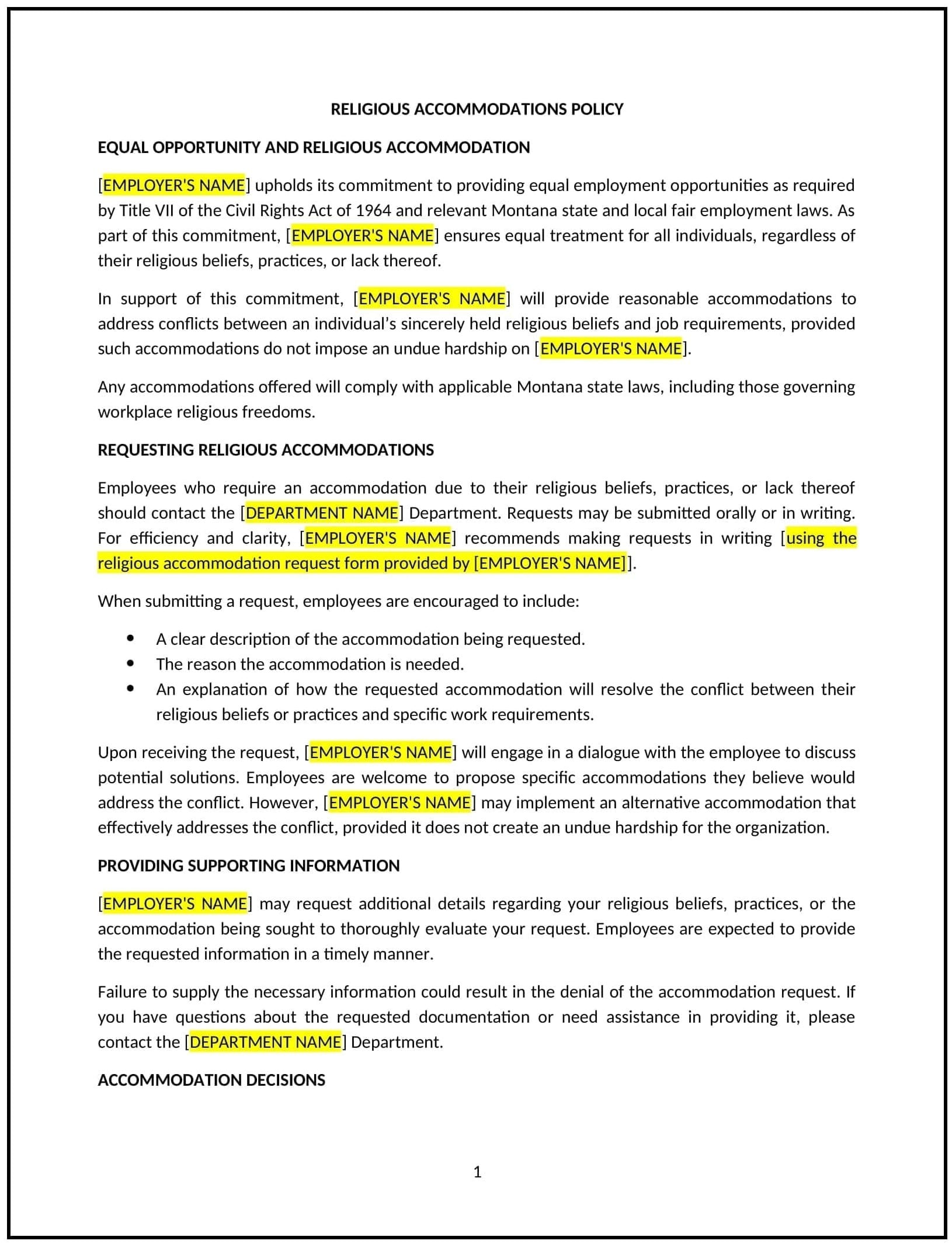
Religious accommodations policy (Montana)
A religious accommodations policy helps Montana businesses address employee requests for adjustments to their work schedules or duties based on religious beliefs and practices. This policy outlines the company's approach to evaluating and granting accommodations, ensuring that employees can observe their religious practices while maintaining workplace fairness and operational efficiency.
By implementing this policy, businesses can foster an inclusive and respectful work environment, enhance employee satisfaction, and reduce the risk of legal challenges related to religious discrimination.
How to use this religious accommodations policy (Montana)
- Define religious accommodations: The policy should clearly define what constitutes a religious accommodation, including adjustments to work schedules, dress codes, or other practices that allow employees to observe religious holidays, rituals, or attire.
- Establish the process for requesting accommodations: The policy should outline the steps employees must follow to request a religious accommodation, including who to contact, what information is required, and the time frame for submitting requests.
- Assess accommodation requests on a case-by-case basis: The policy should specify that accommodation requests will be evaluated individually, considering the employee's religious needs, the impact on the business, and the feasibility of the accommodation.
- Determine reasonable accommodations: The policy should explain that the company will provide reasonable accommodations, as long as they do not create an undue hardship on the business. This may include adjusting schedules, allowing time off for religious holidays, or making exceptions to dress code policies.
- Address potential conflicts: The policy should address how the company will handle situations where providing an accommodation would result in a conflict with business operations or other employees, including exploring alternative solutions or adjustments.
- Provide guidelines for addressing refusal or denial: The policy should explain how the company will address instances where religious accommodations are not granted, ensuring that employees understand the reasons for denial and any available options for appeal.
- Review and update regularly: The policy should be reviewed periodically to ensure that it reflects changes in laws, business needs, and employee feedback, and to ensure it remains relevant and effective.
Benefits of using this religious accommodations policy (Montana)
This policy provides several key benefits for Montana businesses:
- Promotes inclusivity: By accommodating employees' religious beliefs and practices, businesses create a more inclusive work environment that respects the diversity of their workforce.
- Enhances employee satisfaction: Providing religious accommodations demonstrates a commitment to employee well-being and respect for personal beliefs, improving job satisfaction and retention.
- Reduces legal risk: A clear religious accommodations policy helps businesses minimize the risk of legal claims related to religious discrimination by ensuring that requests are handled consistently and fairly.
- Supports workplace harmony: Addressing religious accommodations proactively helps prevent conflicts between employees or between employees and management, fostering a more cooperative and respectful work environment.
- Increases diversity and talent retention: By accommodating religious practices, businesses can attract and retain diverse talent, especially those from minority religious groups, which can enrich the company culture and promote innovation.
- Protects business reputation: A business that upholds religious freedom and promotes equal treatment is likely to have a positive reputation within the community, contributing to better relationships with customers and employees.
Tips for using this religious accommodations policy (Montana)
- Communicate the policy clearly: Ensure that all employees are aware of the religious accommodations policy and understand the process for requesting accommodations and how these requests will be evaluated.
- Encourage open communication: Create a culture where employees feel comfortable discussing their religious needs and requesting accommodations without fear of discrimination or retaliation.
- Be flexible: While maintaining business operations, try to offer flexible solutions to accommodate religious requests, such as adjusting work schedules or duties where feasible.
- Document accommodation requests: Keep accurate records of all accommodation requests and the company’s responses to ensure consistency and transparency in the process.
- Provide training for managers: Train managers and HR personnel on how to handle religious accommodation requests, ensuring that they understand the policy and know how to handle requests respectfully and effectively.
- Monitor the policy's effectiveness: Periodically assess whether the policy is meeting the needs of employees and the business, and make adjustments as needed to improve the accommodation process.
Frequently asked questions (FAQs)
Similar templates
Where deals go from offer to paid
