Got contracts to review? While you're here for policies, let Cobrief make contract review effortless—start your free review now.
Customize this template for free
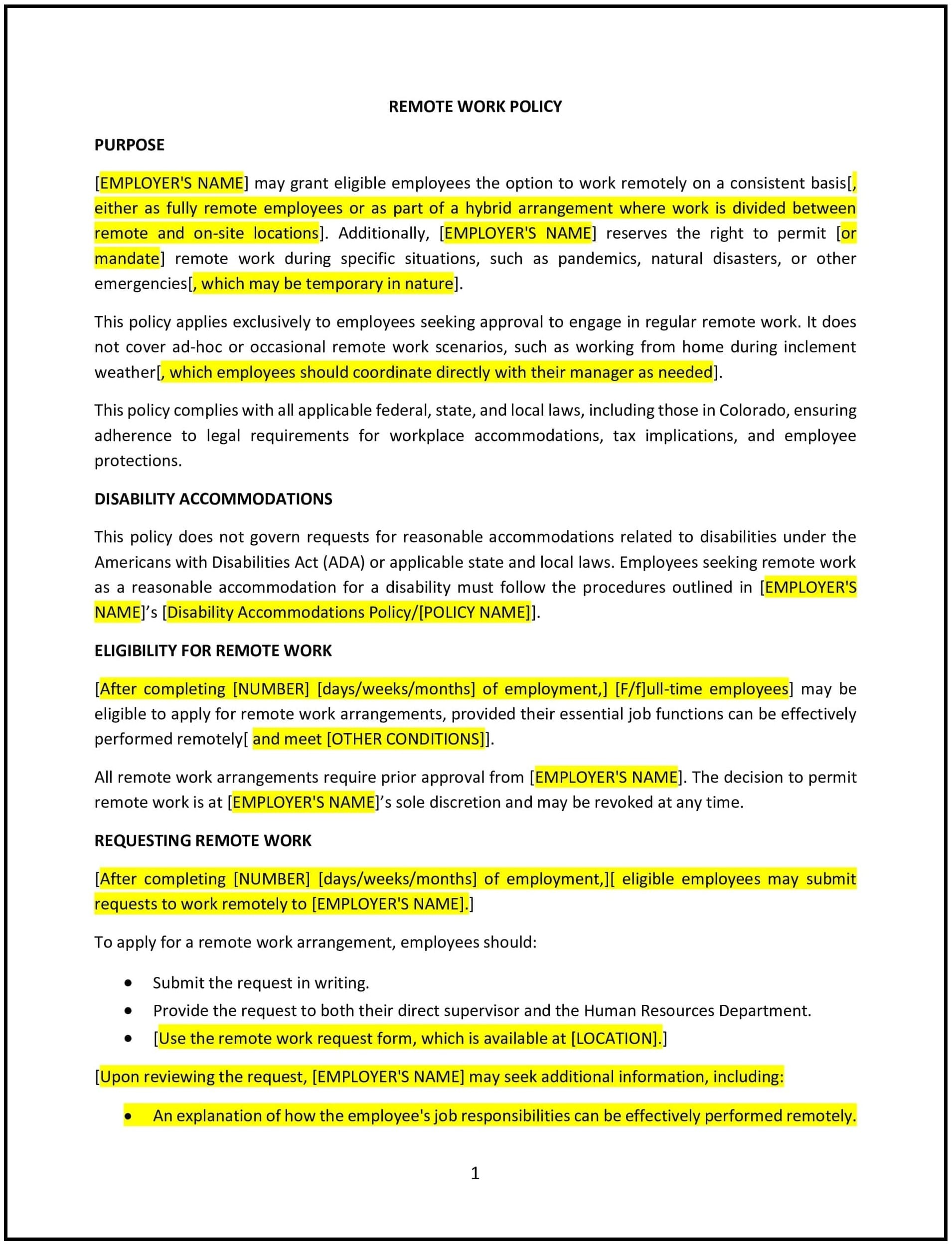
Remote work policy (Colorado)
A remote work policy helps Colorado businesses establish clear guidelines for employees working outside of traditional office settings. This policy outlines expectations for remote work arrangements, including eligibility, communication, equipment usage, and performance standards, to ensure productivity and alignment with business goals.
By implementing this policy, businesses can support flexibility, enhance employee satisfaction, and maintain compliance with Colorado employment laws.
How to use this remote work policy (Colorado)
- Define eligibility: Clearly specify which roles or employees qualify for remote work arrangements based on business needs and job responsibilities.
- Set expectations: Outline performance standards, work hours, and availability requirements for remote employees.
- Address equipment and expenses: Specify the business’s responsibilities for providing equipment and reimbursing necessary expenses, as required by Colorado law.
- Ensure data security: Include guidelines for maintaining data privacy and security while working remotely.
- Monitor and evaluate: Establish processes for regular check-ins, performance reviews, and evaluating the success of remote work arrangements.
Benefits of using this remote work policy (Colorado)
This policy offers several benefits for Colorado businesses:
- Supports compliance: Aligns with Colorado employment laws, including reimbursement requirements for remote work expenses.
- Enhances productivity: Provides a structured framework to ensure remote work aligns with organizational goals.
- Increases employee satisfaction: Supports flexibility, contributing to improved morale and retention.
- Promotes accountability: Sets clear expectations for performance, communication, and responsibilities.
- Simplifies management: Streamlines the process of implementing and monitoring remote work arrangements.
Tips for using this remote work policy (Colorado)
- Communicate clearly: Ensure all employees understand the policy, including expectations and eligibility criteria.
- Train managers: Provide leadership with tools to effectively oversee remote teams and address challenges.
- Emphasize security: Implement robust data security measures to protect sensitive business and employee information.
- Encourage collaboration: Use technology to facilitate communication and teamwork among remote employees.
- Review periodically: Update the policy as needed to reflect changes in Colorado laws, technology, or business practices.