Got contracts to review? While you're here for policies, let Cobrief make contract review effortless—start your free review now.
Customize this template for free
Remote work policy (Georgia)
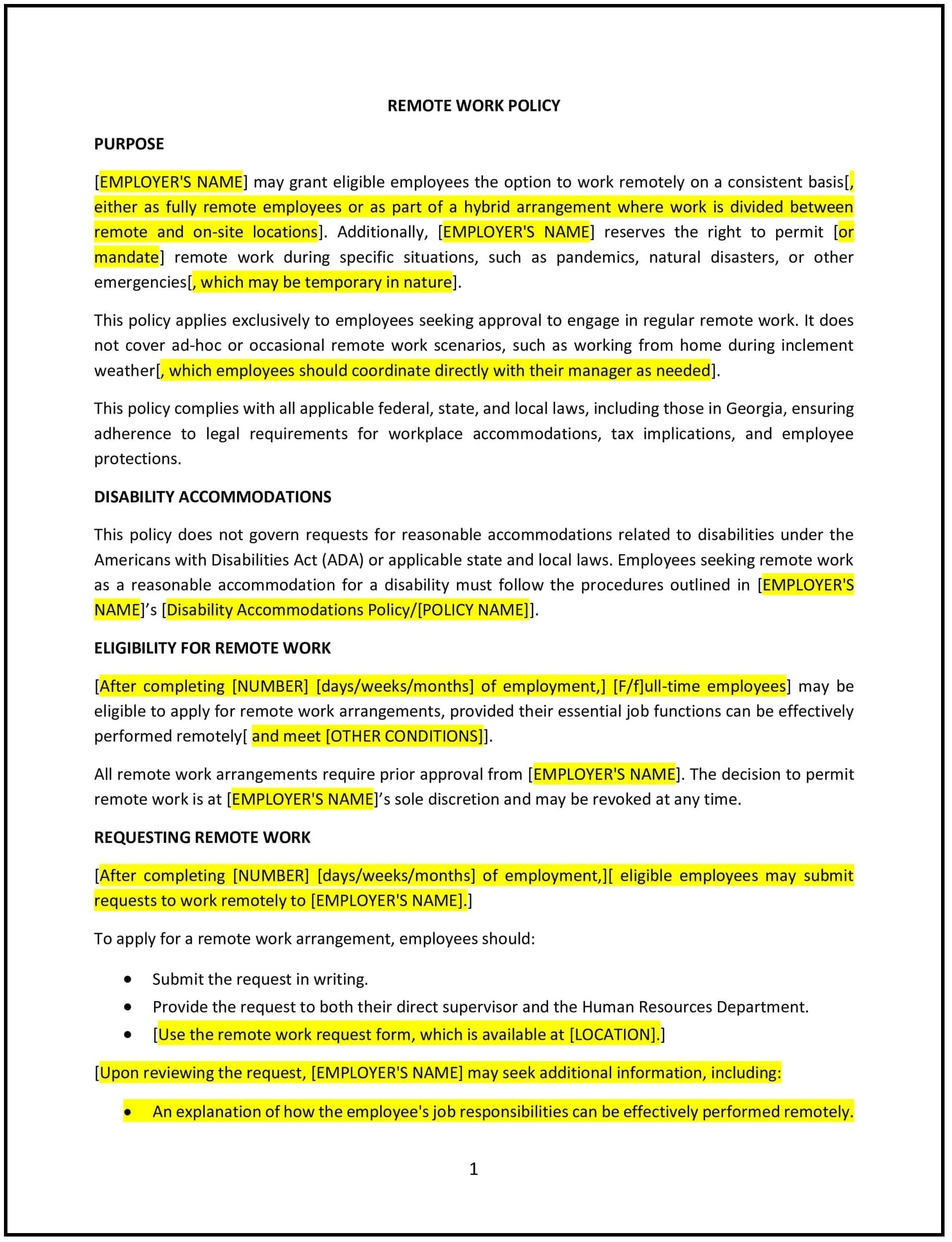
This remote work policy is designed to help Georgia businesses manage remote work arrangements effectively. The policy outlines expectations, eligibility criteria, and procedures to support productivity, communication, and work-life balance for remote employees.
By implementing this policy, businesses can foster flexibility, maintain operational efficiency, and meet the needs of a modern workforce.
How to use this remote work policy (Georgia)
- Define eligibility: Specify which roles or employees are eligible for remote work, considering job responsibilities and performance history.
- Set expectations: Clearly outline performance standards, communication requirements, and work hours for remote employees.
- Provide necessary tools: Ensure employees have access to the technology, equipment, and support needed to perform their duties remotely.
- Establish a communication plan: Specify how remote employees should stay in touch with their teams, such as through regular check-ins, emails, or video meetings.
- Address data security: Include guidelines for protecting company information, such as using secure networks and adhering to confidentiality policies.
- Monitor productivity: Require periodic performance reviews or progress updates to ensure remote employees meet expectations.
- Review regularly: Periodically assess the remote work arrangement to ensure it continues to meet business and employee needs.
Benefits of using this remote work policy (Georgia)
Implementing this policy provides several advantages for Georgia businesses:
- Increases flexibility: Remote work options accommodate employee needs and support work-life balance.
- Enhances productivity: Employees often perform better in environments that suit their preferences and schedules.
- Expands talent pools: Offering remote work allows businesses to hire from a wider geographic area.
- Reduces costs: Remote arrangements can lower expenses for office space, utilities, and supplies.
- Reflects Georgia-specific practices: Tailoring the policy to local workplace trends ensures relevance and practicality.
Tips for using this remote work policy (Georgia)
- Communicate clearly: Ensure employees understand their responsibilities and expectations when working remotely.
- Provide training: Offer guidance on remote work tools, communication platforms, and data security practices.
- Encourage accountability: Require remote employees to track their hours and provide regular updates on progress.
- Foster connection: Create opportunities for team bonding and collaboration through virtual or in-person events.
- Adjust as needed: Use feedback from employees and managers to refine the policy over time.