Got contracts to review? While you're here for policies, let Cobrief make contract review effortless—start your free review now.
Customize this template for free
Remote work policy (Hawaiʻi)
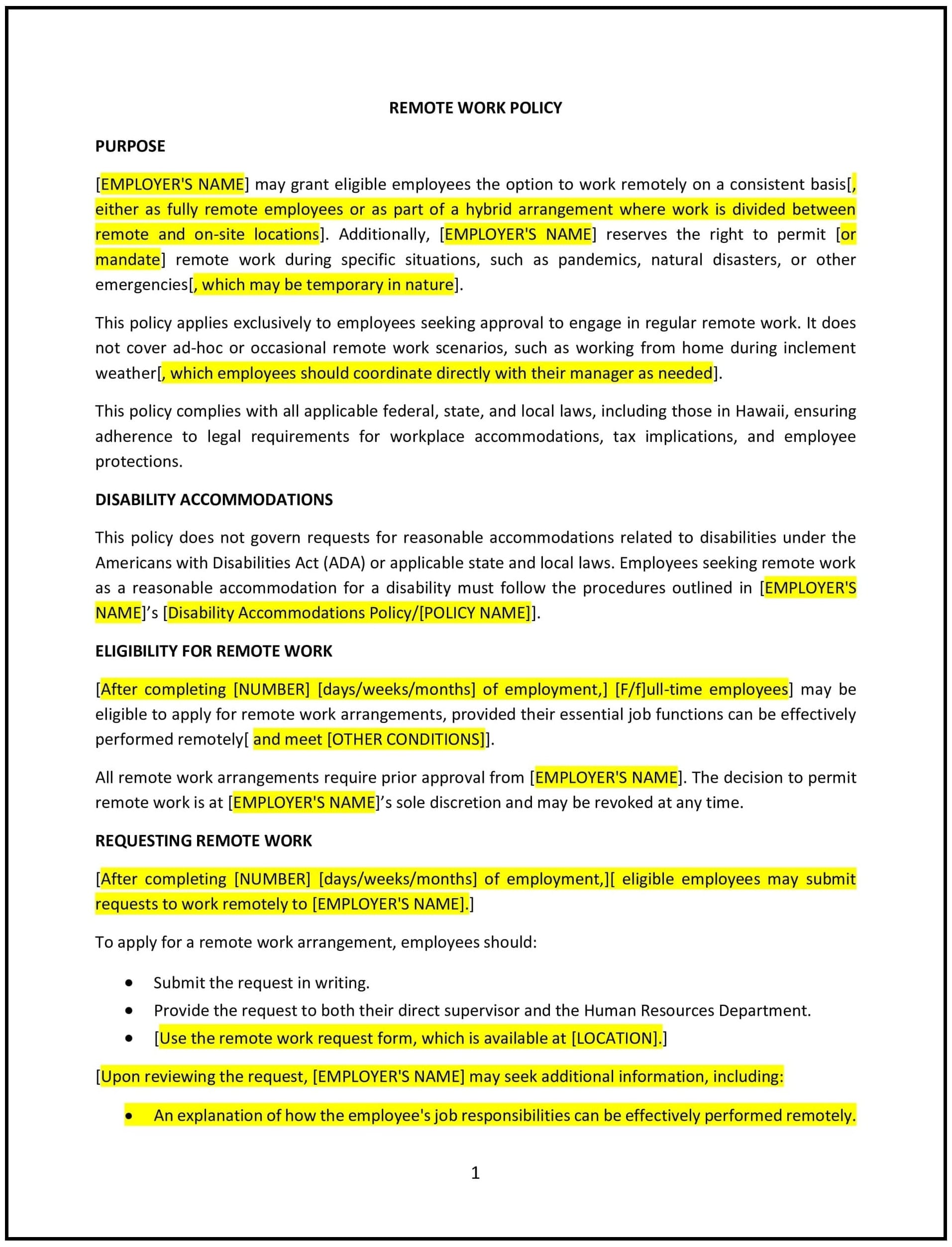
A remote work policy helps Hawaiʻi businesses establish clear guidelines for employees who work outside the traditional office environment. This policy outlines expectations, procedures, and best practices for remote work, while considering Hawaiʻi’s unique geographic and cultural context. It is designed to support productivity, work-life balance, and effective communication in a remote work setting.
By implementing this policy, businesses in Hawaiʻi can attract and retain talent, reduce overhead costs, and adapt to the evolving needs of the modern workforce.
How to use this remote work policy (Hawaiʻi)
- Define remote work: Clearly explain what remote work entails, such as working from home, a co-working space, or another location outside the office.
- Establish eligibility criteria: Specify which roles or employees are eligible for remote work based on job responsibilities, performance, and business needs.
- Set expectations: Outline expectations for work hours, availability, communication, and productivity to ensure alignment with business goals.
- Provide tools and resources: Identify the technology, equipment, and support remote workers will need to perform their duties effectively.
- Address data security: Provide guidelines for protecting sensitive information and maintaining cybersecurity while working remotely.
- Establish communication protocols: Define how remote workers should stay connected with their teams, such as through email, video calls, or collaboration tools.
- Monitor performance: Describe how performance will be evaluated for remote workers, including key metrics and feedback processes.
- Review and update the policy: Regularly assess the policy’s effectiveness and make adjustments as needed to reflect changes in business needs or workforce trends.
Benefits of using this remote work policy (Hawaiʻi)
This policy offers several advantages for Hawaiʻi businesses:
- Supports work-life balance: Remote work allows employees to better manage personal and professional responsibilities, which can improve morale and retention.
- Expands talent pool: Businesses can recruit talent from across Hawaiʻi or beyond, without being limited by geographic location.
- Reduces overhead costs: Remote work can lower expenses related to office space, utilities, and other operational costs.
- Increases productivity: Many employees find they are more productive when working remotely, free from office distractions.
- Enhances flexibility: A remote work policy provides flexibility for employees and businesses to adapt to changing circumstances.
- Promotes sustainability: Reduced commuting contributes to lower carbon emissions and supports Hawaiʻi’s environmental goals.
- Builds trust: Clear guidelines and expectations foster trust between employees and management, even in a remote setting.
Tips for using this remote work policy (Hawaiʻi)
- Communicate the policy effectively: Share the policy with employees and provide training on remote work best practices and tools.
- Set clear expectations: Clearly outline work hours, communication protocols, and performance metrics to avoid misunderstandings.
- Provide the right tools: Ensure remote workers have access to the technology, software, and resources they need to succeed.
- Prioritize cybersecurity: Educate employees on data security best practices and provide guidelines for protecting sensitive information.
- Foster connection: Encourage regular check-ins, virtual team meetings, and collaboration to maintain a sense of teamwork and belonging.
- Monitor performance: Use measurable goals and regular feedback to evaluate remote workers’ performance and address any issues.
- Review the policy periodically: Update the policy as needed to reflect changes in business needs, technology, or workforce trends.