Got contracts to review? While you're here for policies, let Cobrief make contract review effortless—start your free review now.
Customize this template for free
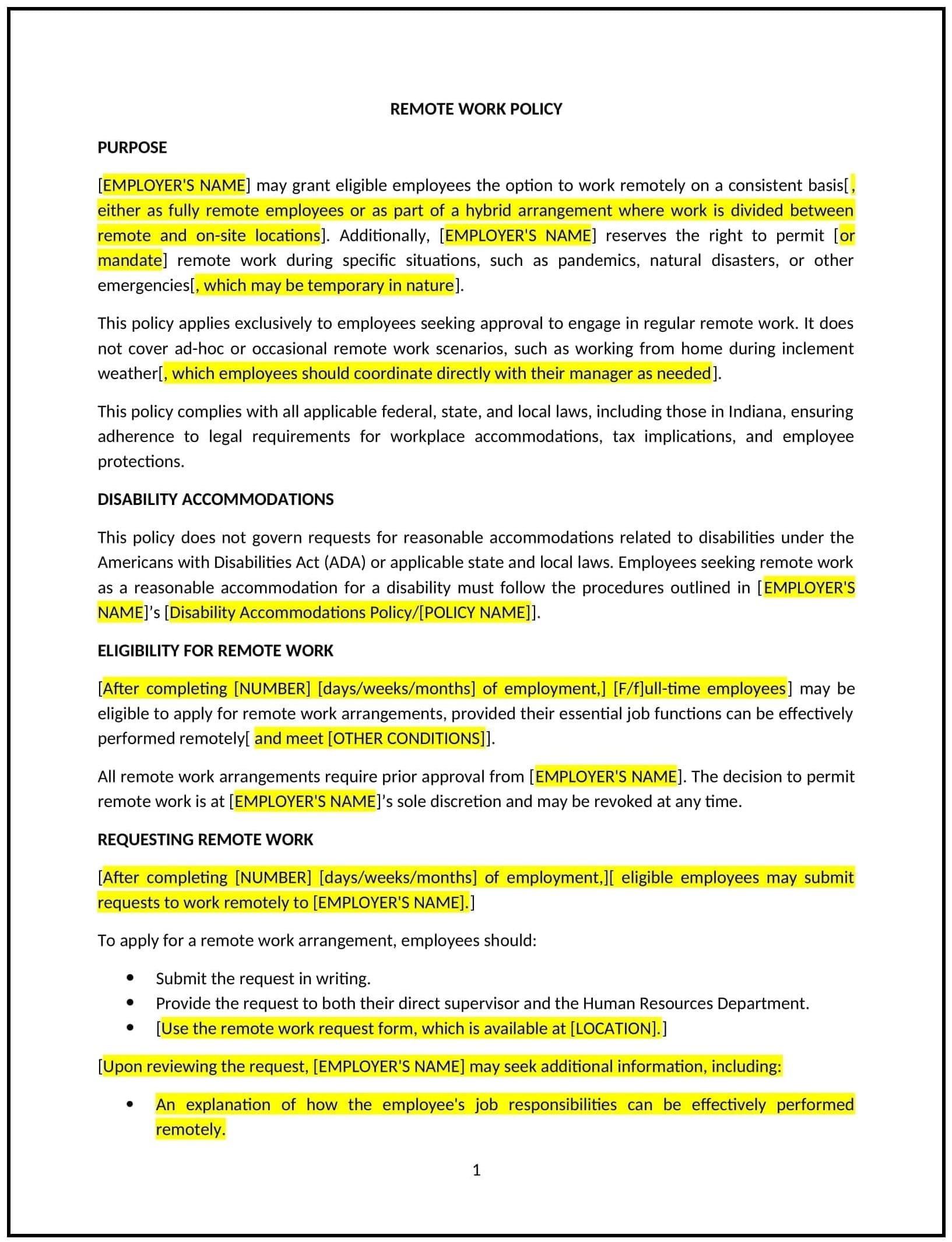
Remote work policy (Indiana): Free template
This remote work policy helps Indiana businesses establish clear guidelines for employees working remotely. It outlines expectations for productivity, communication, and security while addressing eligibility criteria and equipment requirements. Whether offering full-time or hybrid remote work arrangements, this policy supports businesses in maintaining operational efficiency and fostering employee flexibility.
By implementing this policy, Indiana businesses can ensure a structured and consistent approach to remote work, improving employee satisfaction while minimizing potential challenges.
How to use this remote work policy (Indiana)
- Define eligibility criteria: Specify which roles or employees are eligible for remote work based on job responsibilities, performance history, and business needs.
- Establish work schedules: Clearly outline expectations for work hours, availability, and time tracking to ensure consistency with business operations.
- Set communication standards: Provide guidelines for maintaining regular communication with managers, team members, and clients, including the use of specific tools like email, video conferencing, or project management software.
- Detail equipment and technology requirements: List the equipment, software, and internet connection standards employees must have to work effectively. Clarify whether the business or employee is responsible for providing these resources.
- Address data security: Include procedures for protecting company information, such as using VPNs, encrypting sensitive files, and adhering to the company’s IT security policy.
- Provide workspace guidelines: Recommend that employees maintain a dedicated, distraction-free workspace to promote productivity and professionalism.
- Outline performance expectations: Define how performance will be measured and evaluated for remote employees, including deliverables, deadlines, and feedback processes.
- Include reimbursement policies: Specify any reimbursements for remote work-related expenses, such as internet or office supplies, if applicable.
- Review and update regularly: Periodically review the policy to ensure it reflects changes in remote work trends, technology, or Indiana-specific regulations.
Benefits of using this remote work policy (Indiana)
Implementing this policy provides several key benefits for Indiana businesses:
- Improves productivity: Establishes clear expectations and processes to ensure remote employees remain focused and efficient.
- Enhances employee satisfaction: Provides flexibility in work arrangements, contributing to higher morale and retention rates.
- Reduces overhead costs: Decreases expenses related to office space, utilities, and supplies.
- Strengthens communication: Encourages regular, structured communication to maintain collaboration and alignment with business goals.
- Supports data security: Helps protect sensitive company information with clear IT security guidelines for remote work.
- Promotes accountability: Ensures remote employees understand their responsibilities and performance standards.
Tips for using this remote work policy (Indiana)
- Communicate the policy clearly: Share the policy with all employees and provide training on its implementation to ensure everyone understands expectations and guidelines.
- Monitor performance: Use clear metrics and regular check-ins to track employee performance and address any issues promptly.
- Foster inclusion: Make remote employees feel included by encouraging participation in team meetings, virtual events, and decision-making processes.
- Provide IT support: Ensure remote employees have access to technical assistance for resolving equipment or software issues.
- Adapt to feedback: Regularly seek feedback from remote employees and managers to refine the policy and address emerging challenges.
- Stay compliant: Keep up-to-date with Indiana laws regarding remote work, such as reimbursement requirements or employee rights.