Got contracts to review? While you're here for policies, let Cobrief make contract review effortless—start your free review now.
Customize this template for free
Remote work policy (Iowa)
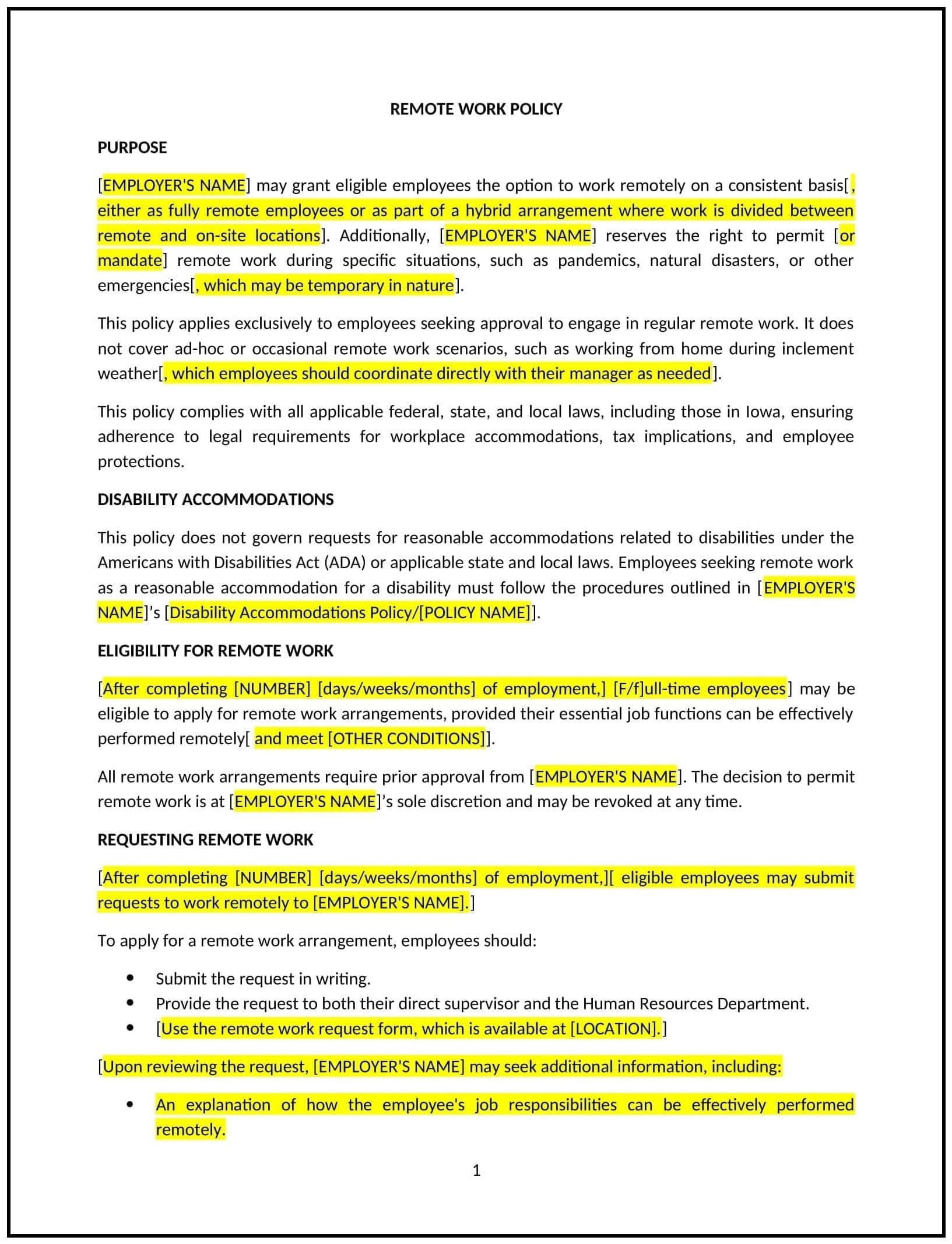
A remote work policy helps Iowa businesses define expectations and guidelines for employees who work outside the office. This policy covers aspects such as work hours, communication, productivity expectations, equipment use, and data security for remote workers. By establishing clear rules, businesses can ensure that remote work is effective, employees are accountable, and business operations continue smoothly.
By implementing this policy, businesses can support a flexible work environment, enhance employee satisfaction, and maintain operational efficiency, while mitigating risks related to remote work.
How to use this remote work policy (Iowa)
- Define eligibility: Clearly specify which employees are eligible for remote work, based on roles, responsibilities, and performance. Outline the criteria that employees must meet to qualify for remote work, such as job performance or operational needs.
- Set work hours: Establish clear guidelines for work hours, including expectations for availability, core working hours, and flexibility. Specify whether employees are required to follow a set schedule or if they can have more flexibility in setting their hours.
- Outline communication expectations: Define the preferred communication tools and frequency for remote workers, such as daily check-ins, team meetings, or availability for urgent tasks. Specify how remote workers should stay connected with colleagues and supervisors.
- Define productivity expectations: Set clear performance expectations, including deliverables, deadlines, and quality of work. Ensure employees understand how their performance will be measured and how it will be evaluated while working remotely.
- Address equipment and technology: Specify what equipment will be provided by the company (e.g., computers, software, phones) and what employees must provide. Also, outline the company's expectations regarding the use and maintenance of remote work tools.
- Maintain data security: Establish guidelines for protecting company data while working remotely, including secure Wi-Fi usage, password protection, and handling of sensitive information. Provide guidance on the use of VPNs, encryption, and other security measures.
- Set boundaries for remote work: Make clear the boundaries between work and personal time for remote workers, including expectations for availability outside of regular work hours and how employees can take breaks or manage their time.
- Review and update regularly: Periodically review and update the remote work policy to ensure it aligns with changing business needs, technological advances, and feedback from remote workers.
Benefits of using this remote work policy (Iowa)
This policy offers several key benefits for Iowa businesses:
- Increases flexibility and work-life balance: A well-structured remote work policy provides employees with the flexibility to balance work and personal life, which can increase job satisfaction and employee retention.
- Enhances productivity: By setting clear expectations, businesses can ensure that remote workers remain productive, focused, and aligned with the company's goals and objectives.
- Reduces office space costs: By offering remote work options, businesses can reduce the need for physical office space, leading to potential cost savings on rent, utilities, and office supplies.
- Expands talent pool: Offering remote work increases the potential to hire skilled employees from a wider geographical area, improving access to top talent.
- Supports business continuity: Remote work allows businesses to continue operations during emergencies or disruptions, such as severe weather or health crises, while keeping employees safe and engaged.
- Strengthens employee trust and autonomy: When businesses provide employees with the tools and guidelines to work remotely, it fosters a sense of trust and autonomy, contributing to a more motivated and engaged workforce.
Tips for using this remote work policy (Iowa)
- Communicate expectations clearly: Ensure that remote workers understand the rules and guidelines for remote work, including work hours, productivity expectations, and communication requirements.
- Provide the right tools: Equip remote employees with the necessary technology, such as laptops, software, and secure access tools, to ensure they can work effectively from home.
- Foster a sense of connection: Encourage remote workers to stay connected with their colleagues through regular meetings, video calls, and team-building activities to maintain a collaborative work environment.
- Set clear performance metrics: Establish clear performance metrics to ensure remote workers are meeting business objectives and deadlines. This will help maintain productivity and accountability.
- Encourage regular feedback: Provide regular opportunities for feedback, so remote workers can voice concerns, suggest improvements, and discuss any challenges they face in the remote work setup.
- Monitor and evaluate effectiveness: Regularly assess the effectiveness of remote work arrangements, considering employee performance, satisfaction, and operational efficiency, and make adjustments as needed.
- Be flexible and adaptable: While it’s important to have clear guidelines, businesses should be flexible with remote work arrangements and open to adapting the policy to meet employees’ evolving needs.