Smoking in the workplace policy (Connecticut): Free template
Got contracts to review? While you're here for policies, let Cobrief make contract review effortless—start your free review now.
Customize this template for free
Smoking in the workplace policy (Connecticut)
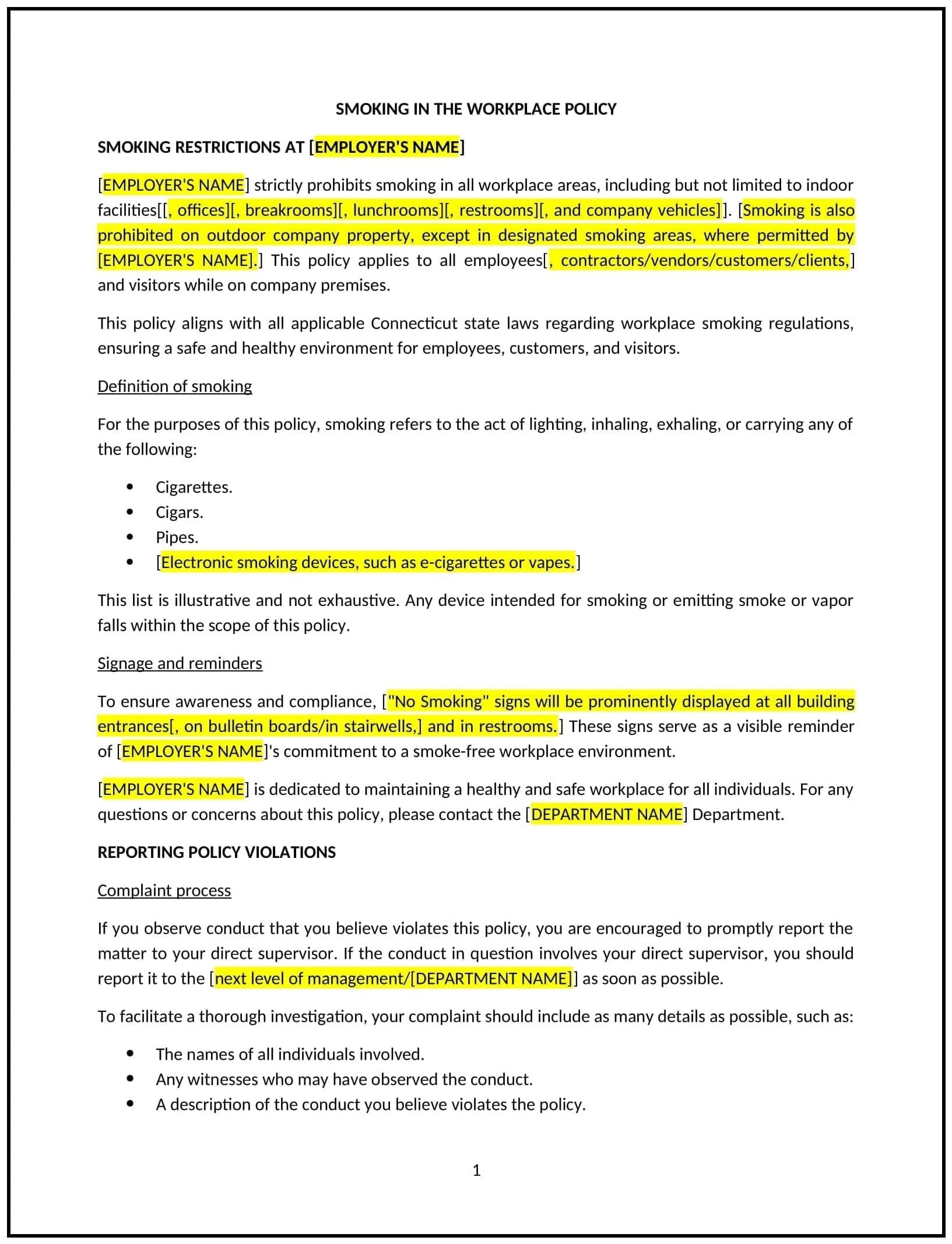
A smoking in the workplace policy helps Connecticut businesses create a healthy and productive environment by regulating smoking in the workplace. This policy outlines the company’s stance on smoking, including where smoking is permitted, the expectations for employees, and the company’s commitment to maintaining a smoke-free workplace.
By implementing this policy, businesses can ensure compliance with state and local regulations, promote a healthier work environment, and reduce the risks associated with smoking, such as exposure to secondhand smoke.
How to use this smoking in the workplace policy (Connecticut)
- Define smoking restrictions: Clearly outline where smoking is and is not permitted in the workplace, including indoor areas, outdoor spaces, and areas around entrances. Specify whether smoking is allowed in designated smoking areas or if it is completely prohibited on company premises.
- Establish enforcement guidelines: Specify how the policy will be enforced, including any disciplinary actions for non-compliance and the steps employees should take to report violations.
- Address smoking breaks: Clarify the policy on smoking breaks, including whether employees are allowed to take breaks to smoke and how these breaks should be managed to avoid disruptions in work.
- Support for smoking cessation: Offer support for employees who wish to quit smoking, such as access to smoking cessation programs, counseling, or resources to help them stop.
- Comply with state and local laws: Ensure that the policy complies with Connecticut’s smoking regulations, as well as any relevant local ordinances, and update the policy as necessary to stay in compliance with changing laws.
- Protect non-smokers: Emphasize the company’s commitment to protecting non-smokers from exposure to secondhand smoke, ensuring that smoking areas are appropriately located and separated from workspaces.
Benefits of using this smoking in the workplace policy (Connecticut)
This policy offers several benefits for Connecticut businesses:
- Promotes a healthier work environment: By reducing exposure to secondhand smoke and encouraging healthier behaviors, the policy contributes to a healthier workplace for all employees.
- Complies with legal requirements: Helps the business comply with state and local laws regarding smoking in public places and workplaces, reducing the risk of legal penalties.
- Enhances productivity: Limiting smoking breaks and maintaining a smoke-free environment can lead to fewer disruptions during work hours, resulting in improved employee focus and productivity.
- Supports employee well-being: Offering smoking cessation support helps employees who wish to quit smoking, leading to long-term health benefits and improved overall well-being.
- Reduces healthcare costs: A smoke-free workplace can reduce the risk of smoking-related illnesses, potentially lowering the company’s healthcare costs and absenteeism due to smoking-related health issues.
Tips for using this smoking in the workplace policy (Connecticut)
- Communicate the policy clearly: Ensure all employees are aware of the smoking restrictions and the areas where smoking is permitted. This can be communicated through training sessions, signage, or inclusion in the employee handbook.
- Provide cessation support: Offer smoking cessation resources or programs to support employees who wish to quit smoking. This can improve employee health and reduce long-term healthcare costs.
- Monitor compliance: Regularly monitor smoking areas and employee behavior to ensure compliance with the policy. Address violations promptly and consistently to maintain a smoke-free workplace.
- Review periodically: Review and update the policy regularly to reflect any changes in state and local laws, as well as to assess the policy’s effectiveness in maintaining a healthy and productive workplace.