Smoking in the workplace policy (Hawaiʻi): Free template
Got contracts to review? While you're here for policies, let Cobrief make contract review effortless—start your free review now.
Customize this template for free
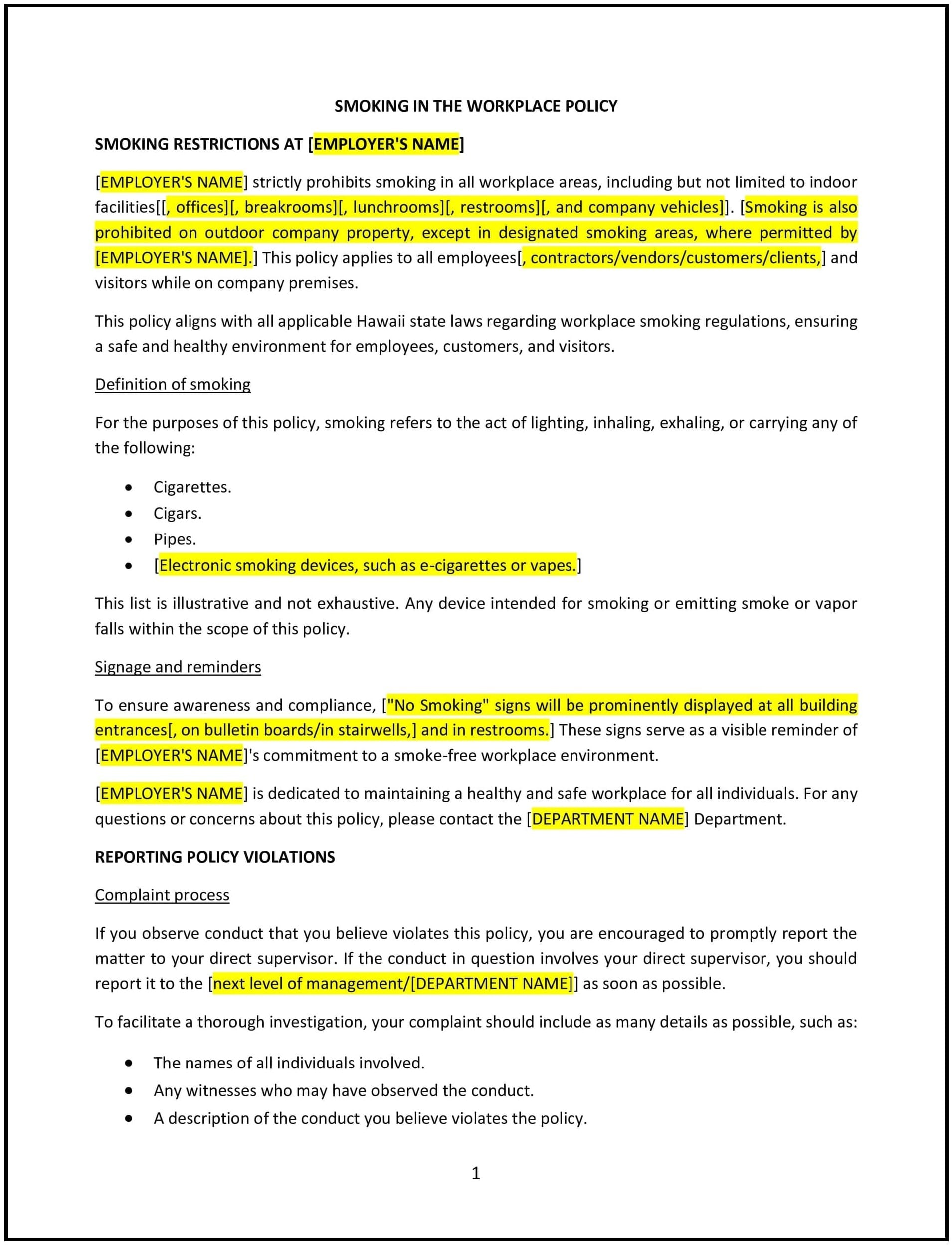
Smoking in the workplace policy (Hawaiʻi)
A smoking in the workplace policy helps Hawaiʻi businesses create a safe and healthy environment for employees and visitors. This policy outlines guidelines for smoking, vaping, and tobacco use on business premises, while addressing Hawaiʻi’s strict smoking laws and cultural values. It is designed to promote wellness, reduce exposure to secondhand smoke, and align with state regulations.
By implementing this policy, businesses in Hawaiʻi can protect the health of their workforce, enhance workplace satisfaction, and demonstrate a commitment to a clean and respectful environment.
How to use this smoking in the workplace policy (Hawaiʻi)
- Define the scope: Clearly state that the policy applies to all employees, contractors, and visitors on business premises.
- Prohibit smoking in designated areas: Specify areas where smoking, vaping, and tobacco use are prohibited, such as indoor spaces, entrances, and outdoor common areas.
- Designate smoking areas (if applicable): If smoking is allowed on-site, identify specific outdoor areas where smoking is permitted, ensuring they are away from entrances and high-traffic zones.
- Address e-cigarettes and vaping: Include e-cigarettes and vaping in the policy, as they are subject to the same restrictions as traditional smoking under Hawaiʻi law.
- Communicate the policy: Share the policy with employees during onboarding and through internal communications, such as emails or posted notices.
- Provide resources for quitting smoking: Offer information about smoking cessation programs or resources to support employees who want to quit.
- Train managers and staff: Educate managers and employees on the policy’s guidelines and the importance of maintaining a smoke-free environment.
- Monitor compliance: Regularly review adherence to the policy and address any violations promptly and fairly.
- Review and update the policy: Periodically assess the policy’s effectiveness and make adjustments as needed to reflect changes in laws or business needs.
Benefits of using this smoking in the workplace policy (Hawaiʻi)
This policy offers several advantages for Hawaiʻi businesses:
- Promotes health and wellness: A smoke-free environment reduces exposure to secondhand smoke and supports the well-being of employees and visitors.
- Enhances workplace satisfaction: Employees appreciate a clean and healthy workspace, which can improve morale and productivity.
- Aligns with state laws: The policy helps businesses comply with Hawaiʻi’s strict smoking regulations, including the Hawaiʻi Smoke-Free Law.
- Reduces fire risks: Prohibiting smoking in certain areas minimizes the risk of fire hazards, particularly in workplaces with flammable materials.
- Demonstrates responsibility: A clear policy shows the business’s commitment to creating a safe and respectful environment for everyone.
- Supports sustainability: A smoke-free workplace contributes to cleaner air and a healthier community, aligning with Hawaiʻi’s environmental values.
- Improves public image: Businesses that prioritize health and wellness are viewed more favorably by customers, employees, and the community.
Tips for using this smoking in the workplace policy (Hawaiʻi)
- Communicate the policy effectively: Share the policy with employees during onboarding and through regular reminders, such as emails or posted notices.
- Post clear signage: Display no-smoking signs in prohibited areas to remind employees and visitors of the policy.
- Provide resources: Offer information about smoking cessation programs or resources to support employees who want to quit.
- Train managers: Educate managers on how to enforce the policy respectfully and address violations fairly.
- Be consistent: Apply the policy consistently to all employees, contractors, and visitors to ensure fairness and compliance.
- Review the policy periodically: Update the policy as needed to reflect changes in laws, workplace dynamics, or business needs.