Smoking in the workplace policy (Idaho): Free template
Got contracts to review? While you're here for policies, let Cobrief make contract review effortless—start your free review now.
Customize this template for free
Smoking in the workplace policy (Idaho)
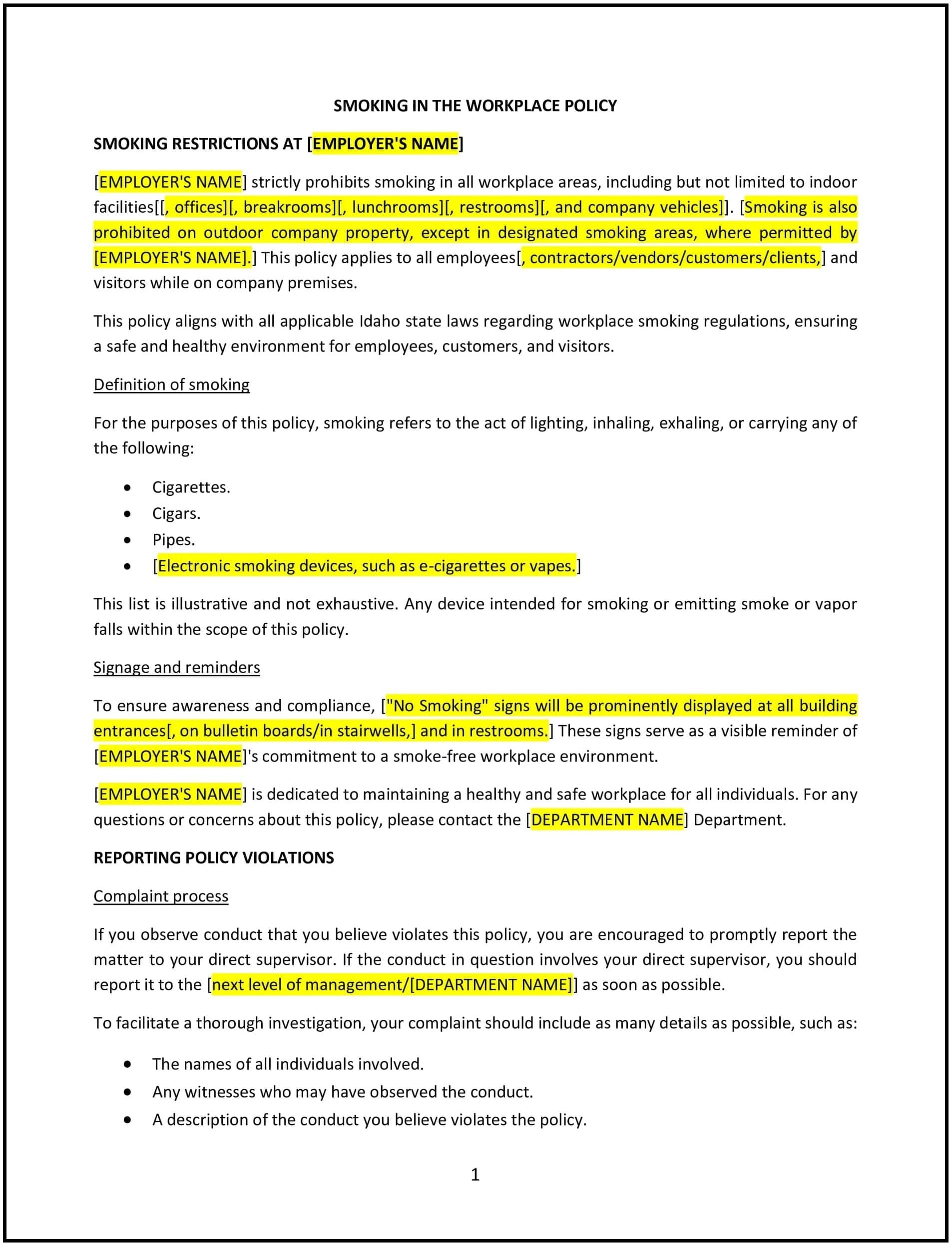
A smoking in the workplace policy helps Idaho businesses establish guidelines for managing smoking and tobacco use on company premises. This policy outlines designated smoking areas, restrictions on smoking, and support for employees who wish to quit tobacco use. It also emphasizes the importance of maintaining a healthy and safe work environment for all employees.
By implementing this policy, businesses can promote employee well-being, reduce exposure to secondhand smoke, and comply with Idaho state laws regarding smoking in the workplace.
How to use this smoking in the workplace policy (Idaho)
- Define smoking restrictions: Specify where smoking is prohibited, such as inside buildings, near entrances, or in company vehicles, to ensure clarity and consistency in applying the policy.
- Designate smoking areas: Identify specific outdoor areas where smoking is permitted, ensuring they are away from entrances, windows, and high-traffic areas.
- Address e-cigarettes and vaping: Include guidelines for the use of e-cigarettes and vaping devices, which may be subject to the same restrictions as traditional smoking.
- Provide cessation support: Offer resources and programs to help employees quit smoking, such as access to counseling, nicotine replacement therapies, or wellness initiatives.
- Communicate the policy: Share the policy with employees during onboarding and through internal communication channels to ensure awareness and understanding.
- Train managers: Provide training for managers on how to enforce the policy, address violations, and support employees who wish to quit smoking.
- Review and update the policy: Periodically assess the policy’s effectiveness and make adjustments based on changes in business needs, employee feedback, or Idaho laws.
Benefits of using this smoking in the workplace policy (Idaho)
This policy offers several advantages for Idaho businesses:
- Promotes employee health: Reducing exposure to secondhand smoke and supporting smoking cessation efforts contribute to a healthier workforce.
- Enhances workplace safety: A smoke-free environment reduces fire hazards and improves air quality, creating a safer workplace for all employees.
- Supports compliance: The policy helps businesses adhere to Idaho state laws regarding smoking in the workplace, reducing the risk of legal disputes or penalties.
- Improves productivity: Healthier employees are more likely to be productive and have fewer absences due to smoking-related illnesses.
- Fosters inclusivity: A smoke-free workplace ensures all employees, including non-smokers and those with respiratory conditions, can work in a comfortable environment.
- Encourages positive habits: Providing cessation support encourages employees to adopt healthier lifestyles, benefiting both the individual and the business.
Tips for using this smoking in the workplace policy (Idaho)
- Communicate the policy clearly: Share the policy with employees during onboarding and through internal communication channels to ensure awareness and understanding.
- Train managers: Provide training for managers on how to enforce the policy, address violations, and support employees who wish to quit smoking.
- Monitor compliance: Regularly review smoking areas and employee adherence to the policy to ensure consistency and fairness.
- Stay informed about legal updates: Keep up-to-date with changes to Idaho state laws regarding smoking in the workplace and update the policy as needed.
- Encourage transparency: Foster a culture where employees feel comfortable reporting violations or seeking support to quit smoking.
- Document everything: Maintain records of policy communications, training sessions, and any actions taken to enforce the policy, ensuring accountability and transparency.