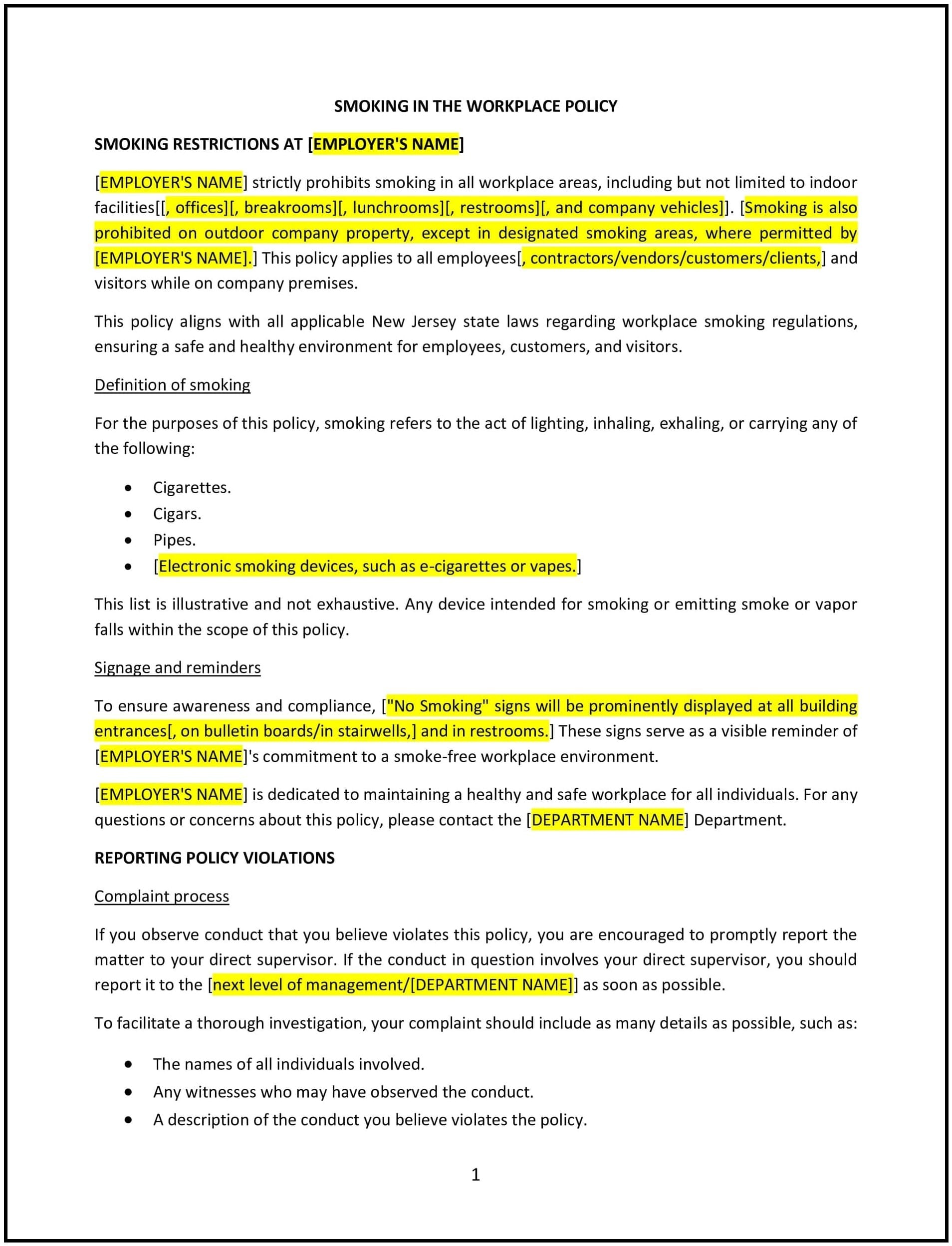
Smoking in the workplace policy (New Jersey): Free template
Restricts smoking in designated areas to comply with public health laws and promote employee well-being.
- Policies
- New Jersey
Smoking in the workplace policy (New Jersey)
A smoking in the workplace policy helps New Jersey businesses establish clear guidelines regarding smoking on company premises. This policy defines smoking areas, sets boundaries for where employees can smoke, and outlines the company’s stance on smoking during work hours. It also addresses the use of electronic cigarettes and vaping products in the workplace.
By adopting this policy, businesses in New Jersey can promote a healthy and safe work environment, reduce health risks, and ensure that employees adhere to the rules regarding smoking.
How to use this smoking in the workplace policy (New Jersey)
- Define smoking areas: Specify where employees are permitted to smoke, such as designated outdoor areas away from building entrances and common areas.
- Prohibit smoking in the workplace: Clearly outline that smoking is not allowed inside the workplace or in common areas, including hallways, restrooms, and elevators.
- Address electronic cigarettes and vaping: Include guidelines for the use of electronic cigarettes and vaping products, specifying whether these are allowed in designated smoking areas or if they are prohibited altogether.
- Set breaks and designated times: Establish specific times for employees to take breaks for smoking, ensuring that it does not interfere with work performance.
- Ensure health and safety: Reinforce the importance of a smoke-free environment for the health and safety of all employees, including those who do not smoke.
- Provide resources for quitting: Offer support for employees who wish to quit smoking, such as information on smoking cessation programs or benefits related to quitting.
- Review and update: Regularly assess the policy to reflect any changes in New Jersey state laws, health guidelines, and company needs.
Benefits of using this smoking in the workplace policy (New Jersey)
This policy provides several benefits for New Jersey businesses:
- Promotes a healthy work environment: Reduces exposure to second-hand smoke, helping to maintain a clean, healthy, and comfortable workplace.
- Reduces health risks: Supports employee health by discouraging smoking and promoting smoking cessation efforts.
- Improves workplace safety: Minimizes the risk of fire hazards caused by smoking indoors or in prohibited areas.
- Enhances employee well-being: Encourages employees to take breaks that do not disrupt their work, while promoting a balanced and healthier lifestyle.
- Strengthens company reputation: Shows a commitment to employee health and well-being, enhancing the company’s image and culture.
Tips for using this smoking in the workplace policy (New Jersey)
- Communicate the policy clearly: Ensure all employees are aware of the designated smoking areas, prohibited smoking zones, and rules regarding vaping and e-cigarettes.
- Monitor compliance: Regularly check that employees adhere to the designated smoking areas and breaks, ensuring the policy is followed.
- Provide support for quitting: Offer resources or programs to assist employees who want to quit smoking, such as smoking cessation workshops or healthcare support.
- Be consistent: Apply the policy fairly and consistently to all employees to ensure that the rules are clear and equally enforced.
- Review the policy regularly: Update the policy to reflect changes in New Jersey laws, smoking research, or employee needs.
Frequently asked questions (FAQs)
Similar templates
Where deals go from offer to paid
