Got contracts to review? While you're here for policies, let Cobrief make contract review effortless—start your free review now.
Customize this template for free
Standards of conduct policy (Idaho)
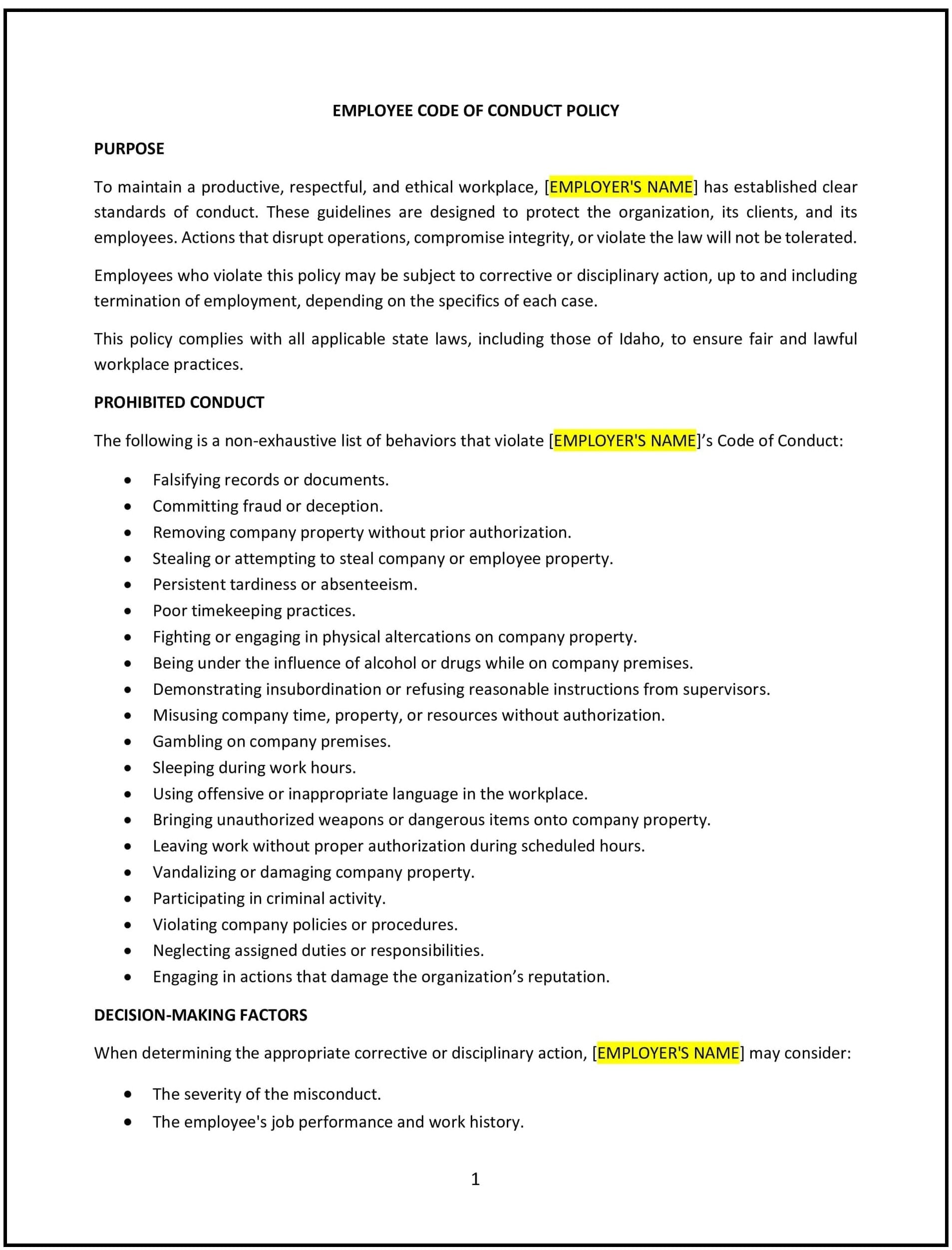
A standards of conduct policy helps Idaho businesses establish clear expectations for employee behavior in the workplace. This policy outlines acceptable and unacceptable conduct, including professionalism, respect, and ethical behavior. It also emphasizes the importance of maintaining a safe, inclusive, and productive work environment for all employees.
By implementing this policy, businesses can foster a positive workplace culture, reduce conflicts, and ensure employees understand their responsibilities and the consequences of misconduct.
How to use this standards of conduct policy (Idaho)
- Define acceptable behavior: Specify the standards of behavior expected from employees, such as professionalism, respect, teamwork, and adherence to company values.
- Address unacceptable conduct: Outline examples of unacceptable behavior, such as harassment, discrimination, theft, or misuse of company resources, to ensure clarity and consistency in applying the policy.
- Set reporting procedures: Provide clear instructions for employees to report violations of the policy, including multiple reporting channels and protections against retaliation.
- Establish consequences: Explain the consequences of violating the standards of conduct, such as disciplinary action, up to and including termination, to ensure accountability.
- Train employees: Provide training for employees on the policy, including how to recognize and report misconduct, and the importance of maintaining a respectful workplace.
- Train managers: Equip managers with the skills to address misconduct, enforce the policy consistently, and support employees who report violations.
- Review and update the policy: Periodically assess the policy’s effectiveness and make adjustments based on changes in business needs, employee feedback, or Idaho laws.
Benefits of using this standards of conduct policy (Idaho)
This policy offers several advantages for Idaho businesses:
- Promotes a positive workplace culture: Clear expectations for behavior foster a respectful, inclusive, and professional work environment.
- Reduces conflicts: The policy helps prevent and address workplace conflicts by setting standards for respectful and ethical behavior.
- Enhances productivity: A positive and respectful workplace culture contributes to higher employee morale, engagement, and productivity.
- Protects the business’s reputation: Addressing misconduct promptly and fairly helps maintain the business’s credibility and professionalism.
- Supports inclusivity: The policy reinforces the business’s commitment to creating a workplace free from harassment, discrimination, and other forms of misconduct.
- Encourages accountability: Clear consequences for misconduct help employees understand their responsibilities and the importance of adhering to the policy.
Tips for using this standards of conduct policy (Idaho)
- Communicate the policy clearly: Share the policy with employees during onboarding and through internal communication channels to ensure awareness and understanding.
- Train employees: Provide training on the policy, including how to recognize and report misconduct, and the importance of maintaining a respectful workplace.
- Train managers: Equip managers with the skills to address misconduct, enforce the policy consistently, and support employees who report violations.
- Monitor compliance: Regularly review workplace behavior and address any potential issues promptly to ensure adherence to the policy.
- Encourage transparency: Foster a culture where employees feel comfortable reporting misconduct without fear of retaliation.
- Document everything: Maintain records of policy communications, training sessions, and any actions taken to enforce the policy, ensuring accountability and transparency.