Got contracts to review? While you're here for policies, let Cobrief make contract review effortless—start your free review now.
Customize this template for free
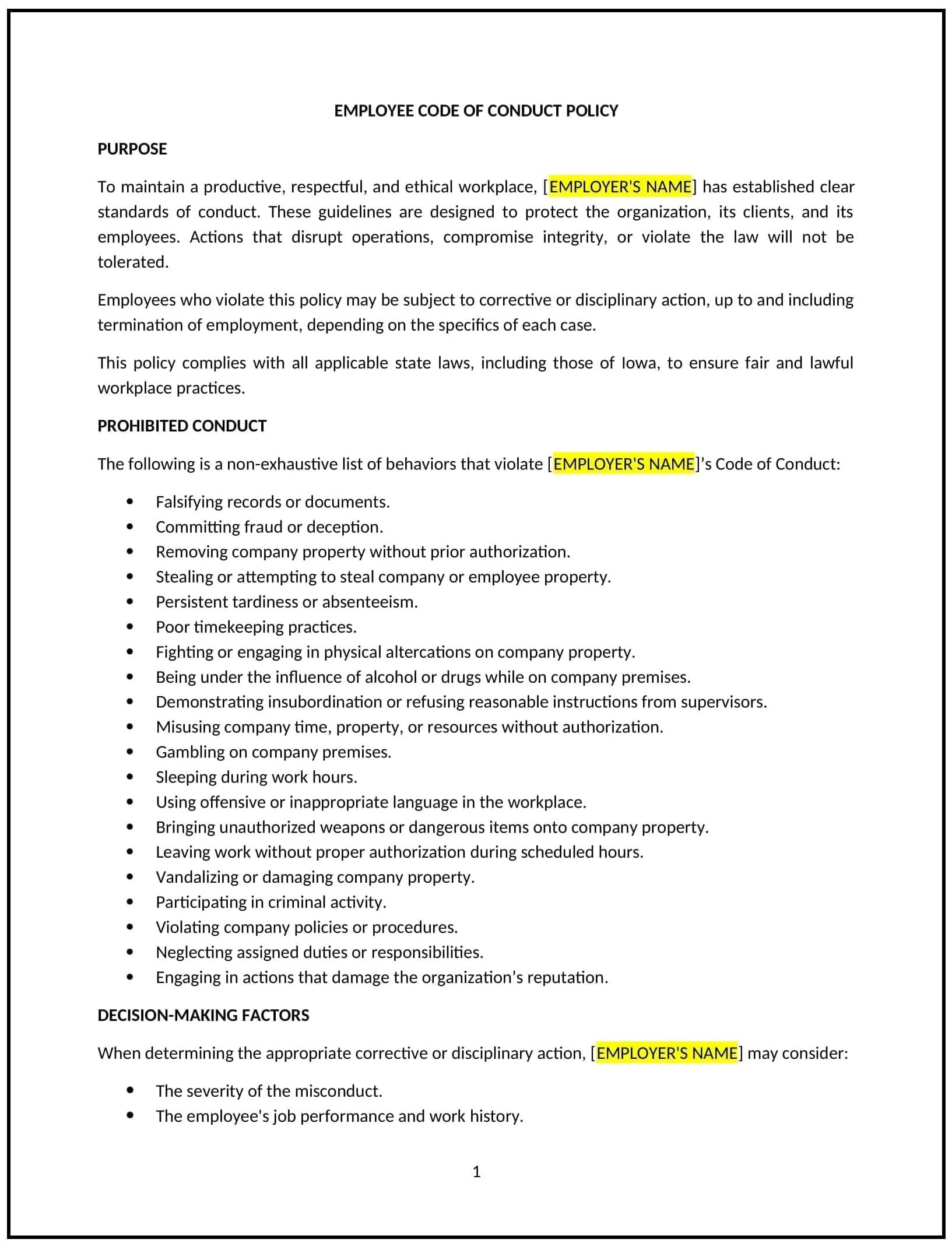
Standards of conduct policy (Iowa)
A standards of conduct policy helps Iowa businesses establish clear expectations for employee behavior and conduct in the workplace. This policy outlines the ethical, professional, and behavioral standards that employees are expected to adhere to while on the job. It covers areas such as attendance, dress code, respect for others, substance abuse, and confidentiality.
By implementing this policy, businesses can maintain a positive, productive work environment where employees understand their responsibilities, promote fairness, and mitigate the risk of misconduct.
How to use this standards of conduct policy (Iowa)
- Define acceptable behavior: Clearly outline the behaviors that are expected from employees, including respect for colleagues, adherence to company rules, and commitment to maintaining a professional work environment.
- Set performance expectations: Include expectations regarding employee performance, including attendance, productivity, punctuality, and quality of work. Specify the consequences of poor performance or failure to meet expectations.
- Address workplace conduct: Define what constitutes acceptable and unacceptable conduct in the workplace, including respect for diversity, communication, and collaboration with coworkers, supervisors, and clients.
- Implement a dress code: Specify what is considered appropriate attire in the workplace, ensuring that employees understand what is acceptable based on company culture and industry standards.
- Establish substance abuse policies: Address the use of alcohol, drugs, or any other substances in the workplace, outlining the consequences of violating this policy and promoting a drug-free workplace.
- Respect for confidentiality: Make it clear that employees must respect company confidentiality, trade secrets, and sensitive information, outlining the consequences for violations.
- Outline the disciplinary process: Specify the steps that will be taken when an employee violates the standards of conduct, including warnings, counseling, suspension, or termination, based on the severity of the violation.
- Review and update regularly: Periodically review the policy to ensure that it remains relevant, aligns with legal requirements, and reflects any changes in company culture or operations.
Benefits of using this standards of conduct policy (Iowa)
This policy offers several key benefits for Iowa businesses:
- Promotes a positive workplace culture: Clear guidelines on expected behavior help create a respectful and productive environment where employees feel valued and motivated.
- Reduces misconduct: By outlining acceptable and unacceptable behaviors, businesses can prevent misconduct, reduce conflicts, and address issues before they escalate.
- Protects company reputation: Maintaining high standards of conduct protects the company’s image and ensures that employees represent the business professionally to clients, customers, and the public.
- Ensures consistency: A well-structured policy ensures that all employees are held to the same standards, promoting fairness and accountability across the organization.
- Enhances employee morale: When employees know what is expected of them and are treated fairly, morale improves, leading to greater engagement and job satisfaction.
- Provides clear consequences: Employees are less likely to engage in inappropriate behavior when they are aware of the consequences of violating the standards of conduct policy.
Tips for using this standards of conduct policy (Iowa)
- Communicate the policy clearly: Ensure that all employees understand the standards of conduct and have access to the policy, whether it is included in the employee handbook or provided separately.
- Apply the policy consistently: Enforce the standards of conduct fairly and consistently across all employees to prevent accusations of favoritism or bias.
- Provide examples of acceptable behavior: Include real-life examples of acceptable and unacceptable behaviors in the workplace to help employees better understand the policy.
- Train managers and supervisors: Ensure that managers and supervisors are well-trained on how to enforce the standards of conduct and address violations appropriately.
- Provide opportunities for feedback: Allow employees to ask questions or seek clarification about the policy to ensure they understand expectations and feel comfortable following the guidelines.
- Regularly review and update the policy: Review the standards of conduct policy annually to ensure that it aligns with any changes in company operations, legal requirements, or industry standards.