Standards of conduct policy (Kansas): Free template
Got contracts to review? While you're here for policies, let Cobrief make contract review effortless—start your free review now.
Customize this template for free
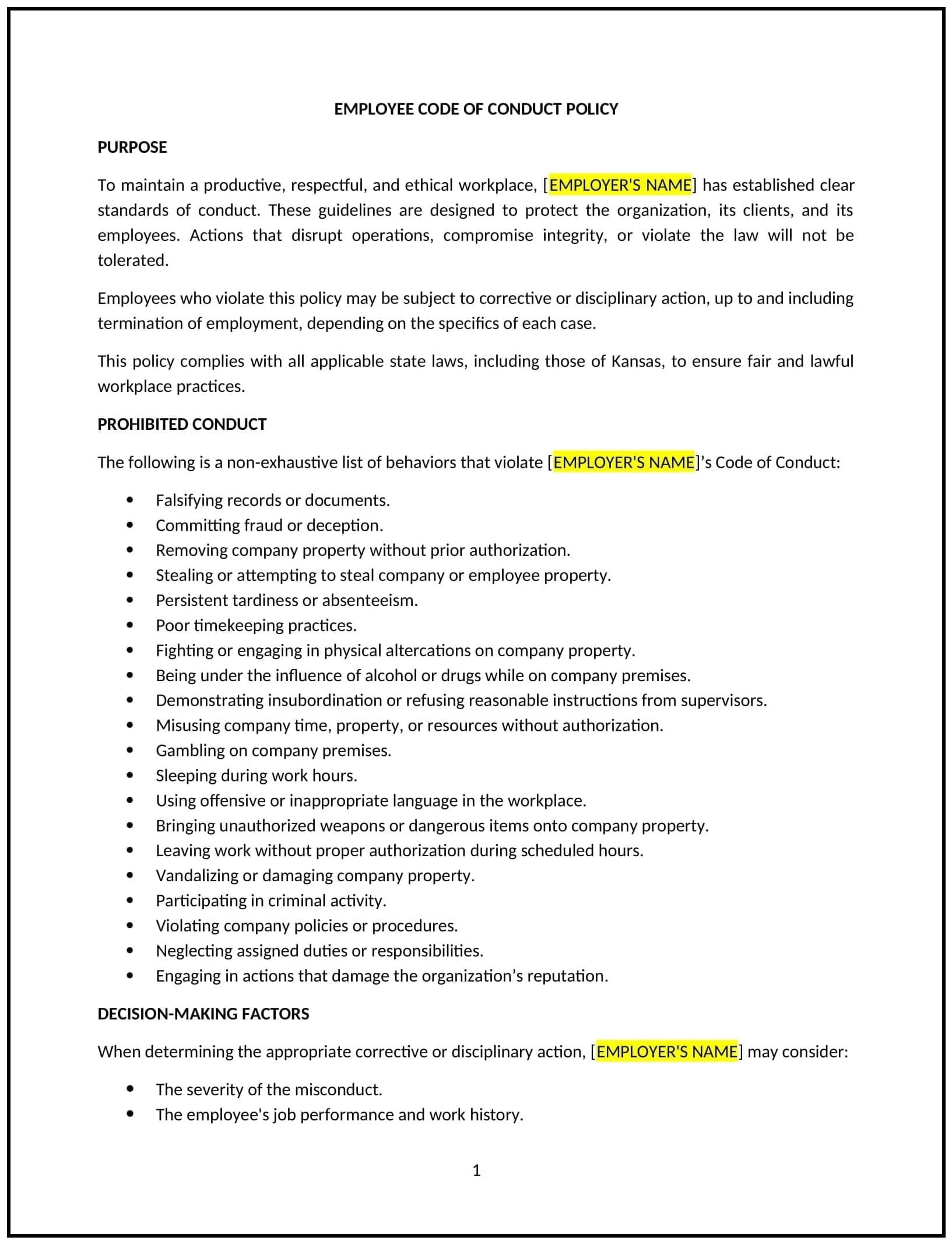
Standards of conduct policy (Kansas)
A standards of conduct policy helps Kansas businesses establish clear expectations for employee behavior and performance within the workplace. This policy outlines the principles and actions that are considered acceptable and unacceptable in the workplace, focusing on areas such as professionalism, ethical behavior, respect for others, and adherence to company values.
By implementing this policy, businesses can maintain a positive, productive work environment, reduce conflicts, and ensure that employees understand their roles and responsibilities.
How to use this standards of conduct policy (Kansas)
- Define acceptable behavior: The policy should specify the standards of conduct expected from all employees, including professionalism, respect for colleagues, honesty, and adherence to company values.
- Outline unacceptable conduct: The policy should clearly outline behaviors that will not be tolerated, such as harassment, discrimination, dishonesty, insubordination, or substance abuse.
- Set expectations for punctuality and attendance: Businesses should establish guidelines for employee attendance, including the expectations for punctuality, requesting time off, and handling absenteeism.
- Address performance expectations: The policy should include guidelines on job performance, such as meeting deadlines, producing high-quality work, and maintaining a positive attitude.
- Specify disciplinary actions: The policy should define the potential consequences for violating the standards of conduct, which could range from verbal warnings to termination, depending on the severity of the violation.
- Encourage reporting of misconduct: Employees should be encouraged to report misconduct or violations of the policy to HR or management, with a clear process in place for submitting complaints.
- Review and update regularly: The policy should be reviewed regularly to ensure it reflects current laws, company goals, and employee expectations.
Benefits of using a standards of conduct policy (Kansas)
- Promotes a positive work environment: By setting clear expectations for behavior, businesses can create a respectful and professional atmosphere that fosters collaboration, productivity, and employee well-being.
- Reduces conflicts: A well-defined standards of conduct policy helps prevent misunderstandings and conflicts between employees by outlining acceptable behavior and providing a process for addressing issues.
- Enhances fairness: The policy ensures that all employees are held to the same standards, promoting fairness and consistency in how employees are treated and evaluated.
- Supports company values: By establishing behavioral standards that align with company values, businesses can reinforce their corporate culture and strengthen employee engagement.
- Minimizes legal risks: A clear policy helps businesses address misconduct promptly and fairly, reducing the risk of legal disputes related to harassment, discrimination, or other employee grievances.
- Improves employee accountability: When employees understand the expected standards of conduct and the consequences of violating them, they are more likely to act responsibly and uphold company values.
Tips for using this standards of conduct policy (Kansas)
- Communicate the policy clearly: Businesses should ensure that all employees are aware of the standards of conduct policy and understand what is expected of them in terms of behavior and performance.
- Provide training and guidance: Businesses should provide employees with training on the policy to help them understand the behaviors that align with company values and the consequences of misconduct.
- Enforce the policy consistently: The policy should be applied consistently across all levels of the organization to avoid favoritism and ensure fairness in addressing violations.
- Offer support and guidance: Employees should have access to resources, such as HR or management, to help them understand the standards of conduct and address any concerns or questions.
- Encourage a reporting culture: Businesses should create a safe environment where employees feel comfortable reporting misconduct without fear of retaliation.
- Review the policy regularly: Businesses should review the policy periodically to ensure that it remains relevant to the company's evolving goals, legal requirements, and workplace dynamics.