Standards of conduct policy (Minnesota): Free template
Got contracts to review? While you're here for policies, let Cobrief make contract review effortless—start your free review now.
Customize this template for free
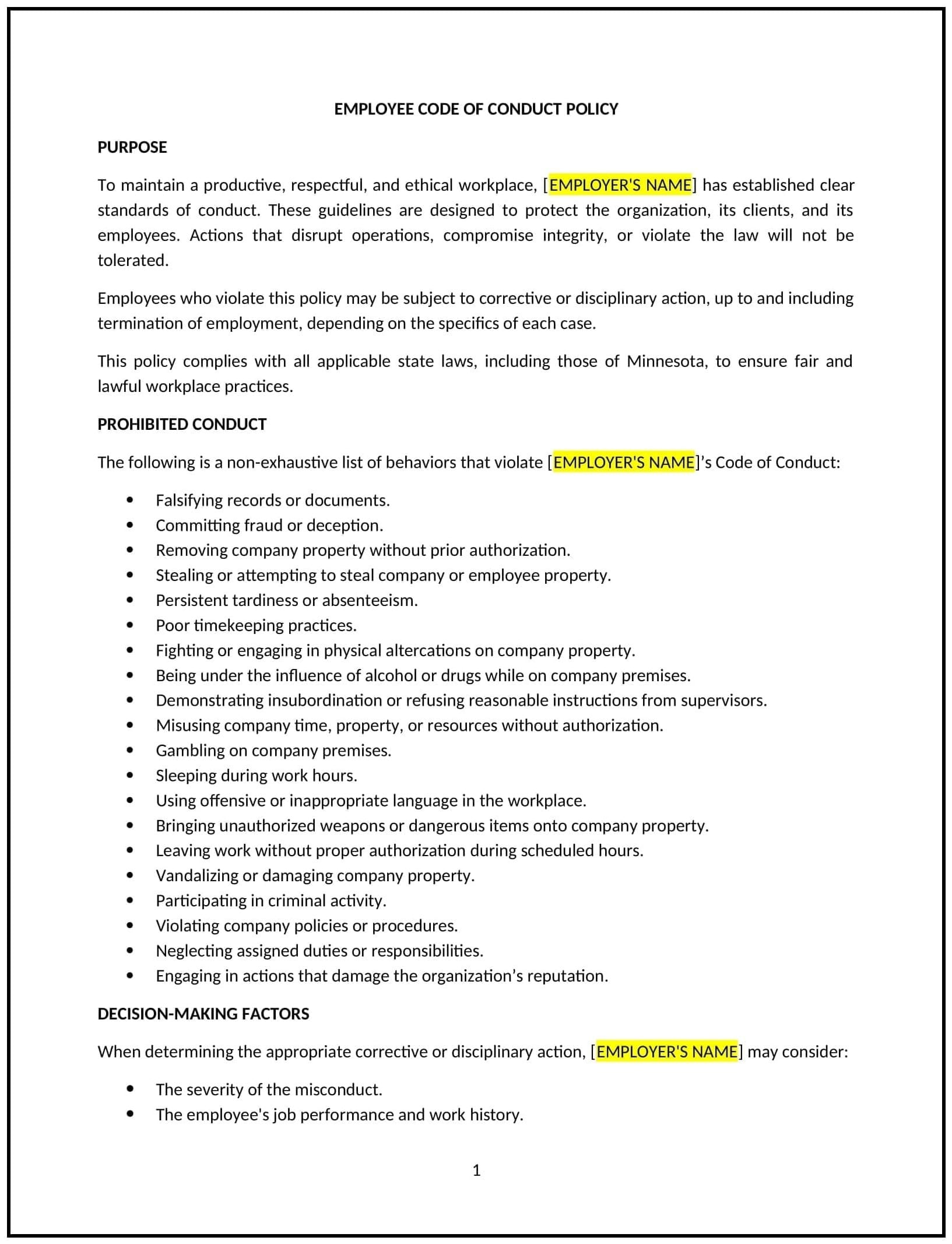
Standards of conduct policy (Minnesota)
This standards of conduct policy is designed to help Minnesota businesses set clear expectations for employee behavior in the workplace. The policy outlines the behaviors that are expected from employees, as well as those that are prohibited, to ensure a respectful, productive, and safe working environment. It also provides guidelines for addressing violations of company standards.
By implementing this policy, businesses can create a workplace culture that promotes professionalism, fairness, and mutual respect, reducing the risk of workplace conflicts and fostering a positive work environment.
How to use this standards of conduct policy (Minnesota)
- Define expected behavior: Clearly outline the types of behavior expected from employees, such as respect for colleagues, adherence to workplace norms, and compliance with company policies. This may include punctuality, professional attire, ethical conduct, and communication standards.
- Specify prohibited behaviors: Identify behaviors that are not acceptable in the workplace, such as harassment, discrimination, insubordination, substance abuse, and dishonesty. Ensure that employees understand the consequences of engaging in such conduct.
- Establish guidelines for professional conduct: Set clear standards for employees' professional interactions, both with colleagues and external stakeholders, emphasizing respect, collaboration, and ethical decision-making.
- Address violations: Provide a clear process for addressing violations of the policy, including a step-by-step procedure for reporting misconduct, investigating incidents, and implementing disciplinary measures when necessary.
- Encourage positive workplace culture: Highlight behaviors that contribute to a positive, inclusive, and supportive work environment, such as teamwork, open communication, and conflict resolution skills.
- Implement training and awareness: Regularly train employees on the standards of conduct and make them aware of any updates to the policy, ensuring they understand their responsibilities and the expectations for behavior.
- Foster accountability: Encourage employees to hold each other accountable and report any violations of the policy, fostering a culture of mutual respect and shared responsibility.
Benefits of using a standards of conduct policy (Minnesota)
Implementing this policy provides several advantages for Minnesota businesses:
- Promotes a respectful work environment: By clearly defining expected behaviors and outlining unacceptable conduct, businesses can create an atmosphere of respect, where employees feel safe and valued.
- Reduces the risk of workplace misconduct: A clearly communicated standards of conduct policy helps prevent incidents of harassment, discrimination, or unethical behavior, reducing the likelihood of conflicts or legal issues.
- Increases productivity: When employees understand the expectations for behavior, they can focus on their work without distractions, leading to increased productivity and overall business success.
- Enhances consistency: A written policy ensures that all employees are held to the same standards and that disciplinary actions are consistent and fair.
- Reflects Minnesota-specific considerations: The policy can be tailored to reflect Minnesota’s employment laws, workplace culture, and local norms, ensuring that it aligns with the state’s legal and social expectations.
Tips for using this standards of conduct policy (Minnesota)
- Communicate expectations clearly: Make sure that all employees are aware of the standards of conduct and understand the behavior expected of them. Provide regular reminders of the policy to reinforce the expectations.
- Address violations promptly: If a violation of the policy occurs, address it as quickly and fairly as possible. Take appropriate action in accordance with company procedures, and ensure that all employees are treated equally under the policy.
- Lead by example: Encourage managers and supervisors to model the expected behaviors and set a positive example for their teams. Leadership plays a key role in shaping the workplace culture.
- Provide conflict resolution resources: Offer resources or training to help employees resolve conflicts in a constructive manner, helping to prevent issues from escalating and contributing to a positive work environment.
- Review and update the policy regularly: Review the standards of conduct policy periodically to ensure it remains aligned with company values, state laws, and employee needs.