Standards of conduct policy (New Hampshire): Free template
Got contracts to review? While you're here for policies, let Cobrief make contract review effortless—start your free review now.
Customize this template for free
Standards of conduct policy (New Hampshire)
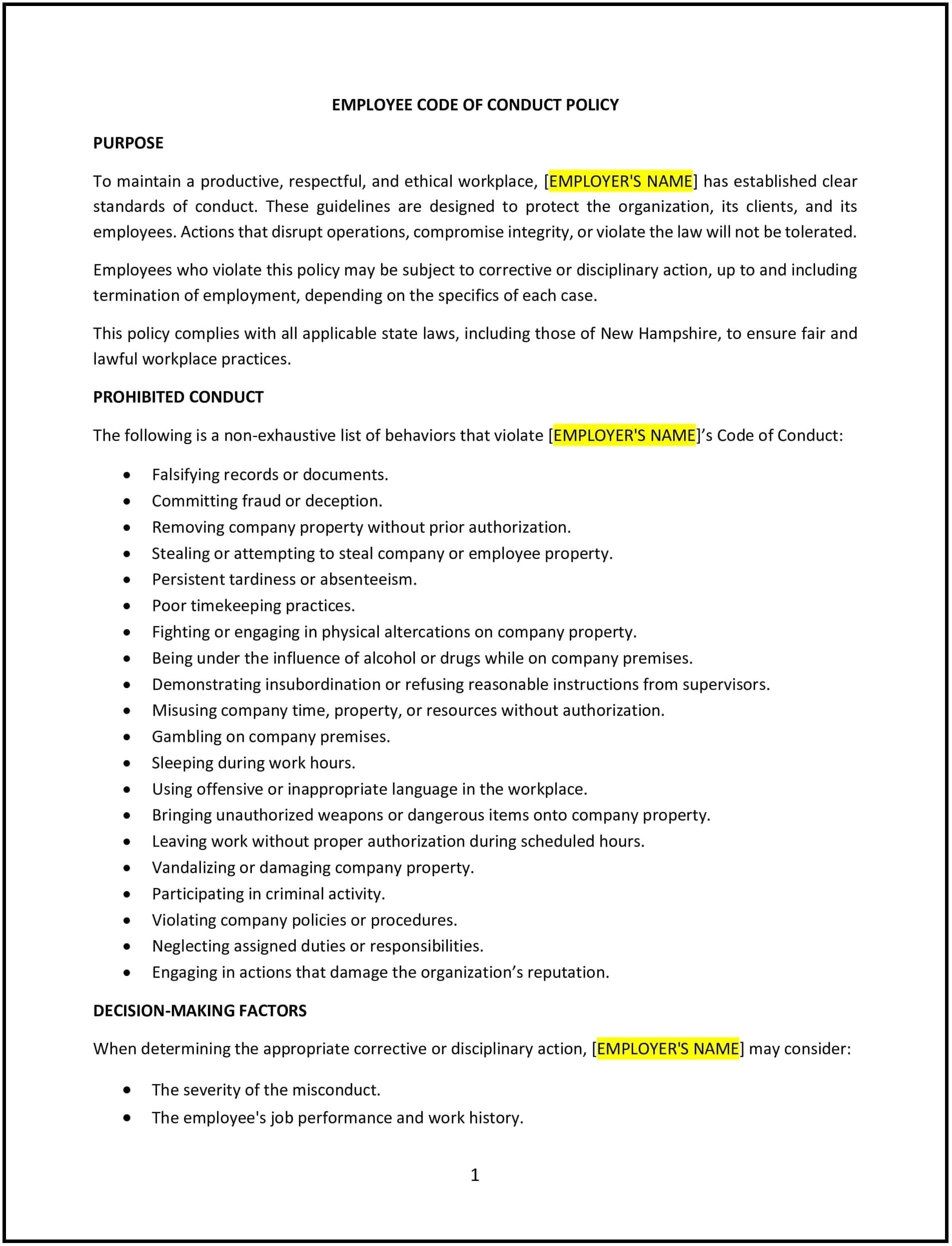
A standards of conduct policy helps New Hampshire businesses outline the behavioral expectations for all employees. It defines the rules and guidelines for professional conduct, ethical behavior, and respect in the workplace, promoting a positive and productive work environment. This policy provides clarity on what is expected from employees and the consequences of violating company standards.
By implementing this policy, businesses can establish a clear framework for managing employee behavior, preventing misconduct, and ensuring a respectful and efficient workplace.
How to use this standards of conduct policy (New Hampshire)
- Define acceptable behavior: Clearly state the types of behavior that are expected in the workplace, such as professionalism, honesty, respect, punctuality, and teamwork.
- Address misconduct: Specify the types of behavior that are not acceptable, such as harassment, discrimination, theft, insubordination, and unethical practices.
- Establish expectations for performance: Outline how employees should approach their job responsibilities, including maintaining productivity, meeting deadlines, and adhering to company values.
- Set guidelines for communication: Explain the standards for professional communication, both within the workplace and externally, including proper use of company email, social media, and other communication channels.
- Outline the use of company resources: Specify the appropriate use of company property, such as equipment, computers, and vehicles, and outline the expectations for maintaining confidentiality and data security.
- Address discipline: Define the process for handling violations of the standards of conduct policy, including the range of possible disciplinary actions (e.g., warnings, suspensions, termination).
- Encourage a positive work environment: Promote a workplace culture where respect, integrity, and teamwork are prioritized, and employees are encouraged to report violations or concerns about misconduct.
- Review and update: Regularly review and update the policy to ensure it reflects the company’s evolving needs and legal requirements.
Benefits of using this standards of conduct policy (New Hampshire)
This policy provides several benefits for New Hampshire businesses:
- Promotes a positive work culture: By clearly outlining acceptable behavior, the policy fosters a respectful and professional work environment where employees feel valued and motivated to perform their best.
- Reduces misconduct: Setting clear behavioral expectations helps prevent misconduct, reduces conflicts, and creates a more harmonious workplace.
- Ensures fairness: A consistent standards of conduct policy ensures that all employees are treated fairly and held to the same expectations, reducing the potential for discrimination or favoritism.
- Enhances productivity: Employees who understand the rules are more likely to stay focused and aligned with company goals, improving overall productivity.
- Protects the company’s reputation: By promoting ethical behavior, the policy helps protect the company’s reputation and brand, both internally and externally.
Tips for using this standards of conduct policy (New Hampshire)
- Communicate the policy clearly: Ensure all employees are aware of the standards of conduct policy and understand the behaviors expected of them in the workplace.
- Be consistent in enforcement: Apply the policy consistently across all employees, regardless of position, to ensure fairness and prevent the perception of favoritism.
- Offer training and support: Provide training on the expectations outlined in the policy, including examples of acceptable and unacceptable behavior, and offer support for employees who may have questions or concerns.
- Monitor compliance: Regularly assess whether employees are adhering to the standards of conduct, and take appropriate action when violations occur.
- Address violations promptly: Respond to violations of the standards of conduct policy promptly and appropriately, taking into consideration the severity of the violation and the need for corrective action.