Got contracts to review? While you're here for policies, let Cobrief make contract review effortless—start your free review now.
Customize this template for free
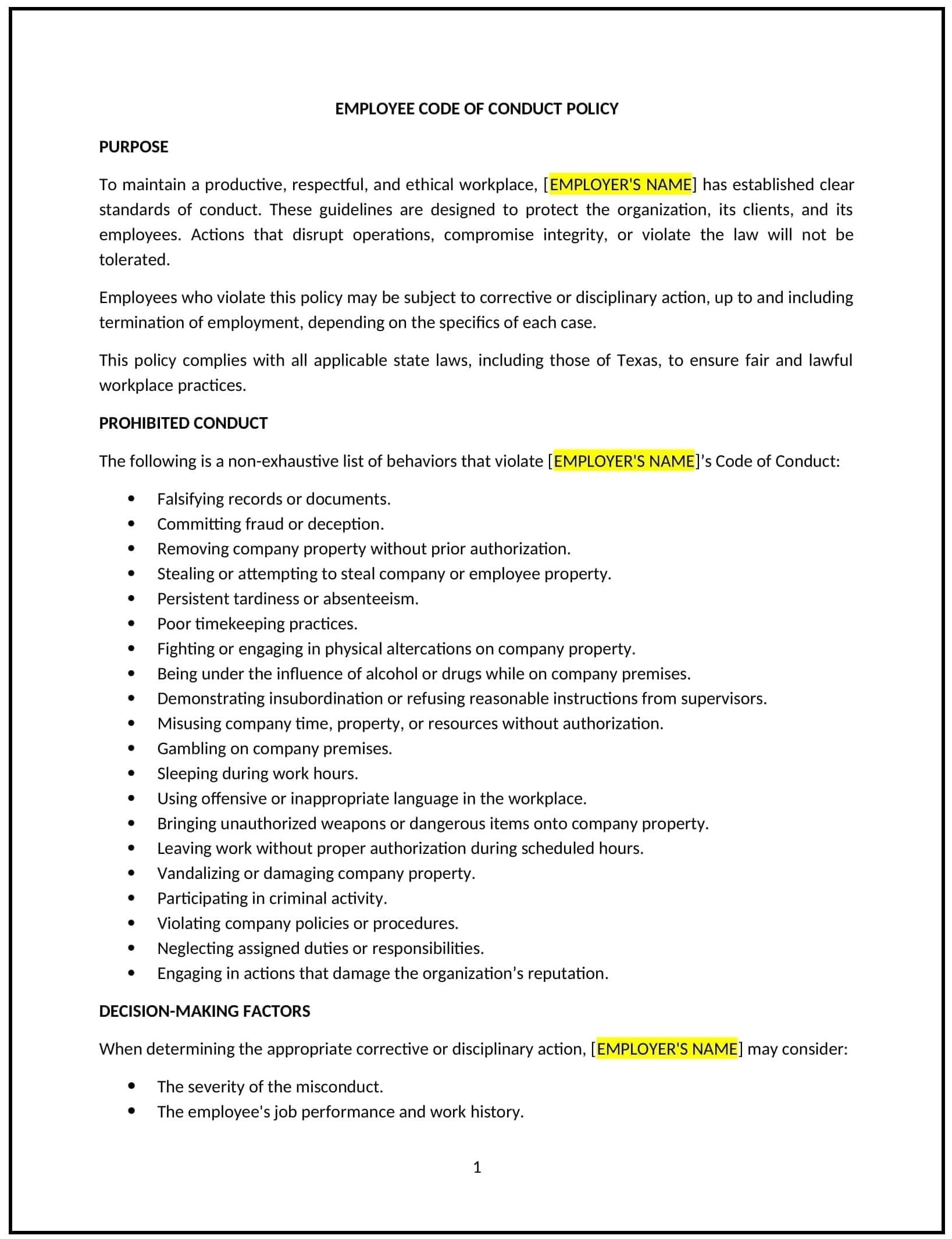
Standards of conduct policy (Texas)
This standards of conduct policy is designed to help Texas businesses establish clear expectations for employee behavior and performance, ensuring that employees understand the company’s core values, ethical standards, and the expectations for professional conduct in the workplace. The policy outlines the behaviors that are acceptable and those that are not, and it provides guidelines for addressing violations of the policy.
By adopting this policy, businesses can promote a respectful, productive, and professional work environment, minimize the risk of misconduct, and enhance overall organizational effectiveness.
How to use this standards of conduct policy (Texas)
- Define acceptable conduct: Clearly outline the standards for acceptable employee behavior, including respect for colleagues, adherence to company policies, professionalism, and compliance with legal and regulatory requirements.
- Set expectations for workplace behavior: Specify the expected behavior regarding issues such as punctuality, dress code, communication, and the treatment of others. The policy should emphasize respect for diversity, collaboration, and maintaining a positive work environment.
- Address prohibited conduct: Identify behaviors that are not tolerated in the workplace, such as harassment, discrimination, violence, dishonesty, substance abuse, and other forms of misconduct. Provide examples of actions or behaviors that could lead to disciplinary action.
- Establish a disciplinary process: Outline the steps the company will take when an employee violates the standards of conduct, including verbal or written warnings, performance improvement plans, suspension, or termination. Ensure that the process is fair and transparent.
- Encourage ethical behavior: Promote ethical behavior by outlining the company’s commitment to integrity and transparency. Specify how employees are expected to act in situations involving conflicts of interest, confidential information, or ethical dilemmas.
- Promote compliance with legal requirements: Ensure that employees understand the importance of complying with Texas state laws, federal regulations, and industry-specific requirements. Encourage employees to report any violations of laws or ethical standards.
- Offer training and resources: Provide ongoing training to employees on the standards of conduct, including workshops or seminars on ethical decision-making, workplace behavior, and legal compliance.
Benefits of using this standards of conduct policy (Texas)
This policy offers several benefits for Texas businesses:
- Promotes a positive work environment: By setting clear expectations for behavior, businesses create a respectful and inclusive environment where employees feel valued and supported.
- Reduces misconduct: A well-defined standards of conduct policy helps prevent misconduct and ensures that employees understand the consequences of violating company policies.
- Enhances organizational efficiency: When employees adhere to the company’s standards of conduct, the workplace runs more smoothly, with fewer disruptions, conflicts, or distractions.
- Protects the company’s reputation: Ensuring that employees act professionally and ethically helps protect the company’s public image and fosters a positive reputation in the industry and community.
- Ensures consistency: By applying the same standards to all employees, businesses promote fairness and consistency, which can lead to better morale and job satisfaction.
- Supports legal compliance: The policy promotes adherence to Texas state laws, federal regulations, and industry standards, reducing the risk of legal liabilities or regulatory violations.
Tips for using this standards of conduct policy (Texas)
- Communicate the policy clearly: Ensure that all employees understand the standards of conduct policy, including expectations for behavior, the consequences of violations, and the process for addressing issues.
- Provide training: Offer regular training to employees on the company’s standards of conduct, ethical decision-making, and legal compliance to ensure that everyone understands the policy and its importance.
- Monitor compliance: Regularly review employee behavior to ensure that the standards of conduct are being followed. Address any violations promptly to maintain a positive and productive work environment.
- Apply the policy consistently: Enforce the standards of conduct policy consistently across all employees, regardless of position or tenure. This helps build trust and ensures fairness in the workplace.
- Review and update regularly: Periodically review the policy to ensure it aligns with changes in Texas state laws, federal regulations, or company practices. Update the policy as needed to reflect evolving workplace norms or legal requirements.