Got contracts to review? While you're here for policies, let Cobrief make contract review effortless—start your free review now.
Customize this template for free
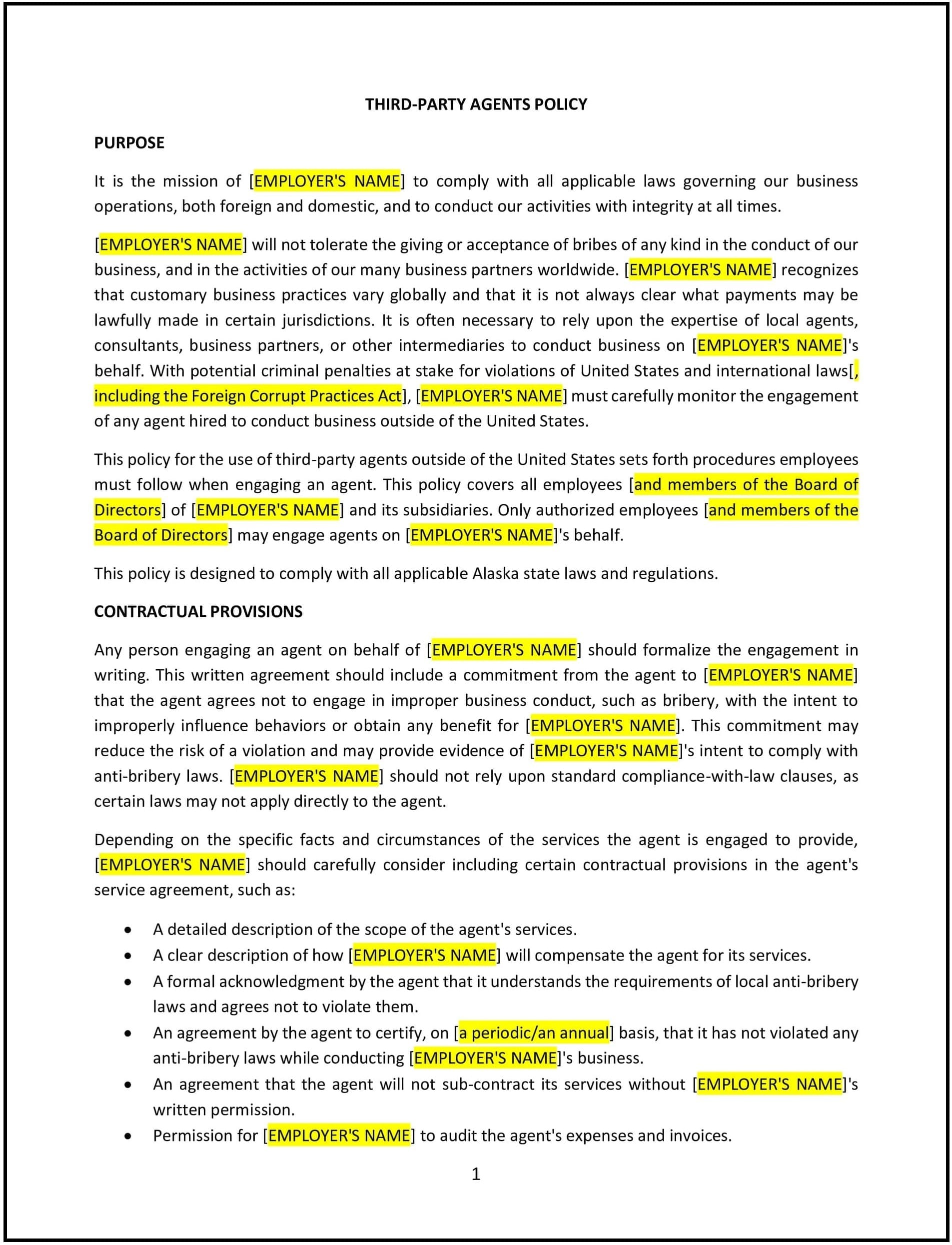
Third-party agents policy (Alaska)
In Alaska, a third-party agents policy provides guidelines for engaging and managing external individuals or organizations that act on behalf of the company. This policy ensures that third-party agents adhere to the company’s standards, legal requirements, and ethical practices while representing the business.
By implementing this policy, businesses can mitigate risks, maintain compliance, and protect their reputation.
How to use this third-party agents policy (Alaska)
- Define agent roles: Clearly outline the scope of work and responsibilities for third-party agents, ensuring alignment with company objectives.
- Set qualification standards: Specify criteria for selecting agents, such as experience, certifications, or compliance with industry standards.
- Include contract requirements: Ensure all third-party agents sign contracts detailing expectations, confidentiality agreements, and compliance with applicable laws.
- Establish monitoring procedures: Provide steps for reviewing agent performance, including regular audits, reports, or performance reviews.
- Address termination protocols: Outline conditions under which the relationship with a third-party agent may be terminated, such as breaches of contract or ethical violations.
Benefits of using a third-party agents policy (Alaska)
A third-party agents policy provides significant advantages for businesses in Alaska. Here’s how it helps:
- Ensures compliance: Helps businesses adhere to state and federal regulations, reducing legal and financial risks.
- Protects reputation: Establishes ethical standards for agents, safeguarding the company’s image and relationships with stakeholders.
- Enhances accountability: Provides a framework for monitoring agent performance and addressing issues promptly.
- Mitigates risks: Reduces potential liabilities associated with third-party actions, such as fraud or non-compliance.
- Promotes consistency: Ensures all agents represent the company’s values and standards, maintaining uniformity in operations.
Tips for using a third-party agents policy (Alaska)
- Tailor to industry needs: Include specific requirements for agents operating in Alaska’s key industries, such as oil, gas, fishing, or tourism.
- Include compliance measures: Require agents to follow applicable laws, such as anti-corruption regulations and labor laws.
- Provide training: Offer orientation or training sessions to familiarize agents with company policies and expectations.
- Maintain transparency: Keep open communication channels with agents to address questions, provide updates, or resolve issues.
- Review regularly: Update the policy as needed to reflect changes in laws, business operations, or industry standards.