Third-party agents policy (California): Free template
Got contracts to review? While you're here for policies, let Cobrief make contract review effortless—start your free review now.
Customize this template for free
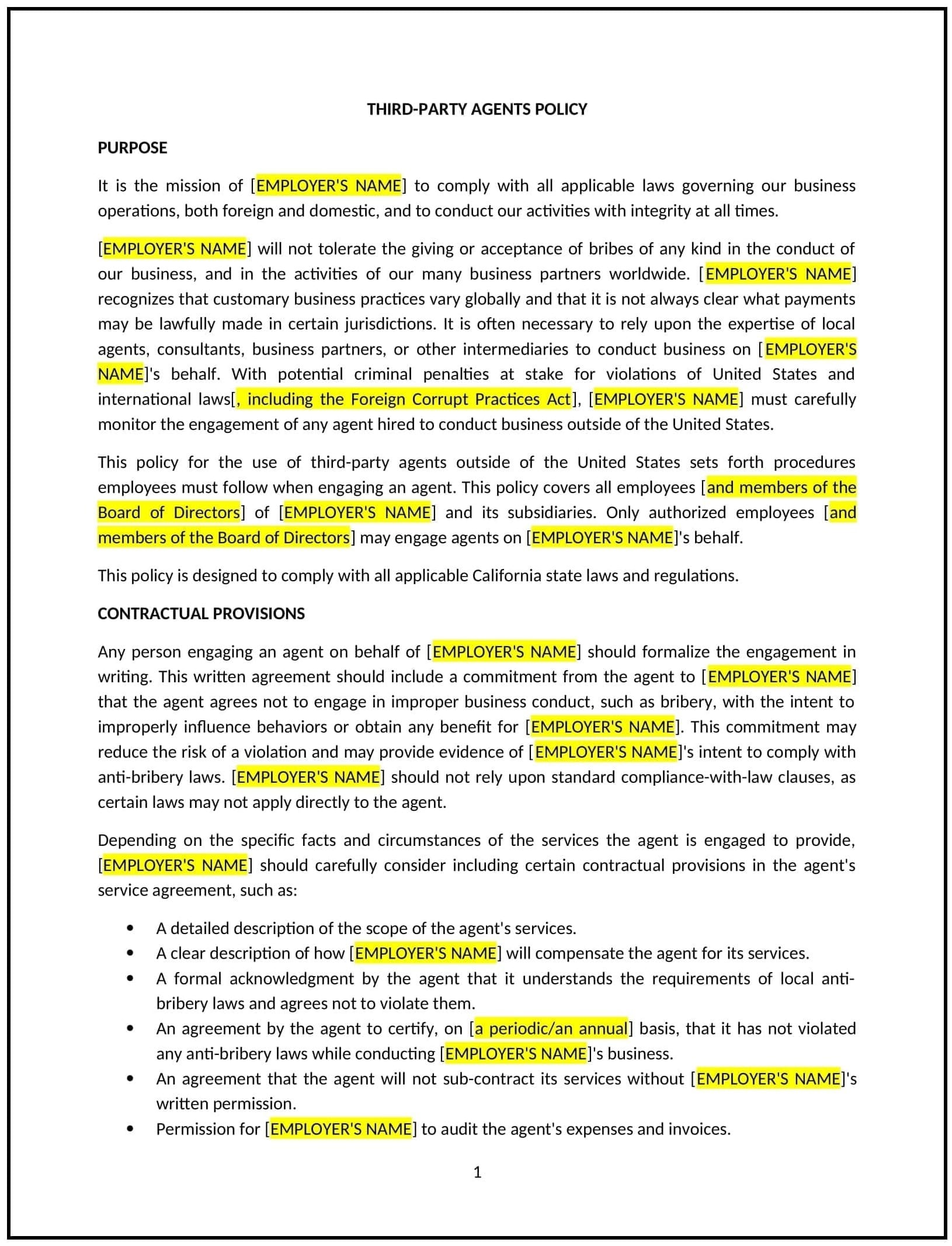
Third-party agents policy (California)
In California, a third-party agents policy provides businesses with guidelines for engaging and managing third-party representatives, such as contractors, consultants, and vendors. This policy ensures compliance with California labor laws, such as AB5 (regulating independent contractor classifications), and addresses risks related to third-party conduct.
The policy outlines the expectations for third-party agents, procedures for vetting and monitoring their activities, and safeguards for protecting the business’s interests. By implementing this policy, California businesses can maintain accountability, ensure legal compliance, and minimize risks.
How to use this third-party agents policy (California)
- Define scope: Clearly outline the roles and activities of third-party agents that fall under this policy, including contractors, consultants, and service providers.
- Establish vetting procedures: Require due diligence, such as background checks, qualifications verification, and contract reviews, before engaging third-party agents.
- Communicate expectations: Specify standards of conduct, compliance requirements, and confidentiality obligations for third-party agents.
- Monitor performance: Implement oversight measures to ensure agents meet performance expectations and adhere to agreements.
- Address termination: Provide procedures for ending relationships with third-party agents who fail to meet expectations or violate the policy.
Benefits of using this third-party agents policy (California)
This policy offers several advantages for California businesses:
- Supports compliance: Reflects California labor laws, including AB5, which governs independent contractor classifications.
- Reduces risks: Mitigates potential legal, financial, and reputational risks associated with third-party misconduct or non-compliance.
- Enhances accountability: Clarifies roles and responsibilities for third-party agents, promoting consistent performance.
- Protects business interests: Safeguards confidential information and intellectual property through clear contractual agreements.
- Promotes efficiency: Streamlines processes for vetting, onboarding, and managing third-party agents.
Tips for using this third-party agents policy (California)
- Reflect California-specific laws: Ensure compliance with AB5 and other labor regulations governing independent contractors and third-party agents.
- Use clear contracts: Draft comprehensive agreements outlining the terms of engagement, confidentiality, and compliance requirements.
- Conduct regular reviews: Periodically evaluate third-party agents to ensure continued alignment with the business’s goals and standards.
- Provide training: Educate managers on engaging and monitoring third-party agents effectively and lawfully.
- Update regularly: Revise the policy to reflect changes in California laws or business practices.