Got contracts to review? While you're here for policies, let Cobrief make contract review effortless—start your free review now.
Customize this template for free
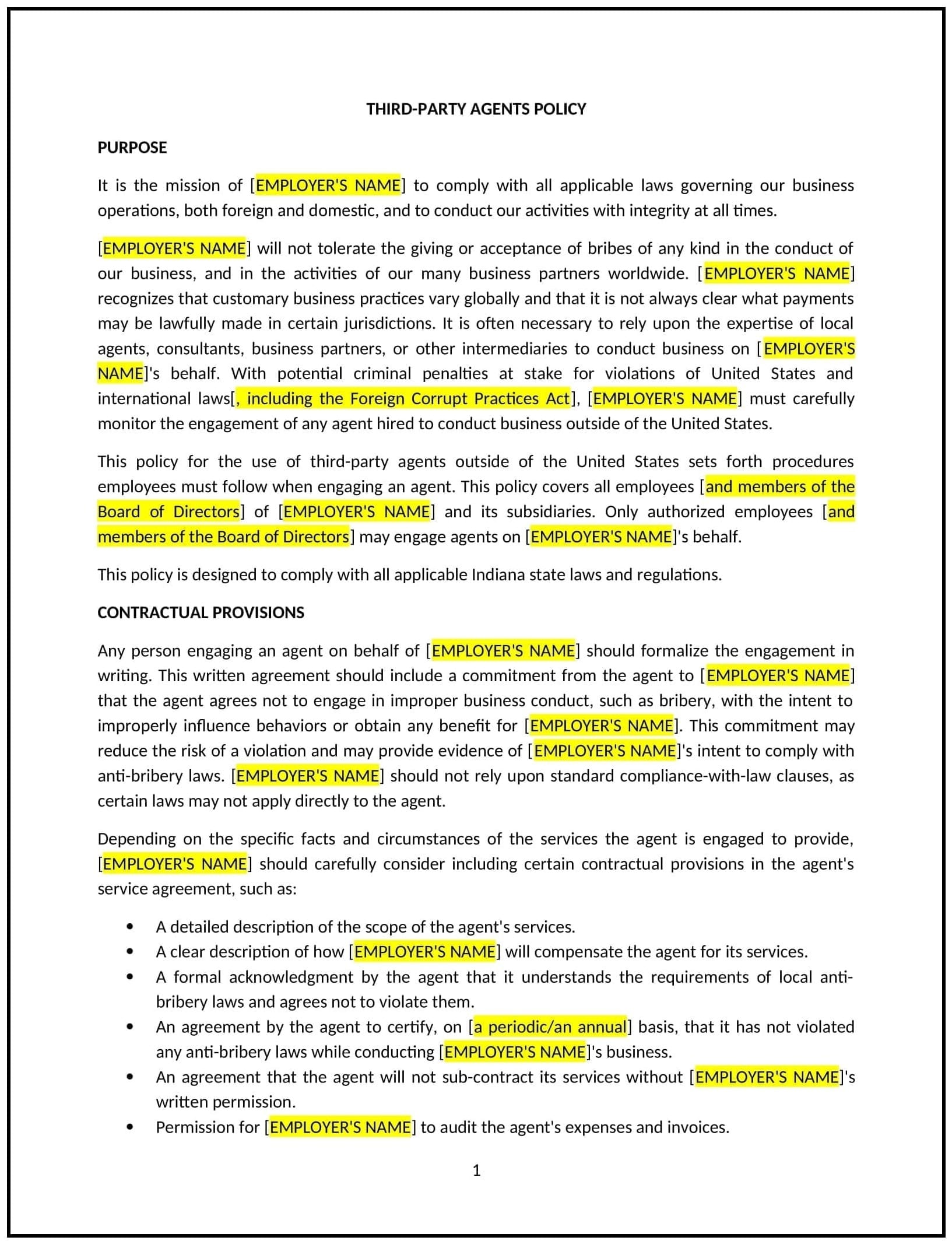
Third-party agents policy (Indiana): Free template
This third-party agents policy helps Indiana businesses establish clear guidelines for managing relationships with third-party agents, such as contractors, consultants, or vendors. It outlines expectations, responsibilities, and procedures to ensure that third-party agents act in alignment with the business's values, legal obligations, and operational goals. The policy also provides a framework for evaluating, monitoring, and terminating third-party agreements when necessary.
By implementing this policy, Indiana businesses can mitigate risks, ensure accountability, and foster productive partnerships with third-party agents.
How to use this third-party agents policy (Indiana)
- Define third-party agents: Clearly outline who qualifies as a third-party agent, such as contractors, consultants, vendors, or other external service providers engaged to support business operations.
- Establish selection criteria: Specify the standards for selecting third-party agents, including qualifications, reputation, and alignment with the business’s objectives and compliance requirements.
- Outline onboarding procedures: Provide steps for onboarding third-party agents, including signing agreements, providing necessary documentation, and completing any required training.
- Specify roles and responsibilities: Clearly define the roles and responsibilities of both the business and the third-party agent to ensure alignment and mutual understanding.
- Address compliance requirements: Include guidelines for ensuring that third-party agents adhere to applicable laws, industry regulations, and company policies, such as data protection or safety protocols.
- Monitor performance: Establish procedures for regularly reviewing the performance of third-party agents to ensure they meet agreed-upon standards and deliverables.
- Include termination processes: Provide guidelines for terminating agreements with third-party agents, including conditions for termination and the steps to follow.
- Review and update regularly: Periodically assess the policy to reflect changes in business practices, legal requirements, or market conditions.
Benefits of using this third-party agents policy (Indiana)
Implementing this policy provides several key benefits for Indiana businesses:
- Enhances accountability: Clearly defines expectations and responsibilities for third-party agents, ensuring they deliver on commitments.
- Mitigates risks: Reduces potential liabilities by requiring third-party agents to adhere to legal and contractual obligations.
- Supports operational consistency: Establishes a framework for selecting, onboarding, and managing third-party agents, improving efficiency.
- Promotes compliance: Helps businesses align with Indiana laws and regulations related to third-party relationships.
- Improves performance oversight: Provides mechanisms for monitoring and evaluating the performance of third-party agents.
- Simplifies dispute resolution: Outlines clear procedures for addressing issues or terminating agreements with underperforming agents.
Tips for using this third-party agents policy (Indiana)
- Communicate expectations: Share the policy with all relevant employees and third-party agents to ensure mutual understanding of roles and responsibilities.
- Perform due diligence: Conduct thorough background checks and assessments before engaging any third-party agent to verify their qualifications and reputation.
- Monitor compliance: Regularly review third-party agents’ adherence to company policies and applicable regulations, addressing any discrepancies promptly.
- Maintain clear documentation: Ensure that all agreements, communications, and performance reviews with third-party agents are documented and securely stored.
- Foster open communication: Encourage regular check-ins and feedback to maintain a strong working relationship with third-party agents.
- Plan for contingencies: Include provisions in agreements to address unexpected issues, such as performance failures or changes in project scope.