Got contracts to review? While you're here for policies, let Cobrief make contract review effortless—start your free review now.
Customize this template for free
Third-party agents policy (Iowa)
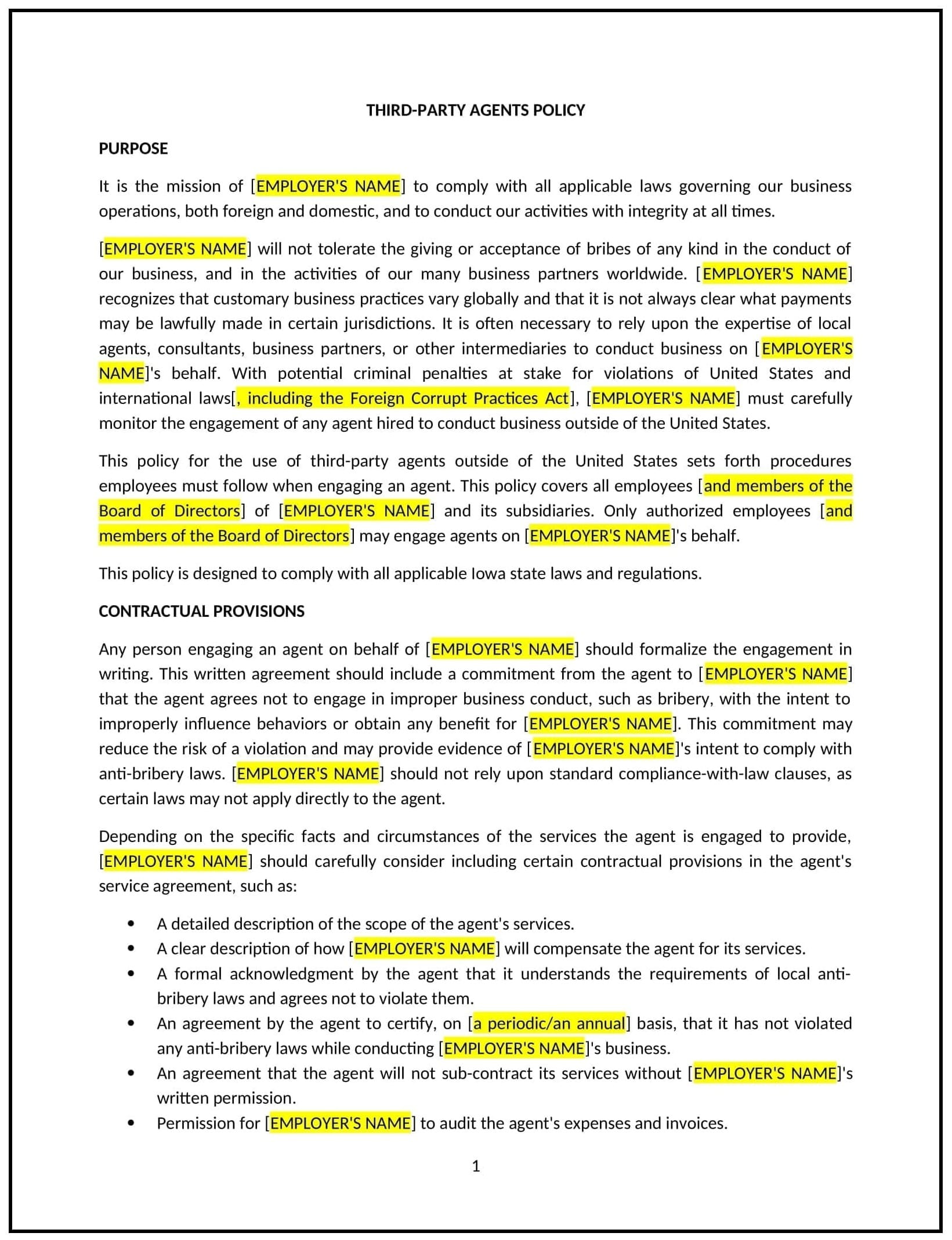
A third-party agents policy helps Iowa businesses define expectations and guidelines for working with third-party vendors, contractors, and agents. This policy ensures that third-party agents act in a manner consistent with the company’s values, business practices, and legal obligations. It addresses the selection, management, and oversight of third-party relationships, focusing on issues like contract terms, confidentiality, risk management, and compliance with applicable laws and regulations.
By implementing this policy, businesses can mitigate risks associated with third-party relationships, ensure consistency in how agents represent the business, and protect sensitive company information.
How to use this third-party agents policy (Iowa)
- Define third-party agents: Specify what constitutes a third-party agent, including vendors, contractors, consultants, and other external parties who perform work on behalf of the business.
- Set selection criteria: Establish clear criteria for selecting third-party agents, such as qualifications, reputation, compliance with industry standards, and alignment with company values.
- Address contracts and agreements: Require that all third-party relationships are governed by formal contracts or agreements that clearly define the scope of work, performance expectations, payment terms, confidentiality requirements, and any other relevant provisions.
- Ensure confidentiality: Outline expectations for maintaining the confidentiality of company data, proprietary information, and any other sensitive materials that third-party agents may access or handle.
- Manage risk: Establish procedures for assessing and managing risks associated with third-party agents, including conducting background checks, assessing financial stability, and evaluating the agent’s ability to meet compliance and regulatory requirements.
- Monitor performance: Define how third-party agents’ performance will be monitored, including regular reporting, audits, and performance reviews to ensure they meet contractual obligations and company standards.
- Address disputes: Provide a framework for resolving disputes or conflicts with third-party agents, including escalation procedures, mediation, or legal action when necessary.
- Review and update regularly: Periodically review and update the policy to ensure that it reflects changes in legal requirements, business operations, and industry practices.
Benefits of using this third-party agents policy (Iowa)
This policy offers several key benefits for Iowa businesses:
- Mitigates risk: By setting clear guidelines for selecting, managing, and monitoring third-party agents, businesses can reduce risks related to non-compliance, fraud, and reputational damage.
- Protects confidential information: The policy ensures that third-party agents understand their obligations regarding confidentiality, protecting sensitive company data and proprietary information.
- Improves accountability: Clear expectations for performance, monitoring, and dispute resolution ensure that third-party agents are held accountable for their work and actions on behalf of the business.
- Enhances business operations: By establishing structured and consistent relationships with third-party agents, businesses can streamline processes, improve efficiency, and maintain control over the quality of external work.
- Reduces legal exposure: A formalized process for managing third-party relationships helps ensure compliance with relevant laws and regulations, reducing the risk of legal challenges.
- Strengthens company reputation: Working with reputable, well-managed third-party agents enhances the business's credibility and helps maintain strong relationships with clients and customers.
Tips for using this third-party agents policy (Iowa)
- Communicate expectations clearly: Ensure that all third-party agents understand the terms of the policy, including their responsibilities and obligations regarding confidentiality, compliance, and performance standards.
- Conduct thorough due diligence: Before entering into an agreement with a third-party agent, conduct background checks and evaluations to ensure they meet the company’s selection criteria and can deliver the required services.
- Monitor ongoing performance: Regularly assess the performance of third-party agents through audits, reviews, and feedback from relevant departments to ensure they are meeting contractual obligations and quality standards.
- Address issues proactively: If performance issues or breaches of the agreement occur, address them promptly by following the dispute resolution procedures outlined in the policy, including mediation or legal action when necessary.
- Stay updated on legal requirements: Keep track of any changes in laws and regulations that may impact third-party relationships and update the policy accordingly to remain compliant.
- Set clear contractual terms: Ensure that all third-party agreements include clear terms about scope of work, deadlines, payments, and performance expectations, and are signed before work begins.