Got contracts to review? While you're here for policies, let Cobrief make contract review effortless—start your free review now.
Customize this template for free
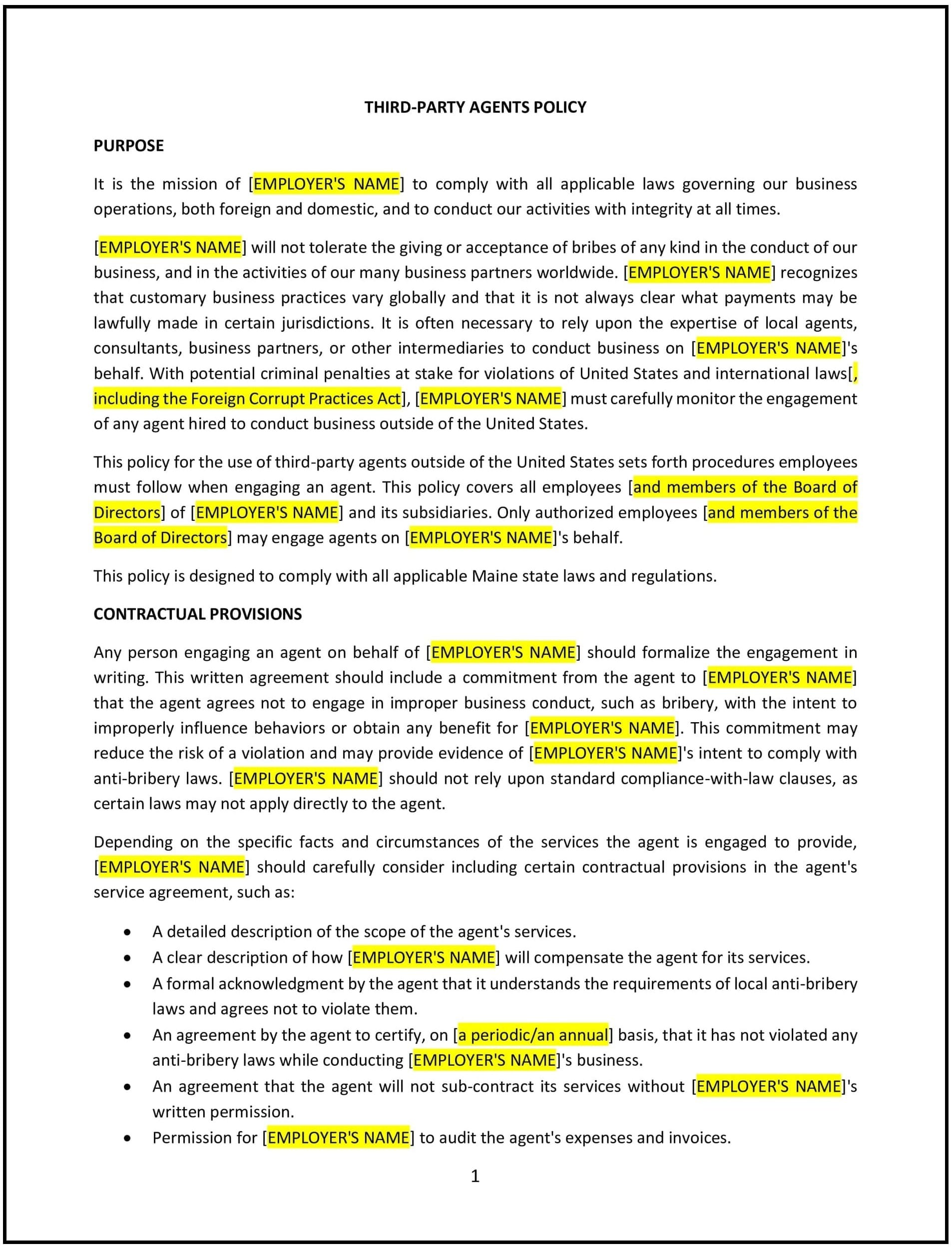
Third-party agents policy (Maine): Free template
This third-party agents policy is designed to help Maine businesses establish guidelines for managing relationships with third-party agents, contractors, vendors, and service providers. It outlines the expectations for selecting, managing, and monitoring third-party agents to ensure that they align with the business's values, legal requirements, and operational standards.
By implementing this policy, Maine businesses can reduce the risks associated with outsourcing, support compliance with laws, and maintain high standards of integrity and performance when working with third-party agents.
How to use this third-party agents policy (Maine)
- Define third-party agents: Clearly define who qualifies as a third-party agent, including contractors, vendors, service providers, and other external parties hired to perform services on behalf of the business.
- Set selection criteria: Establish clear criteria for selecting third-party agents, such as their qualifications, reputation, and alignment with the company’s values and compliance standards.
- Address compliance with laws and regulations: Ensure that third-party agents comply with all relevant Maine state laws, federal regulations, industry standards, and the company’s internal policies.
- Establish performance expectations: Specify the performance standards that third-party agents must meet, including quality of service, timelines, and deliverables, and how performance will be measured.
- Include monitoring and oversight procedures: Outline how the company will monitor and evaluate the work of third-party agents, including periodic reviews, audits, and performance assessments.
- Address contract terms: Detail the contract terms with third-party agents, including confidentiality, intellectual property rights, and termination clauses to ensure protection for both parties.
- Set dispute resolution procedures: Provide guidelines for resolving disputes with third-party agents, including mediation, arbitration, or other methods of conflict resolution.
- Review regularly: Update the policy periodically to reflect changes in business practices, legal requirements, or the third-party agent landscape.
Benefits of using this third-party agents policy (Maine)
Implementing this policy provides several benefits for Maine businesses:
- Reduces risks: Minimizes risks associated with third-party relationships, including legal, financial, and reputational risks, by ensuring that agents adhere to agreed-upon standards and regulations.
- Ensures compliance: Helps ensure that third-party agents comply with Maine state laws, federal regulations, and industry standards, protecting the business from liability.
- Promotes quality control: Establishes clear performance expectations and monitoring procedures, ensuring that third-party agents meet the business’s requirements for quality and service.
- Protects business interests: Safeguards the company’s intellectual property, confidential information, and other assets when working with external agents.
- Enhances transparency: Creates a transparent process for selecting and managing third-party agents, promoting fairness and consistency in vendor relationships.
Tips for using this third-party agents policy (Maine)
- Vet third-party agents thoroughly: Perform due diligence before entering into any agreement with third-party agents, ensuring they meet the business’s standards and legal requirements.
- Monitor performance consistently: Regularly assess the performance of third-party agents, ensuring they deliver services in line with contractual agreements and performance expectations.
- Communicate clearly: Maintain clear communication with third-party agents about the business’s expectations, compliance requirements, and any issues that arise during the relationship.
- Address issues promptly: Respond swiftly to any performance or compliance issues with third-party agents to mitigate risks and prevent further complications.
- Stay compliant: Ensure that third-party contracts include provisions that align with Maine’s legal and regulatory framework, and update the policy as necessary to remain compliant.