Third-party agents policy (Maryland): Free template
Got contracts to review? While you're here for policies, let Cobrief make contract review effortless—start your free review now.
Customize this template for free
Third-party agents policy (Maryland)
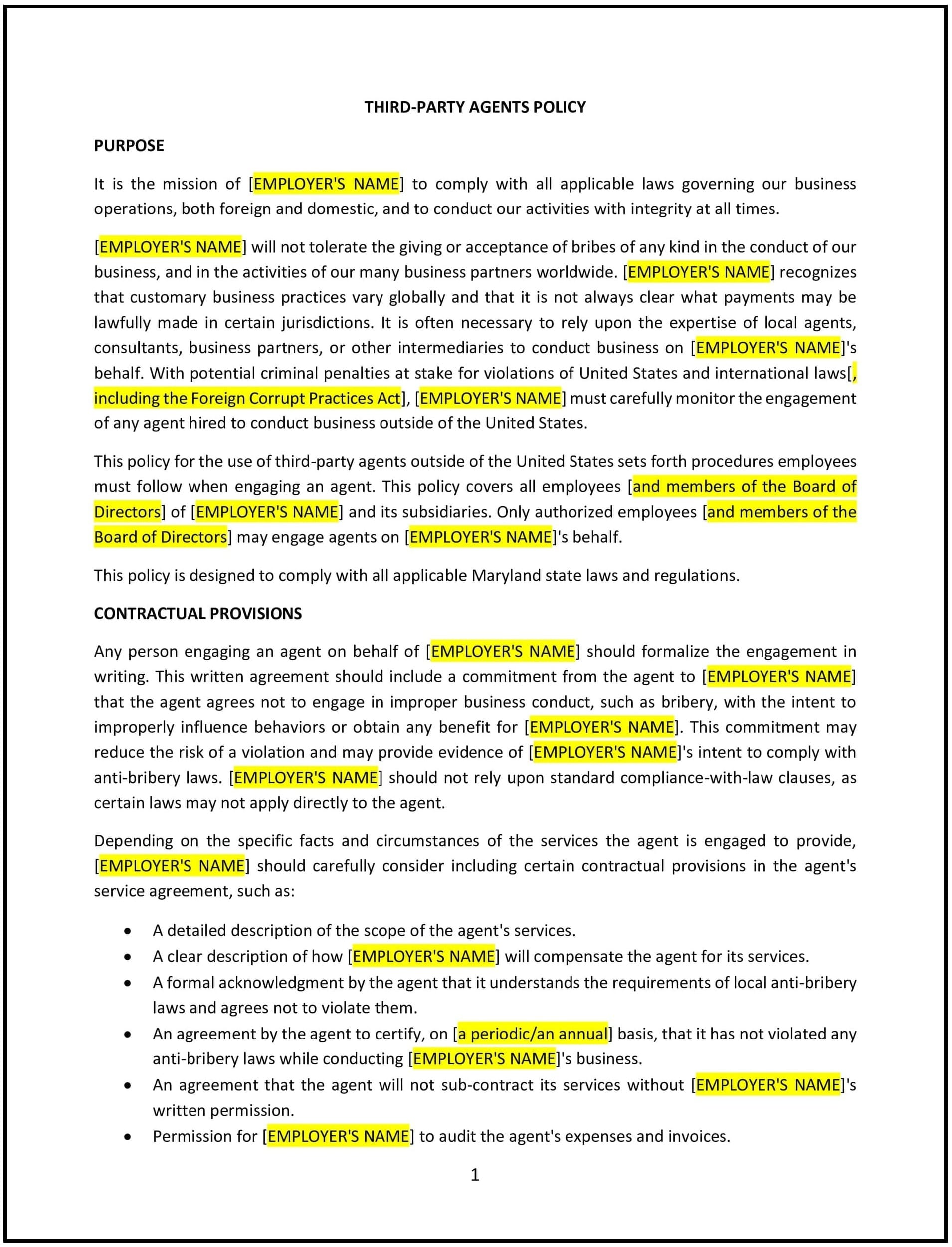
This third-party agents policy is designed to help Maryland businesses establish guidelines for engaging and managing third-party agents, vendors, and contractors. It outlines expectations for conduct, performance, confidentiality, and legal obligations when working with external partners.
By adopting this policy, Maryland businesses can minimize risks, protect company interests, and ensure consistency in how third-party relationships are handled.
How to use this third-party agents policy (Maryland)
- Define third-party agents: Clearly define who qualifies as a third-party agent, including contractors, consultants, vendors, and other external partners.
- Establish engagement procedures: Outline how third-party agents are selected, evaluated, and contracted, ensuring due diligence is applied to prevent conflicts of interest.
- Set performance expectations: Specify the standards of performance, including the quality of work, timelines, and deliverables expected from third-party agents.
- Include confidentiality and data protection: Require third-party agents to maintain confidentiality and implement safeguards to protect proprietary information, client data, or sensitive company details.
- Address legal and ethical responsibilities: Ensure third-party agents understand their legal obligations, including compliance with Maryland laws, non-discrimination policies, and environmental regulations.
- Provide monitoring and oversight: Define how third-party agents’ activities will be monitored and evaluated, ensuring they meet contractual obligations and company standards.
Benefits of using this third-party agents policy (Maryland)
Implementing this policy provides Maryland businesses with several advantages:
- Reduces risk: Minimizes the potential for legal, financial, or reputational risks associated with third-party actions.
- Promotes consistency: Establishes a clear and standardized process for managing third-party relationships.
- Protects company interests: Ensures that external partners adhere to company policies, confidentiality agreements, and legal requirements.
- Enhances oversight: Provides a framework for monitoring third-party performance and addressing issues proactively.
- Aligns with Maryland laws: Supports compliance with state-specific regulations on contracting and business dealings.
Tips for using this third-party agents policy (Maryland)
- Communicate expectations: Ensure all third-party agents are fully informed of their obligations, responsibilities, and the company’s policies before beginning work.
- Perform due diligence: Conduct thorough background checks and evaluations to assess the reliability, reputation, and qualifications of potential third-party agents.
- Monitor performance: Regularly review third-party agents’ work to ensure they meet performance standards and contractual obligations.
- Establish clear contracts: Draft detailed contracts that outline all expectations, terms, and penalties for non-compliance or failure to meet obligations.
- Review regularly: Regularly assess third-party relationships to ensure they remain beneficial and compliant with Maryland regulations.