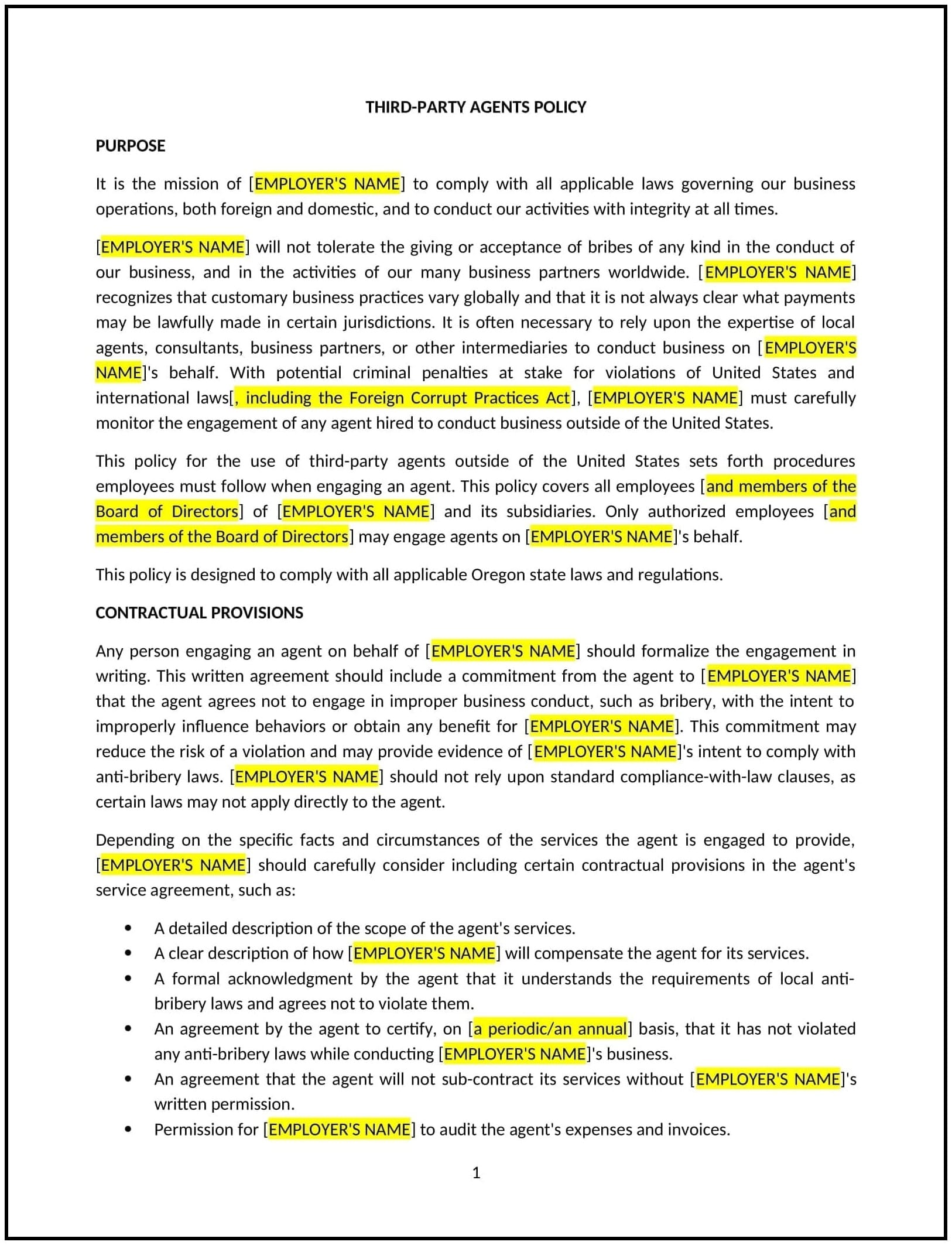
Third-party agents policy (Oregon): Free template
Specifies the standards and oversight required when working with external representatives.
- Policies
- Oregon
Third-party agents policy (Oregon)
This third-party agents policy is designed to help Oregon businesses establish clear guidelines for engaging and managing third-party agents, vendors, and contractors. The policy outlines expectations for conduct, performance, confidentiality, and compliance with applicable laws.
By implementing this policy, businesses can mitigate risks, protect company interests, and ensure consistent management of external relationships.
How to use this third-party agents policy (Oregon)
- Define third-party agents: Clearly identify who qualifies as a third-party agent, such as contractors, consultants, or vendors.
- Establish selection criteria: Specify the qualifications, experience, or certifications required for engaging third-party agents.
- Outline engagement procedures: Provide steps for vetting, contracting, and onboarding third-party agents.
- Set performance expectations: Clearly define standards for work quality, timelines, and deliverables.
- Address confidentiality: Require third-party agents to protect sensitive information through non-disclosure agreements (NDAs) or similar measures.
- Include compliance obligations: Specify that agents must adhere to relevant Oregon laws, including labor and environmental regulations.
- Provide monitoring protocols: Establish procedures for evaluating the performance and compliance of third-party agents regularly.
- Review regularly: Periodically assess and update the policy to reflect changes in Oregon business practices or legal requirements.
Benefits of using this third-party agents policy (Oregon)
Implementing this policy provides several advantages for Oregon businesses:
- Reduces risk: Mitigates potential legal, financial, or reputational risks associated with third-party actions.
- Protects sensitive information: Ensures agents maintain confidentiality and safeguard proprietary business data.
- Promotes consistency: Establishes clear and standardized procedures for managing external relationships.
- Enhances accountability: Regular evaluations ensure agents meet performance and compliance standards.
- Reflects Oregon-specific practices: Tailoring the policy to local laws and business norms ensures practicality and relevance.
Tips for using this third-party agents policy (Oregon)
- Communicate expectations: Share the policy with all third-party agents during the onboarding process.
- Perform due diligence: Vet potential agents thoroughly to assess their reliability, qualifications, and compliance history.
- Monitor performance: Conduct regular reviews to ensure agents meet agreed-upon standards and contract terms.
- Provide training: Offer resources or training to help agents understand your company’s requirements and expectations.
- Address non-compliance: Take immediate action if an agent fails to meet obligations, including contract termination if necessary.
Frequently asked questions (FAQs)
Similar templates

Where deals go from offer to paid
