Time off for public duties policy (Mississippi): Free template
Got contracts to review? While you're here for policies, let Cobrief make contract review effortless—start your free review now.
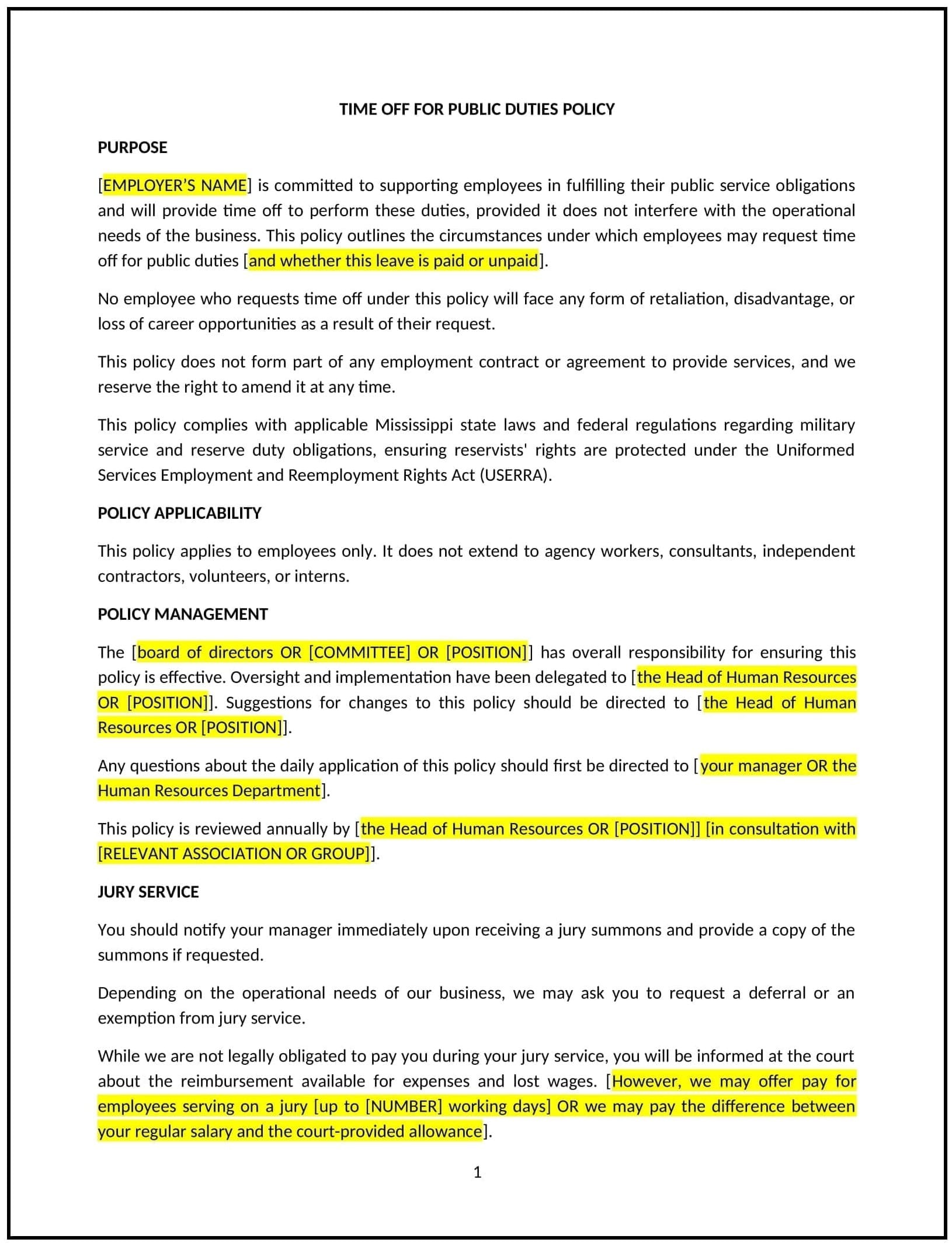
Customize this template for free
Time off for public duties policy (Mississippi)
A time off for public duties policy helps Mississippi businesses create a framework for supporting employees who engage in civic responsibilities. This policy outlines procedures for granting leave for activities such as jury duty, voting, or serving as an election official. It is designed to promote civic engagement, reduce conflicts, and provide clear guidelines for handling requests for time off related to public duties.
By implementing this policy, businesses in Mississippi can demonstrate their commitment to community involvement, foster goodwill among employees, and align with the state’s values of civic participation.
How to use this time off for public duties policy (Mississippi)
- Define eligible public duties: Clearly specify which activities qualify for time off, such as jury duty, voting, or serving as an election official.
- Establish request procedures: Outline how employees should request time off, including notice requirements and documentation.
- Specify leave terms: Explain whether the leave is paid or unpaid and any conditions that apply, such as proof of service or duration limits.
- Communicate expectations: Clarify the business’s expectations regarding scheduling, work coverage, and returning to work after fulfilling public duties.
- Address potential conflicts: Provide guidance on resolving scheduling conflicts or operational challenges caused by employee absences.
- Share the policy: Distribute the policy during onboarding and through regular communications to ensure awareness and understanding.
- Monitor implementation: Regularly review how the policy is applied and address any concerns or inconsistencies promptly.
- Update the policy: Periodically assess the policy to reflect changes in state laws, workplace dynamics, or business needs.
Benefits of using this time off for public duties policy (Mississippi)
This policy offers several advantages for Mississippi businesses:
- Promotes civic engagement: Supporting employees in fulfilling public duties encourages active participation in democracy.
- Reduces conflicts: Clear guidelines help minimize misunderstandings or disputes about time-off requests.
- Builds goodwill: A policy that supports civic responsibilities fosters loyalty and trust among employees.
- Aligns with community values: Reflects Mississippi’s emphasis on civic responsibility and community involvement.
- Enhances reputation: Demonstrates the business’s commitment to ethical practices and social accountability.
- Improves planning: Defined procedures make it easier to manage absences and maintain operational efficiency.
- Supports legal alignment: Helps businesses stay informed about state-specific requirements for time off related to public duties.
Tips for using this time off for public duties policy (Mississippi)
- Communicate clearly: Ensure employees understand the policy by providing written materials and discussing it during meetings or training sessions.
- Train managers: Educate supervisors on how to handle time-off requests consistently and fairly.
- Be flexible: Consider offering additional accommodations, such as flexible hours, to support employees fulfilling public duties.
- Track requests: Maintain records of time-off requests and approvals to monitor trends and ensure fairness.
- Stay informed: Keep up with changes in Mississippi laws or regulations that may affect time-off requirements for public duties.
- Encourage participation: Highlight the importance of civic engagement and how the policy supports employees in contributing to their communities.
- Review periodically: Assess the policy’s effectiveness and make updates as needed to reflect changes in workplace dynamics or legal requirements.