Time off for training policy (Connecticut): Free template
Got contracts to review? While you're here for policies, let Cobrief make contract review effortless—start your free review now.
Customize this template for free
Time off for training policy (Connecticut)
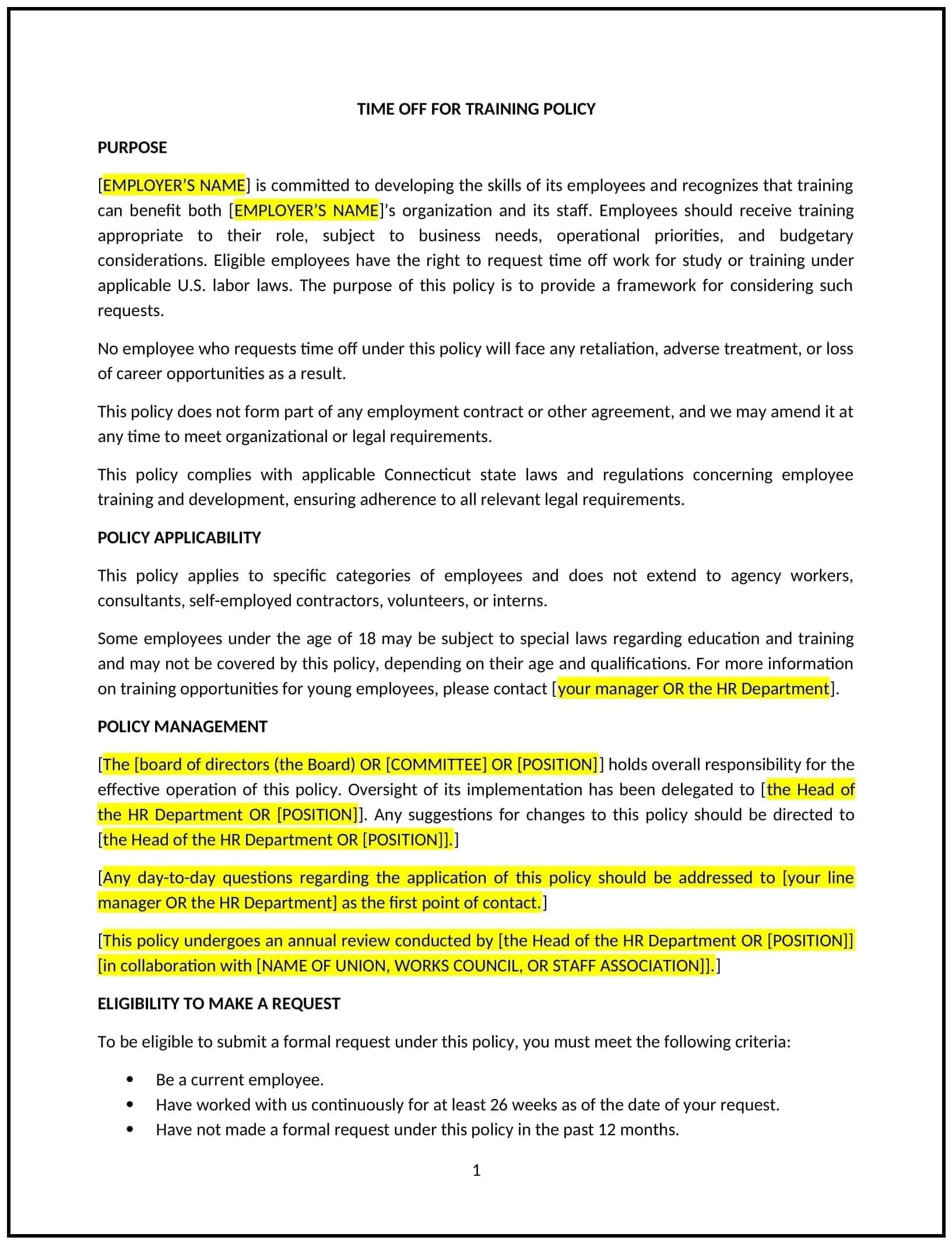
A time off for training policy helps Connecticut businesses support employee development by offering time off for training, professional development courses, or certifications. This policy outlines how employees can request time off for training, the types of training that qualify for leave, and the company’s approach to ensuring that training does not disrupt business operations.
By implementing this policy, businesses can invest in their employees' growth, improve skill sets, and ensure that training aligns with company goals while maintaining productivity.
How to use this time off for training policy (Connecticut)
- Define eligible training: Specify the types of training that qualify for time off, such as job-related skills development, industry certifications, or professional development courses that align with the company’s objectives.
- Set guidelines for requesting time off: Outline the process for employees to request time off for training, including how much notice is required, any necessary documentation (e.g., course registration), and how to submit a request for approval.
- Address paid or unpaid leave: Clarify whether the company will pay employees for time off taken for training or if the leave will be unpaid. Include information on whether employees can use other leave types (e.g., vacation or personal leave) to cover training time.
- Outline training approval: Establish criteria for approving time off for training, such as whether the training aligns with the employee's role, its relevance to business needs, and the potential impact on the employee's workload and team.
- Balance work and training: Ensure that employees and managers work together to coordinate training schedules that minimize disruption to business operations.
- Define training reimbursement: Clarify whether the company will reimburse employees for training costs, including tuition, course materials, and travel expenses, and outline any conditions for reimbursement (e.g., completion of the course, staying with the company for a certain period).
- Promote continuous learning: Encourage employees to pursue training and development opportunities that contribute to their professional growth and the company’s success, while ensuring that training aligns with business needs.
Benefits of using this time off for training policy (Connecticut)
This policy offers several benefits for Connecticut businesses:
- Improves employee skills: Offering time off for training helps employees enhance their skills, improving their performance and contributing to overall company success.
- Increases employee satisfaction and retention: Providing training opportunities shows the company’s commitment to employees’ professional growth, leading to higher morale, job satisfaction, and retention.
- Supports business growth: By investing in employee development, the business can stay competitive by enhancing employees' capabilities, which ultimately benefits the company's growth and innovation.
- Reduces skills gaps: Training ensures that employees have the necessary skills to perform their jobs effectively, reducing performance gaps and increasing efficiency.
- Complies with regulatory requirements: In some industries, training is necessary for compliance with state and federal laws. The policy ensures that employees have the time and resources to meet these requirements.
Tips for using this time off for training policy (Connecticut)
- Communicate the policy clearly: Ensure that all employees understand the process for requesting time off for training, the types of training eligible for leave, and any company expectations regarding training participation.
- Monitor training outcomes: Track the effectiveness of training programs and employee participation to assess whether the company is getting a return on its investment in training and development.
- Offer flexibility: Where possible, allow employees to schedule training during times that minimize disruption to the business, such as during slower work periods.
- Coordinate with managers: Ensure that employees and their managers collaborate to manage workload while employees are away for training, maintaining a balance between training needs and operational requirements.
- Review periodically: Regularly review and update the policy to reflect changes in company goals, employee development needs, and industry trends, ensuring the policy remains relevant and effective.