Time off for training policy (Indiana): Free template
Got contracts to review? While you're here for policies, let Cobrief make contract review effortless—start your free review now.
Customize this template for free
Time off for training policy (Indiana): Free template
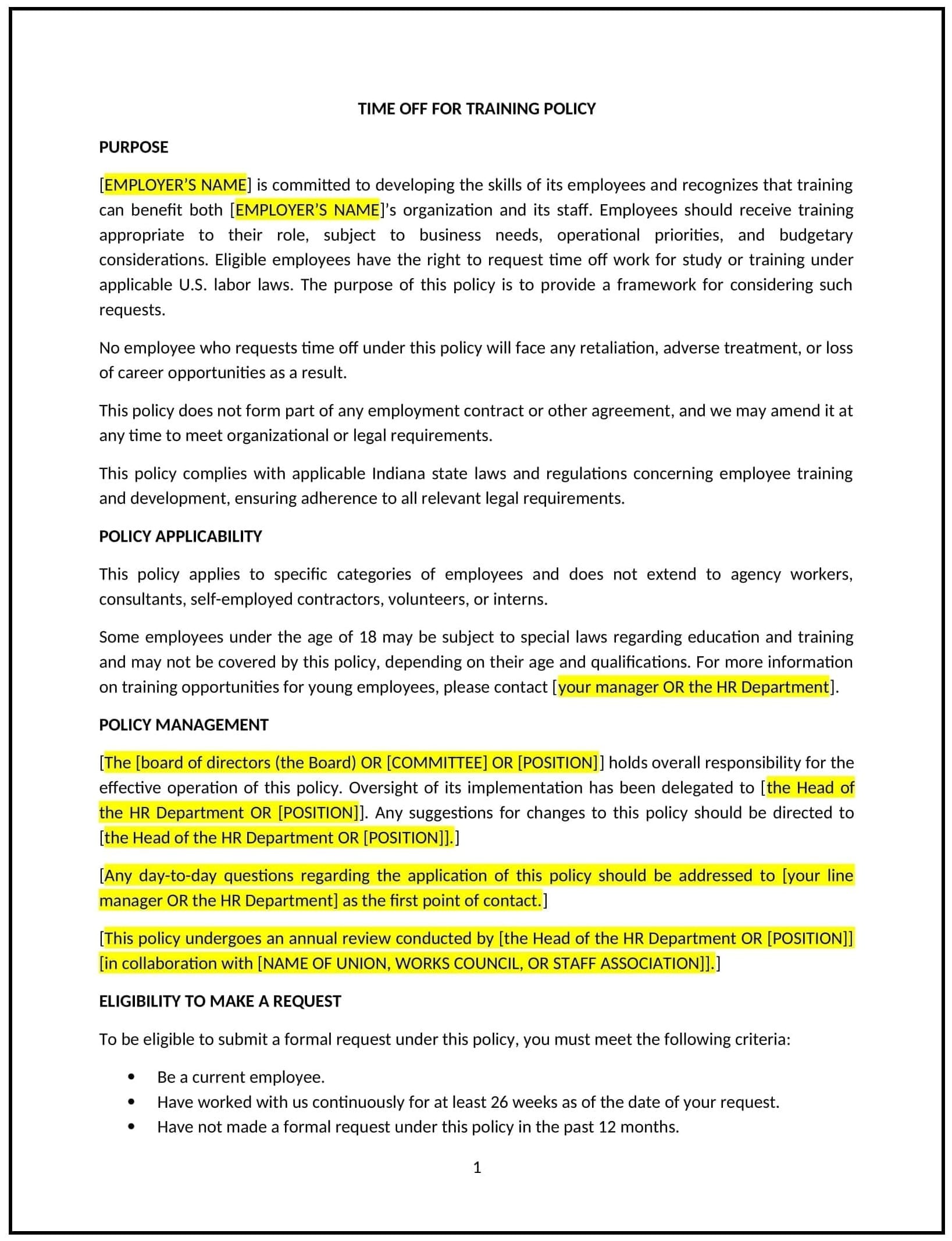
This time off for training policy helps Indiana businesses establish clear guidelines for managing employee absences related to professional training and development. It outlines eligibility criteria, procedures for requesting time off, and expectations for aligning training with business goals. By providing structured support for skill-building opportunities, this policy promotes continuous learning while maintaining workplace productivity.
By implementing this policy, Indiana businesses can enhance workforce capabilities, foster professional growth, and support long-term organizational success.
How to use this time off for training policy (Indiana)
- Define eligible training activities: Specify the types of training or professional development opportunities covered, such as certifications, workshops, conferences, or courses relevant to the employee's role.
- Establish eligibility criteria: Outline which employees qualify for time off for training based on factors such as job role, tenure, and alignment with business objectives.
- Clarify paid and unpaid leave: Clearly state whether training time off is paid or unpaid and if reimbursement for training expenses is provided.
- Provide a request process: Include instructions for employees to request time off, detailing the notice period, approval process, and required documentation (e.g., training schedules or registration confirmations).
- Align training with business needs: Require employees to explain how the training aligns with their role and benefits the business to ensure value from the time invested.
- Address scheduling considerations: Encourage employees to coordinate with their managers to minimize disruptions to operations during their absence.
- Include post-training expectations: Specify requirements for sharing knowledge gained during training, such as presenting key takeaways to colleagues or applying new skills in the workplace.
- Review and update regularly: Periodically assess the policy to ensure it reflects changes in business priorities, training opportunities, or Indiana regulations.
Benefits of using this time off for training policy (Indiana)
Implementing this policy provides several key benefits for Indiana businesses:
- Enhances employee skills: Supports continuous learning and development, helping employees perform better in their roles.
- Boosts retention: Demonstrates a commitment to professional growth, increasing employee satisfaction and loyalty.
- Aligns training with goals: Ensures that time spent on training directly benefits the business’s objectives and workforce capabilities.
- Minimizes disruptions: Provides a structured process for managing absences, maintaining productivity during training periods.
- Promotes knowledge sharing: Encourages employees to share insights gained from training, improving overall team performance.
- Supports compliance: Helps employees stay updated on industry regulations or certifications required for their roles.
Tips for using this time off for training policy (Indiana)
- Communicate the policy: Include the policy in the employee handbook and discuss it during onboarding or performance reviews to ensure employees are aware of its benefits and procedures.
- Encourage planning: Remind employees to plan their training in advance and coordinate with their managers to minimize workplace disruptions.
- Track training outcomes: Keep a record of training sessions attended and their impact on the employee’s performance or business outcomes.
- Offer internal training options: Supplement external training with in-house programs or resources to enhance accessibility and relevance.
- Provide feedback opportunities: Allow employees to suggest training topics or programs that align with their career goals and business needs.
- Stay updated: Regularly review Indiana laws and industry requirements to ensure the policy remains relevant and effective.