Time off for training policy (Kansas): Free template
Got contracts to review? While you're here for policies, let Cobrief make contract review effortless—start your free review now.
Customize this template for free
Time off for training policy (Kansas)
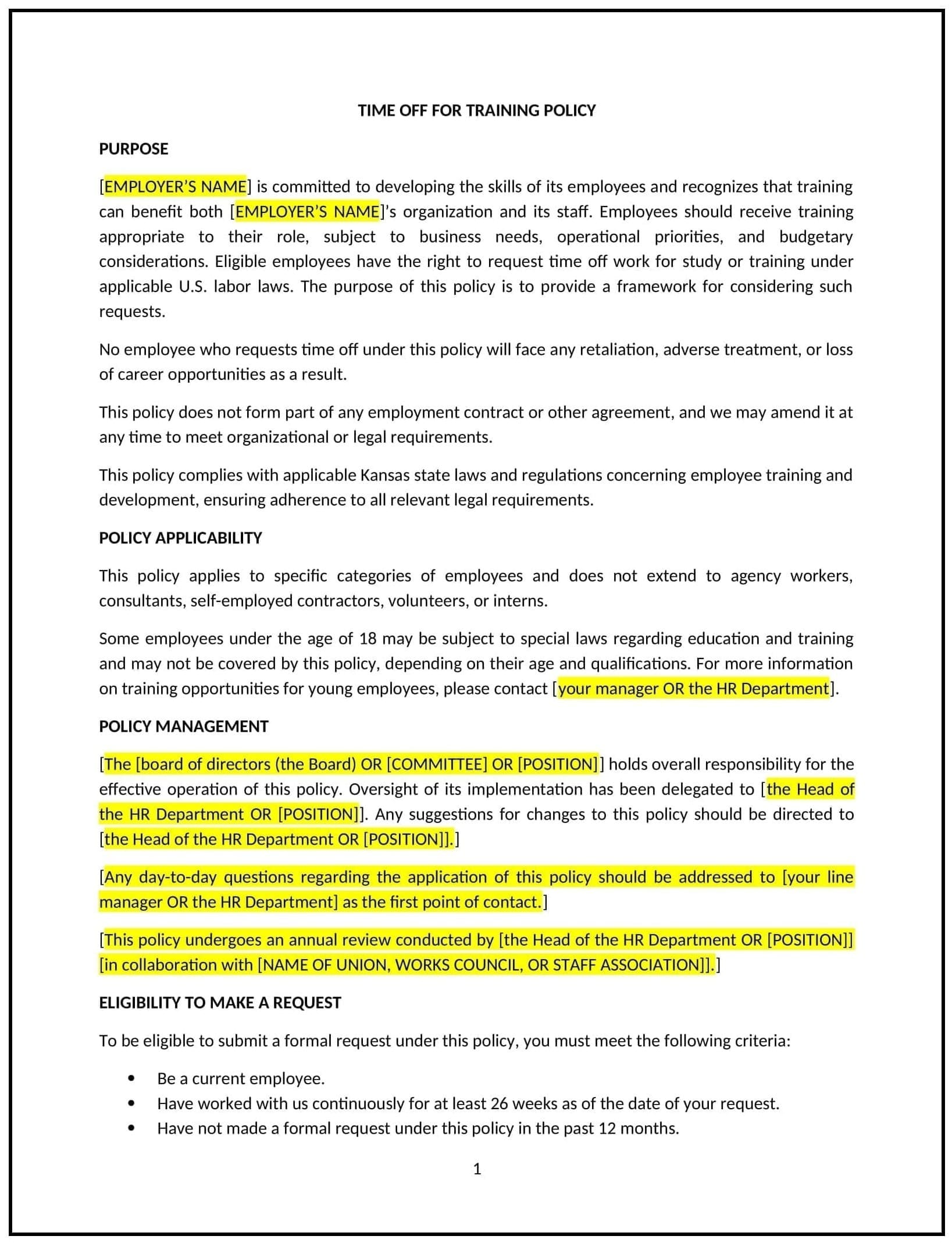
A time off for training policy helps Kansas businesses manage employee requests for time off to attend professional development activities, such as workshops, seminars, or certifications. This policy outlines the guidelines for granting time off for training, how it is compensated, and the expectations for employees to benefit from these opportunities while maintaining productivity.
By implementing this policy, businesses can support employee development, improve skills, and align training efforts with company goals.
How to use this time off for training policy (Kansas)
- Define eligible training activities: The policy should specify which types of training are eligible for time off, such as job-related courses, certifications, workshops, or industry conferences.
- Set approval procedures: Employees should submit a formal request for time off for training, detailing the training program, dates, and purpose. The policy should outline the process for managers or HR to review and approve these requests.
- Clarify time off compensation: The policy should specify whether employees will be paid for time off taken for training or if the leave will be unpaid. It may also include compensation details for travel time or expenses related to training.
- Set limits on training time: The policy should define any limits on the amount of time employees can take off for training, whether it’s based on annual hours, company needs, or specific business requirements.
- Align training with business needs: The policy should encourage employees to choose training programs that align with their roles, career growth, and the company’s strategic objectives.
- Address post-training expectations: The policy should set expectations for employees to apply the skills gained from training in their work and encourage feedback on the training's effectiveness.
- Review and update regularly: Businesses should review the policy periodically to ensure it meets the evolving needs of the company and employees and aligns with industry trends.
Benefits of using a time off for training policy (Kansas)
- Enhances employee skills: By offering time off for training, businesses help employees improve their skills, which can enhance job performance and contribute to company success.
- Increases employee satisfaction: Supporting employee development through training opportunities shows a commitment to career growth, boosting morale and retention.
- Aligns training with company goals: A formal policy helps ensure that training is focused on improving skills that align with business needs and strategic objectives, maximizing the return on investment.
- Fosters a culture of learning: Businesses that provide training opportunities demonstrate a commitment to continuous learning, encouraging employees to stay engaged and improve their capabilities.
- Reduces skill gaps: By facilitating targeted training, businesses can address skill gaps and ensure that employees have the knowledge and tools needed to perform effectively in their roles.
- Supports competitive advantage: Companies that invest in employee development can maintain a competitive edge by ensuring their workforce remains skilled and adaptable in a changing market.
Tips for using this time off for training policy (Kansas)
- Communicate the policy clearly: Businesses should ensure that all employees understand the time off for training policy, including how to request training leave, eligibility, and the process for approval.
- Align training with business needs: Encourage employees to select training opportunities that align with their current roles or career paths, benefiting both personal development and company growth.
- Monitor training effectiveness: After training, businesses should gather feedback from employees on the value and relevance of the training to assess whether it met expectations and provided the desired benefits.
- Be flexible with scheduling: Businesses should offer flexibility in allowing employees to take training time off, ensuring that it does not disrupt business operations or key project deadlines.
- Track training time: Businesses should keep accurate records of training leave taken to manage time off and ensure that the total time taken is reasonable and within company limits.
- Review and update the policy regularly: Businesses should periodically review the policy to ensure it remains relevant to both the company’s evolving needs and the development goals of its employees.