Time off for training policy (Maine): Free template
Got contracts to review? While you're here for policies, let Cobrief make contract review effortless—start your free review now.
Customize this template for free
Time off for training policy (Maine): Free template
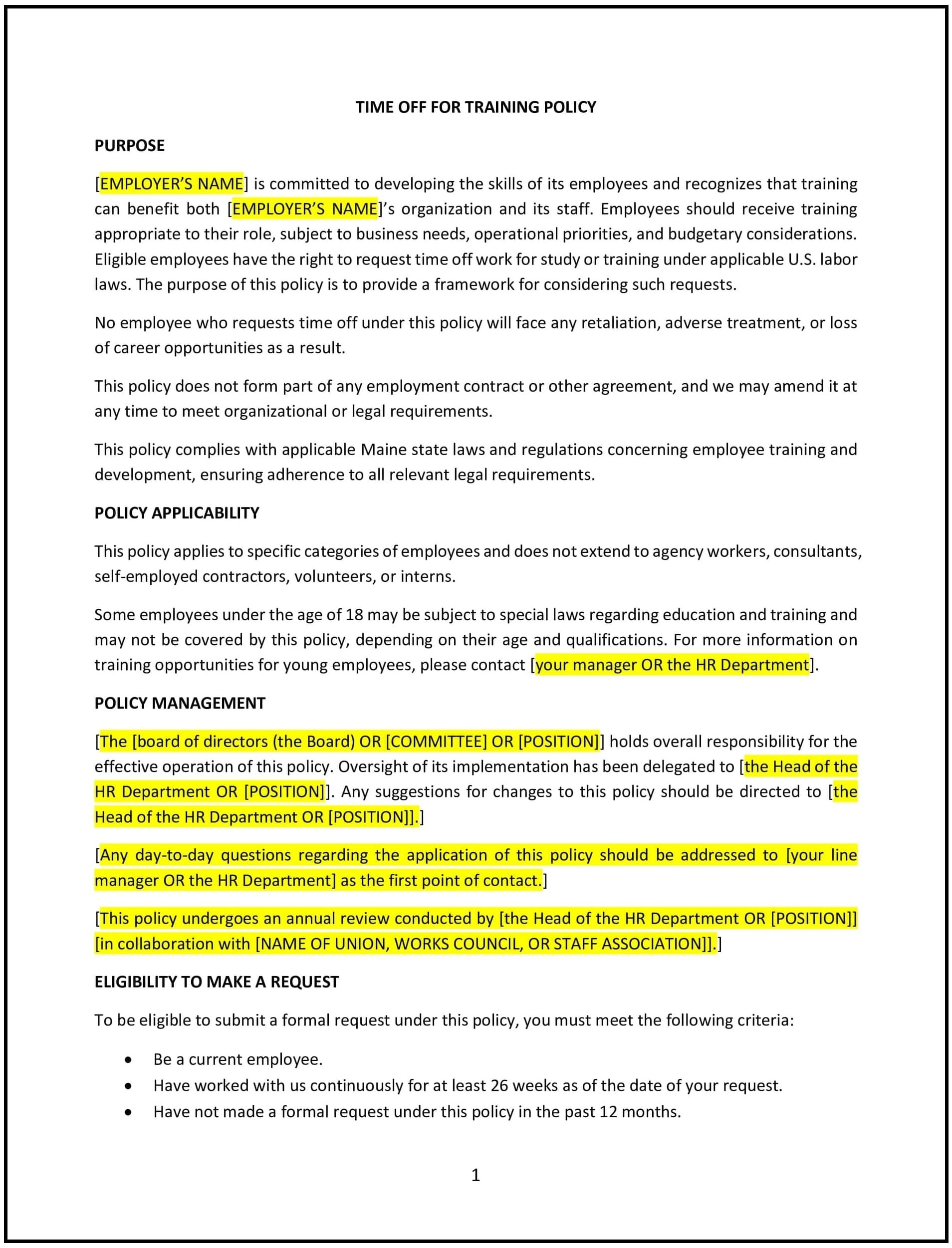
This time off for training policy is designed to help Maine businesses provide employees with the opportunity to enhance their skills and knowledge through external or internal training, seminars, or professional development courses. It outlines the process for requesting time off for training, the types of training covered, and the procedures for supporting employees’ professional growth while maintaining business operations.
By implementing this policy, Maine businesses can encourage continuous learning, ensure employee skill development, and ensure that training leaves do not disrupt company operations.
How to use this time off for training policy (Maine)
- Define eligible training: Specify the types of training eligible for time off, including job-related courses, certifications, seminars, workshops, or conferences that enhance the employee's skills relevant to their role.
- Set approval process: Outline how employees can request time off for training, including the necessary notice period, documentation (e.g., course registration), and criteria for approval.
- Address paid or unpaid leave: Clarify whether time off for training will be paid or unpaid. Some businesses may provide paid time off for training, while others may only offer unpaid leave or allow employees to use vacation days.
- Specify duration of leave: Set limits on the amount of time off granted for training, specifying whether employees can take full days or half-days off and the total number of training hours or days allowed.
- Encourage relevant training: Ensure that employees understand that training should directly benefit their current role and align with the company's objectives, rather than personal or unrelated pursuits.
- Address training costs: Clarify whether the company will cover training expenses such as registration fees, travel, and accommodations, or if employees will be responsible for these costs.
- Review regularly: Update the policy periodically to reflect changes in company practices, employee needs, or legal requirements.
Benefits of using this time off for training policy (Maine)
Implementing this policy provides several benefits for Maine businesses:
- Promotes employee development: Supports continuous learning and professional development, ensuring that employees acquire new skills and stay current in their roles.
- Increases employee engagement: Offering training opportunities enhances job satisfaction, motivates employees, and helps retain top talent.
- Enhances workplace skills: Helps the business improve overall workforce competence, increasing efficiency and productivity.
- Supports company growth: Skilled employees contribute to the company’s long-term success by improving their performance and contributing to innovation and efficiency.
- Ensures fairness: Establishes clear guidelines for all employees to access training opportunities, ensuring equal access to professional development.
Tips for using this time off for training policy (Maine)
- Communicate the policy: Ensure all employees are aware of the policy, including how to request time off for training, during onboarding and through the employee handbook.
- Plan ahead: Encourage employees to request time off for training well in advance to allow for scheduling and resource management.
- Ensure relevance: Ensure that training is directly relevant to the employee’s current role or career development within the company.
- Monitor training effectiveness: Follow up with employees after training to assess how it has contributed to their performance and to identify potential areas for future development.
- Stay flexible: Offer flexibility for training that may require extended time off, such as certification programs, while balancing operational needs.
- Review feedback: Regularly gather feedback from employees on the training opportunities offered, helping the company to improve and offer better learning experiences.