Time off for training policy (North Carolina): Free template
Got contracts to review? While you're here for policies, let Cobrief make contract review effortless—start your free review now.
Customize this template for free
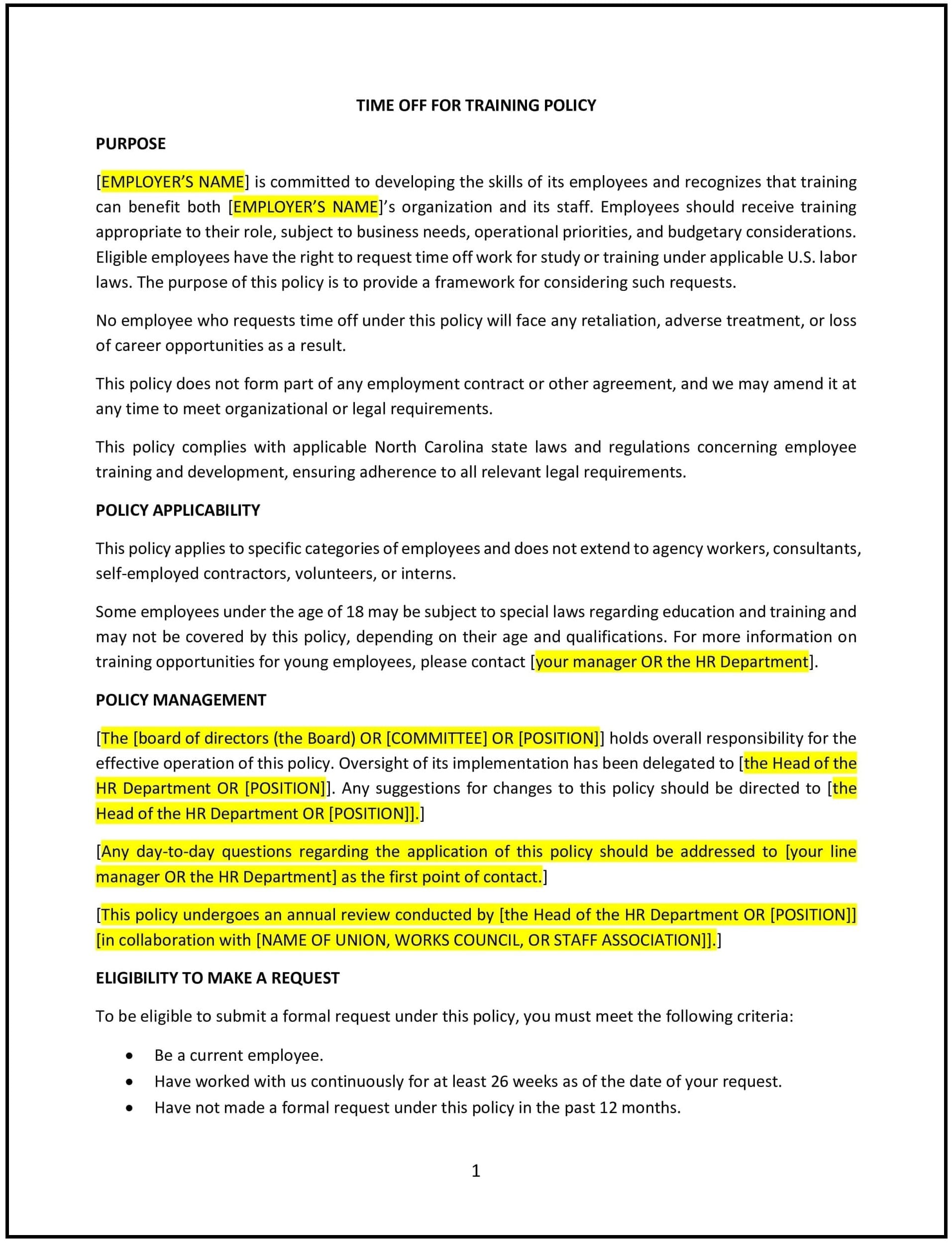
Time off for training policy (North Carolina)
This time off for training policy is designed to help North Carolina businesses support employee development by providing time off for professional training, certifications, or skill-building activities. It outlines procedures for requesting leave, eligibility, and compensation during training.
By adopting this policy, businesses can enhance employee skills, improve performance, and foster a culture of continuous learning.
How to use this time off for training policy (North Carolina)
- Define training activities: Clearly explain what qualifies for training leave, such as workshops, certifications, or skill-building courses.
- Establish eligibility: Specify which employees are eligible for training leave, such as full-time or part-time staff.
- Outline request procedures: Provide steps for employees to request time off for training, including required notice and approval processes.
- Address compensation: Clarify whether employees will be paid during their training leave, in accordance with the business’s policies.
- Set expectations: Explain how employees will apply their new skills or knowledge to their roles after training.
- Train managers: Educate supervisors on handling training leave requests and supporting employee development.
- Review and update: Assess the policy annually to strengthen alignment with evolving workplace needs and business goals.
Benefits of using this time off for training policy (North Carolina)
This policy offers several advantages for North Carolina businesses:
- Enhances skills: Provides employees with opportunities to develop new skills and knowledge, improving job performance.
- Boosts morale: Demonstrates a commitment to employee growth and development, increasing job satisfaction and loyalty.
- Improves retention: Supports career advancement, reducing turnover and attracting top talent.
- Fosters innovation: Encourages employees to bring new ideas and approaches to the workplace.
- Builds trust: Shows employees that the business values their professional growth and contributions.
Tips for using this time off for training policy (North Carolina)
- Communicate clearly: Ensure all employees understand the policy and their eligibility for training leave.
- Provide training: Educate managers on handling training leave requests and supporting employee development.
- Monitor outcomes: Track the impact of training on employee performance and business goals.
- Encourage participation: Promote training opportunities to employees and highlight their benefits.
- Update regularly: Review the policy annually to strengthen alignment with business needs.