Travel and expense reimbursement policy (Indiana): Free template
Got contracts to review? While you're here for policies, let Cobrief make contract review effortless—start your free review now.
Customize this template for free
Travel and expense reimbursement policy (Indiana): Free template
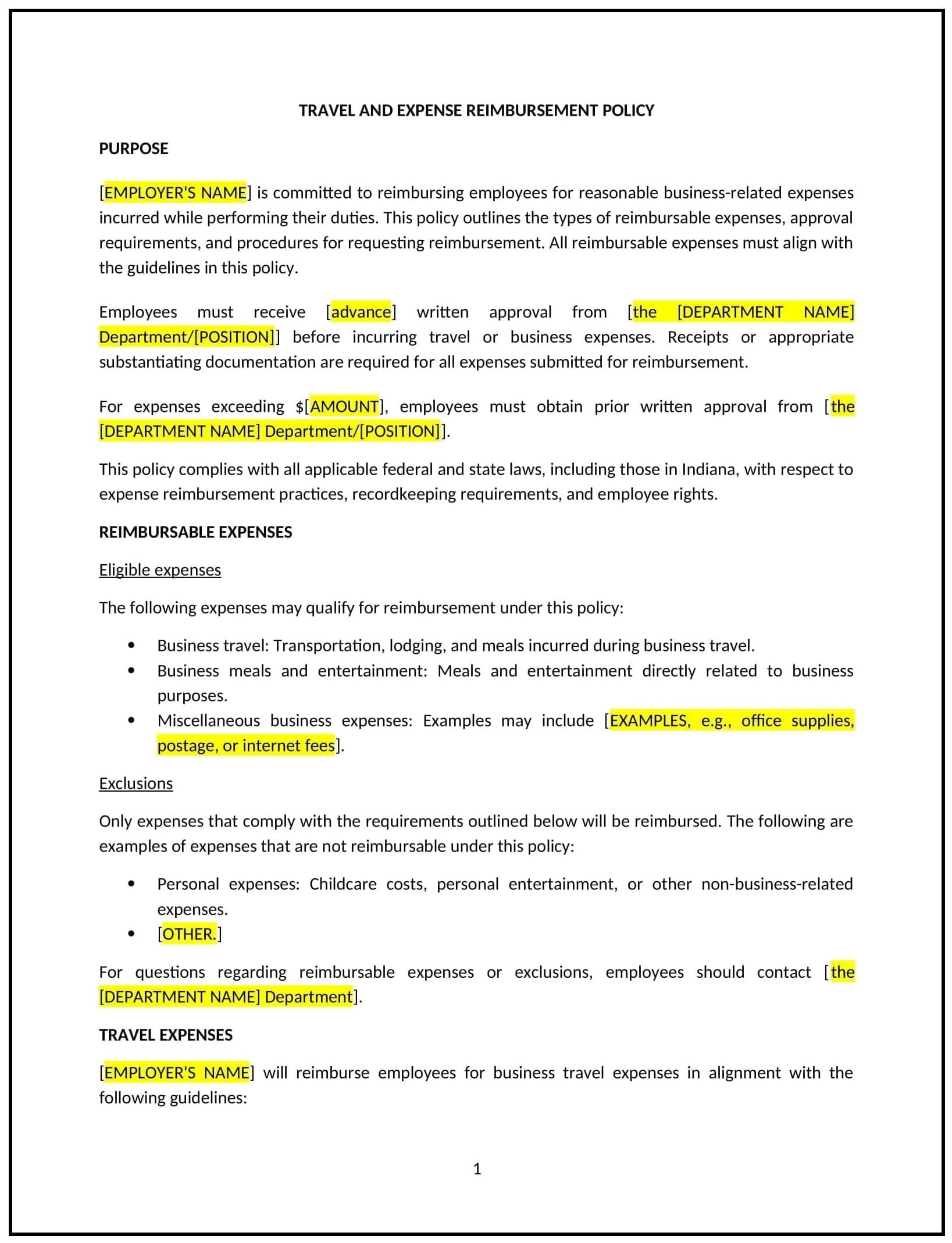
This travel and expense reimbursement policy helps Indiana businesses provide clear guidelines for reimbursing employees for business-related travel and expenses. It outlines eligible expenses, reimbursement procedures, and documentation requirements to ensure accuracy and transparency. By implementing this policy, businesses can streamline reimbursement processes, maintain budget control, and support employees conducting work-related travel.
By implementing this policy, Indiana businesses can ensure fair, consistent, and efficient reimbursement practices while fostering accountability.
How to use this travel and expense reimbursement policy (Indiana)
- Define eligible expenses: Specify which expenses are reimbursable, such as transportation, lodging, meals, and incidentals incurred during business-related travel. Include any restrictions, such as daily limits or excluded items.
- Outline approval procedures: Require employees to obtain pre-approval for travel and significant expenses, providing clear steps for requesting approval and documenting the purpose of the travel or expense.
- Detail documentation requirements: Specify the documentation needed for reimbursement, such as receipts, invoices, or mileage logs, and set a deadline for submitting reimbursement claims.
- Establish reimbursement limits: Include per diem rates or maximum reimbursement amounts for specific expenses, such as hotel stays or meal allowances, to control costs.
- Address payment methods: Clarify whether employees are expected to use personal funds, company credit cards, or travel advances for business-related expenses.
- Provide submission procedures: Include instructions for submitting reimbursement claims, such as using an expense management system or completing a specific form.
- Define timelines: State the timeframe for processing reimbursement requests and issuing payments to employees.
- Review and update regularly: Periodically assess the policy to ensure it reflects changes in business practices, travel needs, or Indiana regulations.
Benefits of using this travel and expense reimbursement policy (Indiana)
Implementing this policy provides several key benefits for Indiana businesses:
- Promotes transparency: Clearly defines reimbursable expenses and processes, reducing confusion or disputes.
- Enhances employee satisfaction: Ensures employees are promptly reimbursed for legitimate business expenses, supporting their financial well-being.
- Supports budget control: Establishes clear limits and guidelines for reimbursable expenses, helping businesses manage costs effectively.
- Improves efficiency: Streamlines the reimbursement process with clear instructions and timelines, saving time for both employees and administrators.
- Reduces compliance risks: Aligns with Indiana laws and tax regulations regarding expense reporting and reimbursement.
- Encourages accountability: Requires employees to provide proper documentation, ensuring expenses are valid and necessary.
Tips for using this travel and expense reimbursement policy (Indiana)
- Communicate the policy: Share the policy during onboarding and ensure it is included in the employee handbook for easy access.
- Train employees: Provide training on the reimbursement process and tools, such as expense management software, to ensure compliance and efficiency.
- Monitor expenses: Regularly review expense reports to identify trends or areas where cost control measures may be needed.
- Provide clear examples: Include examples of reimbursable and non-reimbursable expenses to help employees understand the policy.
- Encourage timely submissions: Remind employees to submit reimbursement requests promptly to avoid delays or missed deadlines.
- Keep records: Maintain accurate records of all reimbursements for auditing and tax purposes.