Travel disruption policy (Alaska): Free template
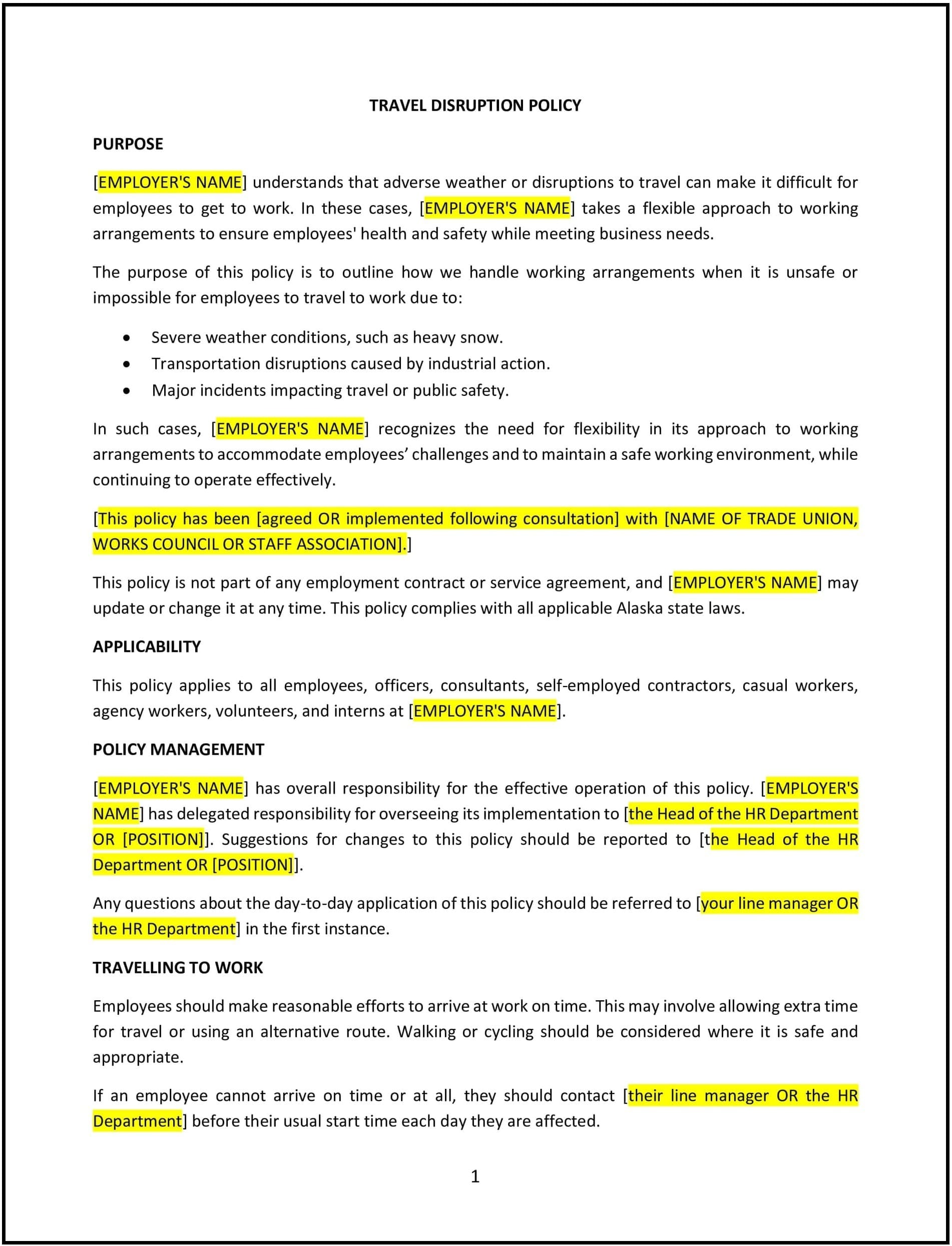
Covers procedures for handling delays or cancellations during work travel, ensuring business continuity in Alaska.
- Policies
- Alaska
Travel disruption policy (Alaska)
In Alaska, a travel disruption policy outlines guidelines for managing unexpected interruptions to business travel, such as delays, cancellations, or adverse weather conditions. This policy ensures employees understand their responsibilities and the company’s support measures during disruptions.
By implementing this policy, businesses can minimize operational impacts and support employees effectively in challenging travel situations.
How to use this travel disruption policy (Alaska)
- Define covered disruptions: Specify the types of travel interruptions included in the policy, such as flight delays, cancellations, road closures, or natural disasters.
- Include communication protocols: Require employees to notify their manager or designated contact immediately in the event of a disruption.
- Outline support measures: Describe the company’s approach to addressing disruptions, such as rebooking travel, covering additional costs, or providing alternative work arrangements.
- Address reimbursement procedures: Clarify how employees can claim additional expenses incurred due to travel disruptions, such as extended lodging or transportation.
- Emphasize safety priorities: Encourage employees to prioritize their safety and follow local advisories or company guidelines during disruptions.
Benefits of using a travel disruption policy (Alaska)
A travel disruption policy provides several advantages for businesses in Alaska. Here’s how it helps:
- Promotes employee safety: Ensures employees have clear guidance on managing disruptions in remote or challenging conditions.
- Reduces uncertainty: Provides employees with structured procedures for addressing and reporting travel interruptions.
- Manages costs: Establishes guidelines for reimbursing disruption-related expenses, preventing unnecessary spending.
- Supports continuity: Minimizes operational delays by enabling employees to adapt their plans efficiently during travel disruptions.
- Builds trust: Demonstrates the company’s commitment to employee well-being and support during unforeseen events.
Tips for using a travel disruption policy (Alaska)
- Address Alaska-specific challenges: Include considerations for common disruptions in Alaska, such as extreme weather, limited transportation options, or rural travel.
- Use travel insurance: Encourage or require the use of travel insurance to cover significant disruption-related costs.
- Provide alternative work arrangements: Allow employees to work remotely or adjust schedules if they are stranded or unable to travel.
- Monitor local advisories: Stay informed about weather conditions, flight cancellations, or other travel risks to proactively support employees.
- Update regularly: Revise the policy as needed to reflect changes in travel practices, company resources, or regional conditions.
Frequently asked questions (FAQs)
Similar templates
Where deals go from offer to paid
