Travel disruption policy (Connecticut): Free template
Got contracts to review? While you're here for policies, let Cobrief make contract review effortless—start your free review now.
Customize this template for free
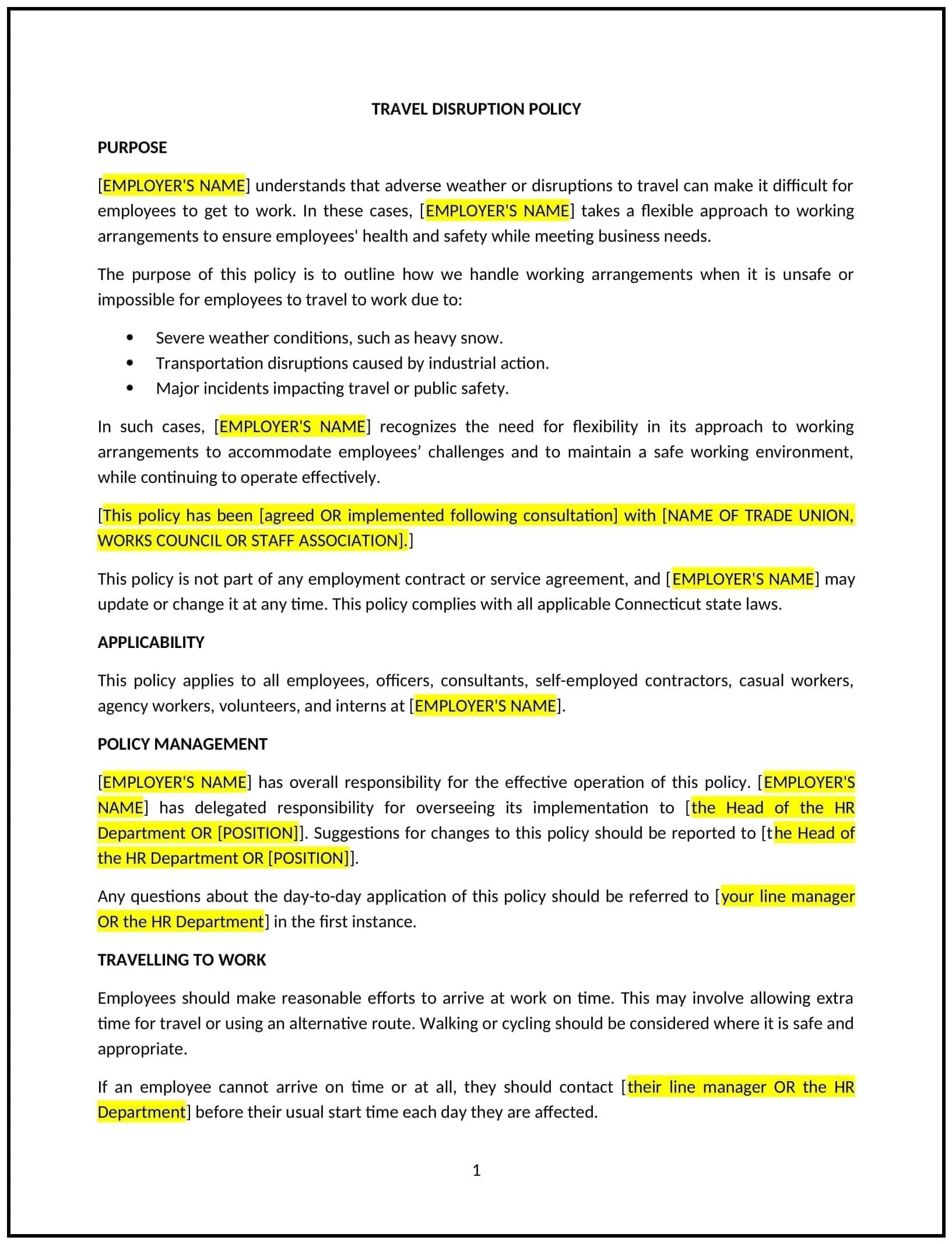
Travel disruption policy (Connecticut)
A travel disruption policy helps Connecticut businesses manage situations where employees’ travel plans are interrupted or disrupted, ensuring that employees are supported and business operations are not unduly affected. This policy outlines how the company will handle disruptions, such as flight cancellations, delays, or changes in transportation, and sets expectations for employees and managers during these situations.
By implementing this policy, businesses can ensure that employees are well-supported during travel disruptions, maintain continuity of business operations, and minimize the impact of travel delays on the organization.
How to use this travel disruption policy (Connecticut)
- Define travel disruptions: Specify what constitutes a travel disruption, including flight cancellations, delays, changes in transportation, or severe weather conditions that affect travel plans.
- Set expectations for reporting: Establish guidelines for how employees should report travel disruptions, including who to notify, what information to provide, and how quickly the disruption should be reported.
- Provide support for affected employees: Outline the support the company will provide when travel disruptions occur, such as helping to rebook flights, arranging alternative transportation, or covering additional accommodation costs if necessary.
- Address time and expense management: Define how employees should manage their time and expenses during disruptions, including whether additional time off or accommodations will be paid for and what the reimbursement process will be.
- Clarify responsibilities for rescheduling: Specify who is responsible for rescheduling meetings, appointments, or events affected by travel disruptions, and outline how to minimize business interruptions.
- Ensure communication with clients and stakeholders: Provide guidelines for how employees should communicate with clients or stakeholders when disruptions affect meetings or deadlines, ensuring transparency and professionalism.
- Promote flexibility: Encourage flexibility in rescheduling travel and work commitments to ensure that employees can continue with their responsibilities without excessive delay or stress.
Benefits of using this travel disruption policy (Connecticut)
This policy offers several benefits for Connecticut businesses:
- Supports employee well-being: By providing clear guidance and support during travel disruptions, the policy helps employees manage the stress and inconvenience of disrupted travel plans, fostering a positive work environment.
- Minimizes business disruption: The policy ensures that employees know how to handle travel disruptions efficiently, minimizing the impact on business operations and keeping meetings, projects, and deadlines on track.
- Increases employee satisfaction: Offering support and flexibility during travel disruptions improves employee morale and demonstrates that the company values their well-being, leading to higher satisfaction and loyalty.
- Improves cost control: By clearly defining how the company will manage the costs associated with travel disruptions, the policy helps control unnecessary expenses and ensures that costs are handled responsibly.
- Enhances customer service: Clear communication during disruptions ensures that clients and stakeholders are kept informed and that business commitments are met with professionalism, even when travel plans are affected.
Tips for using this travel disruption policy (Connecticut)
- Communicate the policy clearly: Ensure that all employees who travel for work understand the procedures for reporting disruptions and the support available to them.
- Monitor travel plans: Keep track of employees' travel arrangements to help anticipate potential disruptions and provide proactive support when necessary.
- Ensure flexibility in rescheduling: Encourage employees and managers to work together to reschedule meetings or appointments in a way that minimizes disruption to business operations.
- Offer support for rebooking: Provide employees with the tools or resources necessary to rebook travel quickly and efficiently in the event of a disruption, reducing downtime.
- Review periodically: Regularly update the policy to ensure it remains effective and relevant, especially as business travel practices or external factors (e.g., travel restrictions, weather patterns) evolve.