Got contracts to review? While you're here for policies, let Cobrief make contract review effortless—start your free review now.
Customize this template for free
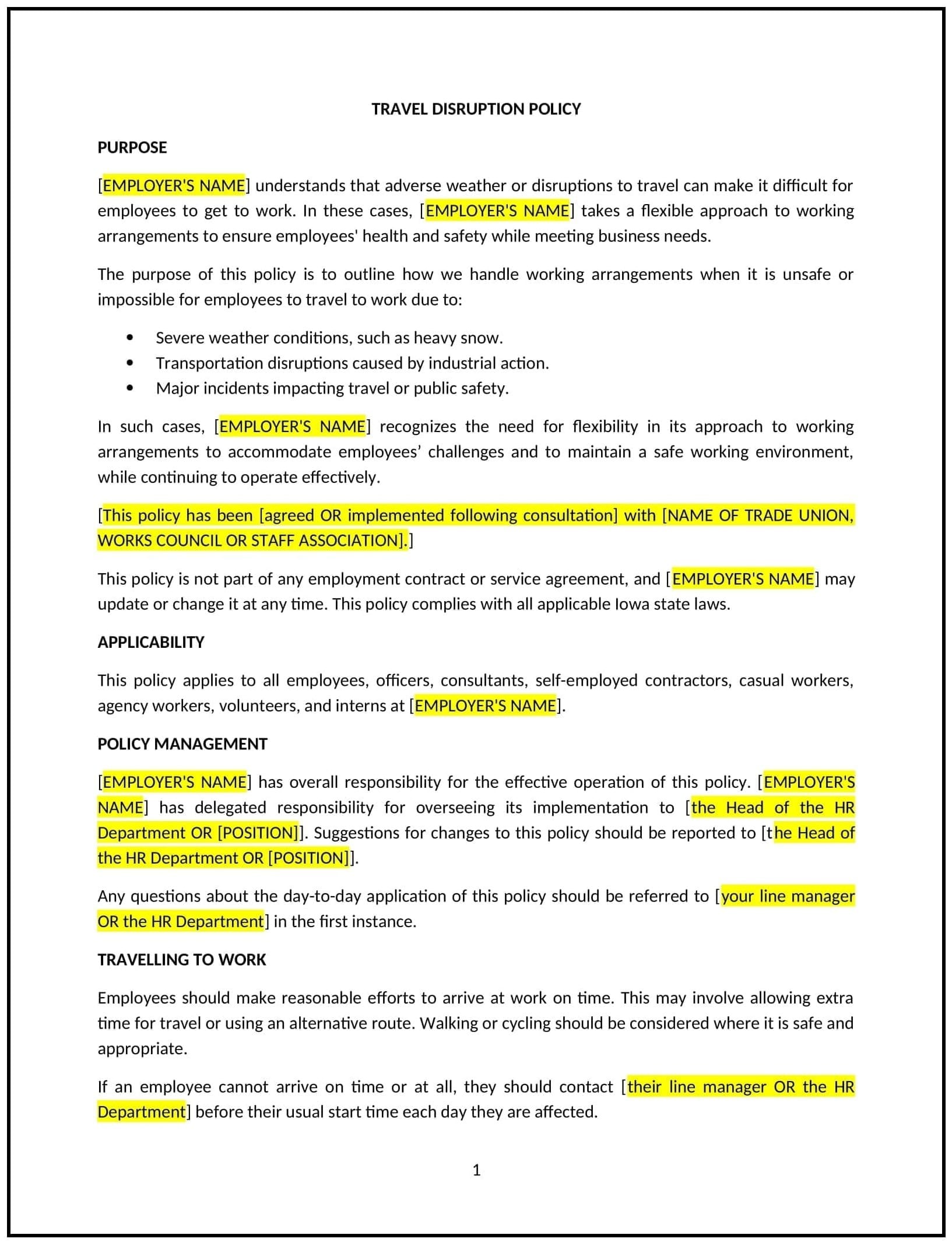
Travel disruption policy (Iowa)
A travel disruption policy helps Iowa businesses manage employee travel disruptions, such as canceled flights, delayed trains, or unforeseen travel-related issues that may impact business operations. This policy outlines the procedures for addressing and mitigating the impact of travel disruptions on employees, including options for rebooking, compensation, and communication with relevant stakeholders. It ensures that employees are supported during travel disruptions while minimizing the effect on productivity and operations.
By implementing this policy, businesses can provide employees with clear guidance on how to manage unexpected travel disruptions and ensure that operations continue smoothly, even when travel plans are affected.
How to use this travel disruption policy (Iowa)
- Define eligible disruptions: Clearly outline the types of disruptions covered by the policy, including flight cancellations, train delays, road closures, natural disasters, or other unforeseen events that prevent employees from reaching their destination as planned.
- Set communication protocols: Establish clear procedures for how employees should report travel disruptions to the company, including how to notify their manager or supervisor, provide documentation of the disruption, and confirm new travel arrangements.
- Address rebooking and alternate arrangements: Specify whether the company will assist with rebooking travel, such as arranging alternative transportation or booking additional accommodations in the event of delays. Clarify which costs the company will cover and how employees should handle bookings.
- Outline compensation for affected employees: Define whether employees will be compensated for lost time or extra costs due to travel disruptions. This may include coverage for meals, accommodation, transportation, or additional work hours incurred as a result of the disruption.
- Clarify responsibilities for mitigating disruptions: Detail what actions employees are expected to take when a disruption occurs, such as seeking the best available rebooking option or finding alternative transportation. Emphasize the importance of maintaining professionalism and communication during disruptions.
- Set limits on reimbursement: Outline the types of expenses that will be reimbursed, such as meals, lodging, and transport, and any limits on amounts that can be claimed for these expenses.
- Review and update regularly: Periodically review and update the policy to ensure it remains relevant to employee needs and evolving business requirements, and to reflect any changes in travel-related issues such as insurance, airline policies, or local laws.
Benefits of using this travel disruption policy (Iowa)
This policy offers several key benefits for Iowa businesses:
- Reduces stress for employees: Providing a clear plan for how to handle travel disruptions helps employees feel supported and reduces stress during unexpected events.
- Maintains business continuity: By addressing travel disruptions proactively, businesses can minimize delays, maintain productivity, and ensure that employees can still complete their work on time despite travel issues.
- Enhances employee satisfaction: Employees are more likely to be satisfied with their employer’s handling of travel disruptions when clear guidelines are in place, leading to improved morale and retention.
- Controls travel-related costs: With defined reimbursement and compensation guidelines, businesses can keep travel-related expenses within budget while supporting employees during disruptions.
- Improves crisis management: A clear travel disruption policy helps businesses respond quickly and effectively to unexpected situations, improving the company’s ability to handle crises and ensuring a positive outcome for both employees and the business.
- Strengthens reputation: By demonstrating that the company supports employees during travel disruptions, businesses can build a reputation as an employer that values the well-being and success of its staff.
Tips for using this travel disruption policy (Iowa)
- Communicate the policy clearly: Ensure that all employees who travel for work are aware of the policy and understand the procedures for managing travel disruptions, including who to contact and what steps to follow.
- Be proactive in supporting employees: When a disruption occurs, businesses should offer immediate support to help employees resolve the issue and continue their work with minimal disruption.
- Use technology to streamline communication: Implement communication tools or travel management software to track and monitor travel disruptions, enabling quick action and minimizing delays in response.
- Maintain flexibility in your approach: While it’s important to have clear guidelines, businesses should remain flexible and adaptable in addressing unique or unforeseen travel issues that may not be covered by the policy.
- Regularly evaluate travel disruption trends: Periodically assess travel disruption patterns to identify any recurring issues, such as certain airports or routes that are more prone to delays, and adjust travel policies or arrangements accordingly.