Travel disruption policy (New Jersey): Free template
Got contracts to review? While you're here for policies, let Cobrief make contract review effortless—start your free review now.
Customize this template for free
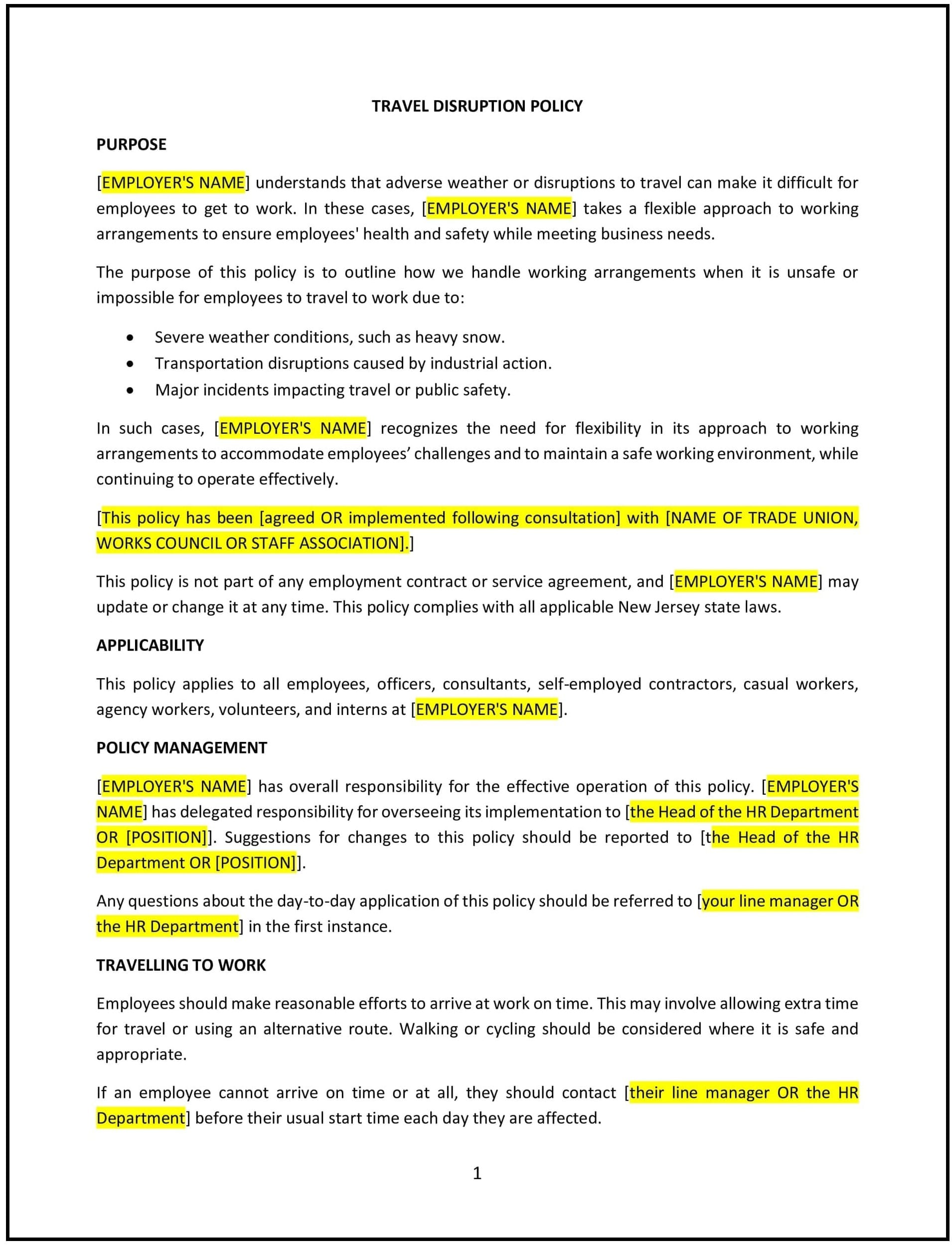
Travel disruption policy (New Jersey)
A travel disruption policy helps New Jersey businesses manage the impact of travel disruptions on employees, such as delays, cancellations, or other issues that may occur while employees are traveling for work. This policy outlines the steps employees should take when faced with travel disruptions, how the company will assist with these situations, and what employees can expect regarding compensation or alternative arrangements.
By adopting this policy, businesses in New Jersey can ensure that employees are prepared for unexpected travel issues and maintain business continuity while minimizing the impact of disruptions.
How to use this travel disruption policy (New Jersey)
- Define what constitutes a travel disruption: Specify the types of disruptions covered by the policy, including flight delays, cancellations, transportation issues, or weather-related disruptions.
- Outline the employee responsibilities: Provide guidelines on what employees should do when they encounter a travel disruption, such as notifying their manager, rebooking transportation, or seeking alternative accommodations.
- Provide assistance from the company: Clarify the type of support the company will provide in the event of a travel disruption, such as helping with rebooking flights or covering additional travel expenses.
- Address compensation or reimbursement: Explain the reimbursement process for extra costs incurred due to travel disruptions, such as meals, lodging, or transportation expenses.
- Set expectations for travel time: Define reasonable expectations for the time employees should allocate for travel, and what the company will do if these timelines are disrupted.
- Include procedures for extended delays: Address how employees should handle extended delays that prevent them from completing their work tasks or attending scheduled meetings.
- Review and update: Regularly review the policy to ensure it reflects New Jersey regulations, industry standards, and evolving business travel needs.
Benefits of using this travel disruption policy (New Jersey)
This policy provides several benefits for New Jersey businesses:
- Reduces uncertainty: Clearly defines the company’s expectations and procedures for handling travel disruptions, minimizing confusion for both employees and managers.
- Ensures employee support: Provides employees with clear guidance and assistance when faced with unexpected travel issues, fostering a supportive work environment.
- Improves business continuity: Helps maintain operations even when travel disruptions occur, ensuring employees can still meet their obligations or work remotely if necessary.
- Enhances employee satisfaction: Shows employees that the company values their time and is prepared to assist them when travel disruptions affect their work.
- Protects the company: Reduces the risk of travel disruptions negatively impacting the business by offering a structured response plan and minimizing downtime.
Tips for using this travel disruption policy (New Jersey)
- Communicate the policy clearly: Ensure that employees understand the steps they should take if they experience a travel disruption, including who to notify and what assistance will be available.
- Provide proactive support: Offer proactive solutions for common disruptions, such as preferred hotels, transportation options, or travel partners, to streamline the process for employees.
- Track expenses carefully: Ensure that employees document additional expenses related to disruptions and provide receipts for reimbursement, maintaining transparency and accountability.
- Be flexible: Offer flexible solutions for employees when faced with extended travel disruptions, such as remote work options or rescheduling meetings.
- Review the policy regularly: Update the policy annually to reflect changes in New Jersey travel regulations, industry best practices, or business travel needs.