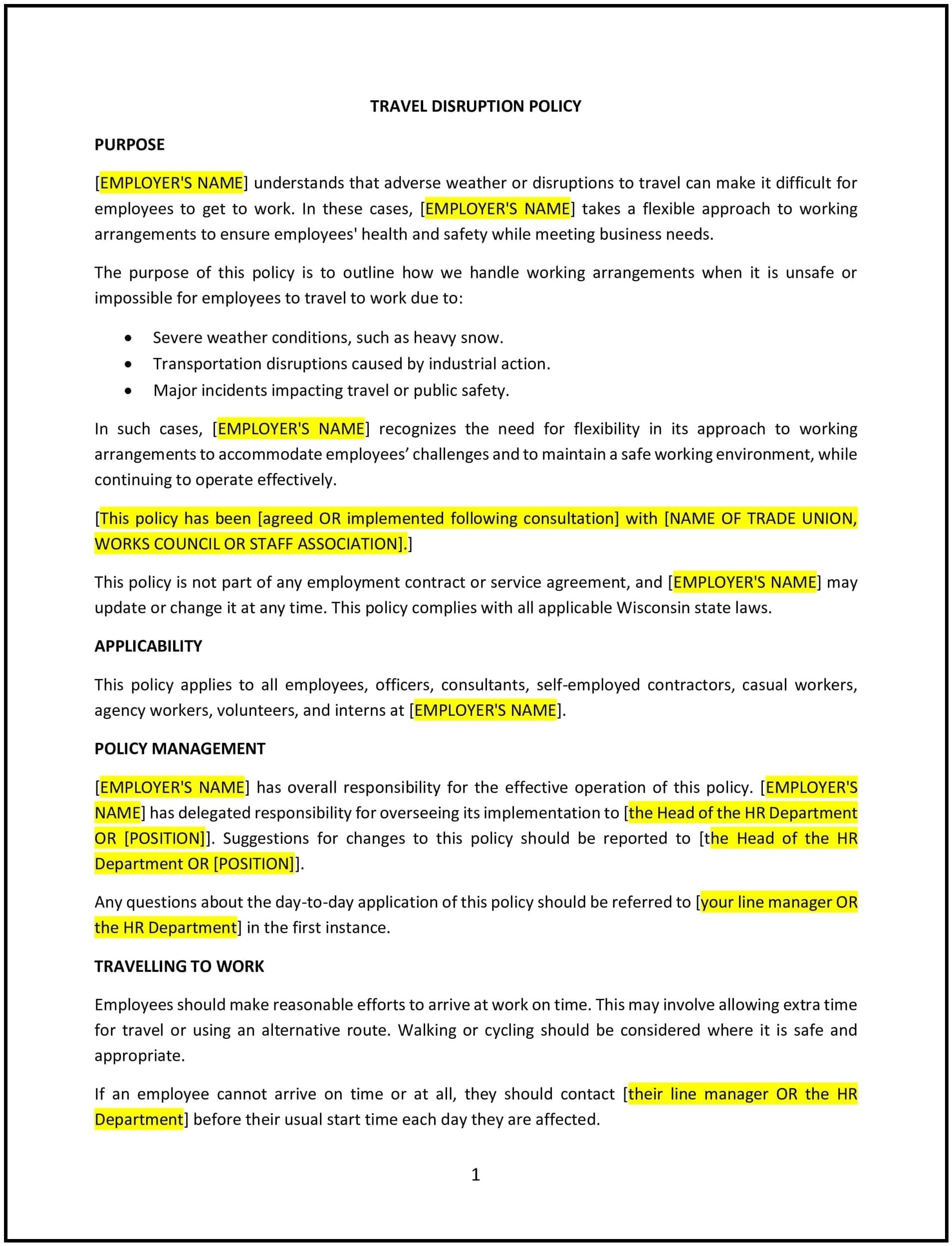
Travel disruption policy (Wisconsin): Free template
Provides steps for handling delays or interruptions during business travel.
- Policies
- Wisconsin
Travel disruption policy (Wisconsin)
In Wisconsin, a travel disruption policy provides clear guidelines for handling unexpected travel interruptions, such as weather delays, canceled flights, or other unforeseen events that impact work-related travel. This policy helps businesses maintain operational efficiency and ensures that employees understand the procedures and support available during travel disruptions.
This policy outlines steps for managing disruptions, reimbursement for additional expenses, and communication protocols to minimize the impact on business operations.
How to use this travel disruption policy (Wisconsin)
- Define covered disruptions: Clearly specify the types of travel disruptions covered under the policy, such as severe weather, airline cancellations, or mechanical issues.
- Outline employee responsibilities: Explain what employees should do in the event of a travel disruption, such as contacting their manager or rebooking travel.
- Address reimbursement: Specify which additional expenses (e.g., lodging, meals, or rebooking fees) are reimbursable and the documentation required for reimbursement.
- Communicate support channels: Provide contact information for company travel coordinators, HR, or third-party travel agencies to assist employees during disruptions.
- Ensure compliance: Align the policy with Wisconsin labor laws and IRS guidelines to address tax treatment for reimbursed travel expenses.
Benefits of using a travel disruption policy (Wisconsin)
- Minimizes operational delays: Helps employees manage travel disruptions efficiently, reducing the impact on business activities.
- Supports compliance: Improves alignment with Wisconsin labor laws and federal regulations related to travel reimbursements.
- Improves employee confidence: Provides clear procedures and support, helping employees handle travel interruptions with less stress.
- Encourages accountability: Sets clear expectations for managing disruptions and submitting reimbursement claims.
- Enhances organizational resilience: Prepares businesses to handle unexpected travel challenges while maintaining productivity.
Tips for using a travel disruption policy (Wisconsin)
- Communicate the policy: Share the policy with employees before work-related travel to ensure they understand their responsibilities and available support.
- Provide training: Train employees and managers on how to handle travel disruptions and use the company’s travel support resources.
- Standardize reimbursement claims: Use a consistent process for employees to submit claims for additional expenses incurred during disruptions.
- Monitor travel trends: Regularly assess the policy to reflect changes in travel risks, industry practices, or Wisconsin labor laws.
- Offer flexibility: Adapt the policy to accommodate unique disruptions or emergencies that may not fall under typical scenarios.
Frequently asked questions (FAQs)
Similar templates
Where deals go from offer to paid
