US export and trade compliance policy (Alabama): Free template
Got contracts to review? While you're here for policies, let Cobrief make contract review effortless—start your free review now.
Customize this template for free
US export and trade compliance policy (Alabama)
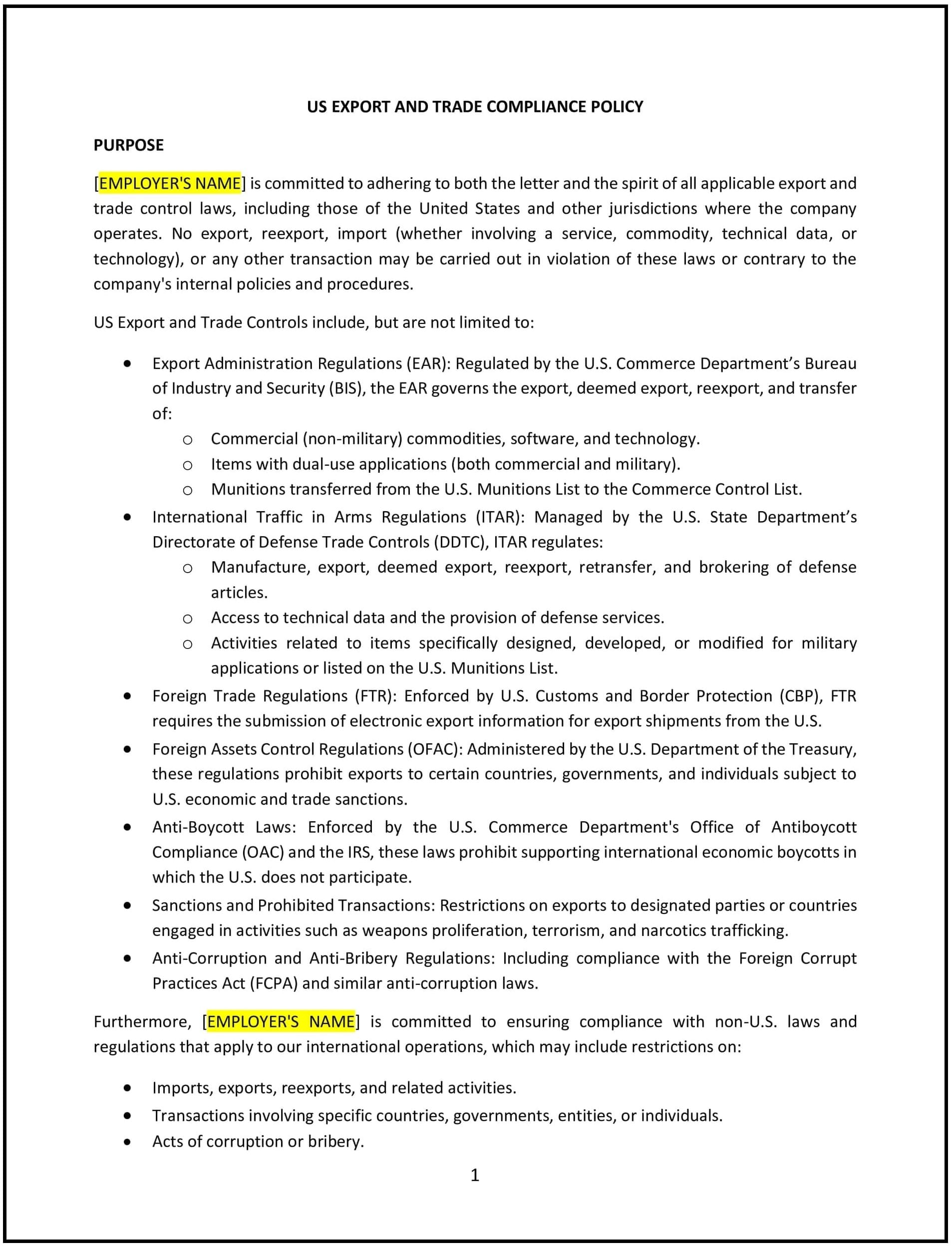
A US export and trade compliance policy outlines the processes and responsibilities for adhering to federal and state regulations governing the export of goods, services, and technology. For SMBs in Alabama, this policy ensures compliance with laws such as the Export Administration Regulations (EAR) and the International Traffic in Arms Regulations (ITAR), mitigating risks and protecting the business from penalties.
This policy provides guidance on identifying export-controlled items, screening transactions, and maintaining accurate records to align business practices with legal requirements.
How to use this US export and trade compliance policy (Alabama)
- Identify export-controlled items: Clarify which goods, services, or technologies are subject to export control laws and require special handling.
- Establish screening procedures: Implement a process for screening customers, partners, and transactions against restricted or denied party lists.
- Train employees: Provide regular training to employees involved in export-related activities to ensure they understand and comply with regulations.
- Maintain records: Specify the requirements for maintaining accurate records of export transactions, including licenses and documentation, in compliance with applicable laws.
- Address violations: Outline the steps to take in the event of a suspected or actual compliance violation, including reporting procedures and corrective actions.
Benefits of using a US export and trade compliance policy (Alabama)
An export and trade compliance policy helps SMBs navigate complex regulatory requirements and protect their operations. Here’s how it helps:
- Ensures legal compliance: Reduces the risk of violations and penalties by aligning business practices with federal and Alabama export regulations.
- Protects the business: Safeguards the company’s reputation and relationships with partners and customers through responsible export practices.
- Promotes accountability: Assigns clear responsibilities for compliance activities, ensuring all transactions are managed correctly.
- Enhances efficiency: Establishes a structured process for handling export transactions, reducing delays and errors.
- Supports training: Encourages consistent employee education on regulatory changes and compliance best practices.
Tips for implementing a US export and trade compliance policy (Alabama)
- Use compliance tools: Leverage software to automate screening and monitor changes to export regulations.
- Assign responsibility: Designate a compliance officer or team to oversee export-related activities and ensure adherence to the policy.
- Communicate the policy: Share the policy with all relevant employees and ensure it is included in onboarding for applicable roles.
- Conduct audits: Regularly review export practices and documentation to identify and address compliance gaps.
- Stay informed: Monitor updates to federal and Alabama trade regulations to keep the policy current and effective.