US export and trade compliance policy (Colorado): Free template
Got contracts to review? While you're here for policies, let Cobrief make contract review effortless—start your free review now.
Customize this template for free
US export and trade compliance policy (Colorado)
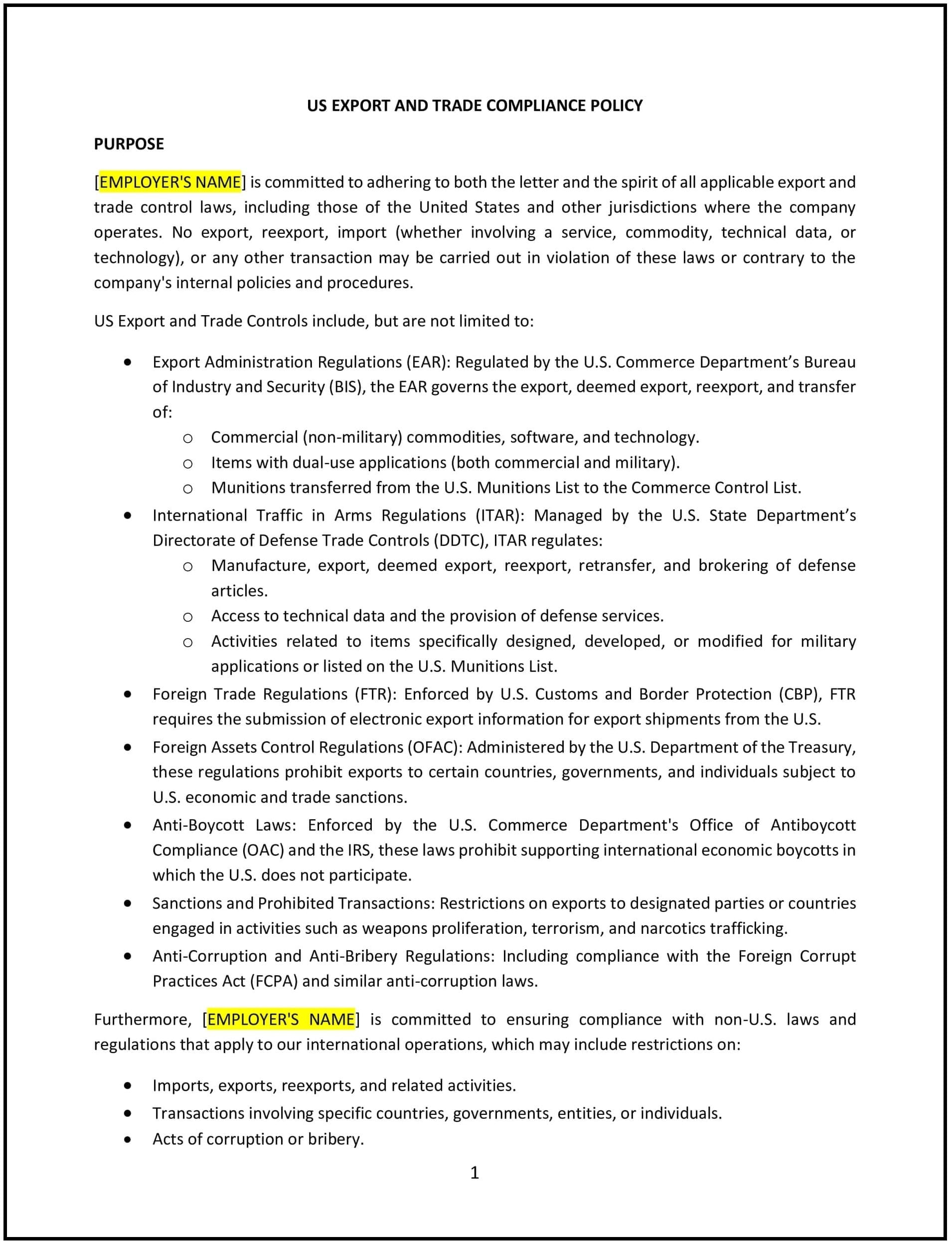
A US export and trade compliance policy helps Colorado businesses navigate regulations governing the export of goods, services, and technology. This policy outlines procedures for ensuring compliance with federal export laws, such as the Export Administration Regulations (EAR) and International Traffic in Arms Regulations (ITAR), while mitigating risks of violations.
By implementing this policy, businesses can safeguard operations, avoid legal penalties, and demonstrate a commitment to responsible trade practices.
How to use this US export and trade compliance policy (Colorado)
- Identify applicable regulations: Clearly specify which laws, such as EAR, ITAR, and Office of Foreign Assets Control (OFAC) sanctions, apply to the business.
- Conduct due diligence: Implement processes for screening customers, suppliers, and partners to ensure compliance with trade restrictions.
- Classify exports: Determine the appropriate export control classifications for goods, software, and technology to ensure accurate licensing.
- Train employees: Provide regular training for staff involved in export or trade activities to ensure understanding of compliance requirements.
- Monitor and audit: Establish procedures for tracking exports and conducting internal audits to identify and address potential compliance gaps.
Benefits of using this US export and trade compliance policy (Colorado)
This policy offers several benefits for Colorado businesses:
- Supports compliance: Aligns business operations with US export laws and regulations, reducing the risk of violations.
- Protects reputation: Demonstrates a commitment to responsible trade practices, enhancing trust with stakeholders.
- Reduces legal risks: Helps avoid penalties, fines, or sanctions by establishing clear compliance procedures.
- Enhances operational efficiency: Streamlines export processes and reduces delays by ensuring proper documentation and approvals.
- Strengthens global relationships: Builds trust with international partners by adhering to trade regulations.
Tips for using this US export and trade compliance policy (Colorado)
- Document procedures: Maintain detailed records of export activities, including licenses, classifications, and communications with regulatory authorities.
- Stay updated: Regularly review changes to export laws and update the policy to reflect new requirements.
- Leverage technology: Use export compliance software to automate screenings, classifications, and documentation processes.
- Establish accountability: Assign a compliance officer or team to oversee export and trade activities.
- Conduct regular audits: Periodically evaluate compliance efforts to identify and address gaps proactively.